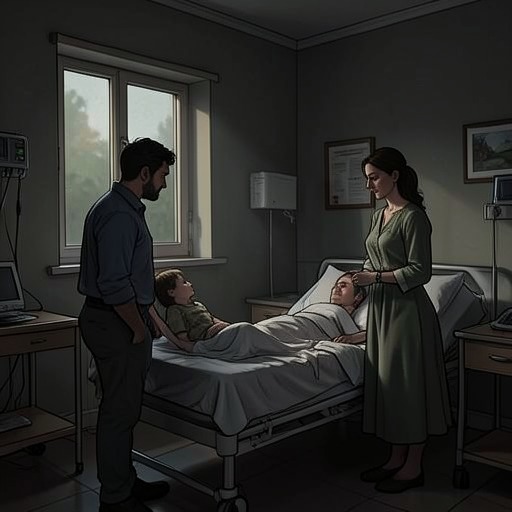
Hope is the thing with feathers
The HumansHope is the thing with feathers is the image through which the narrator understands hope at the moment he tries to save Gulliver. The phrase links an idea first treated as irrational to a physical act of effort: the narrator places his gifted left hand on Gulliver’s heart, works until he is exhausted, and feels a pulse return. The poem surfaces again as he loses consciousness, making hope both the possibility of life and the last remembered language accompanying him into darkness.
The Image and Its Meaning
The expression comes into focus after the narrator considers the history he has read in Isobel Martin, author of the unfinished novel’s work. Human beings, he recognizes, have repeatedly tried against the odds: most have failed, some have succeeded, and failure has not stopped them. Their determination is bound up with their capacity to hope. The narrator’s emphasis makes hope less a prediction of success than a force that allows people to continue without knowing whether their efforts will work.
He immediately marks the irrationality of that force. Hope does not have to make sense; if it did, he observes, it would simply be sense. It also demands effort, a condition unfamiliar to someone whose life at home had been perfectly effortless. This contrast gives the expression a particular weight in his story. Hope is not a comfortable belief that things will turn out well, but a demanding involvement in a future that remains uncertain.
The image of the thing with feathers offers a counterpoint to that strain. In the remembered poem, the bird-like figure sings without words and does not stop. The narrator’s scene, by contrast, is marked by painful work and broken signs of life: a faint pulse, a spoken name, then another pulse. The poem does not remove the physical cost or guarantee a safe outcome. It gives that cost a language of persistence.
Hope as an Act
When the narrator turns from reflection to action, he does not remain at a distance, merely wishing Gulliver well. He places his left hand—the hand identified as his gift hand—against Gulliver’s heart and begins to work. The movement converts the preceding idea into a bodily undertaking. Hope here means acting for another person despite the lack of assurance that the attempt will succeed.
The effort is exhausting. The narrator describes pain that tears through him, while Gulliver initially remains still. A light comes on inside the house; Isobel may have woken because of Newton’s barking, although the narrator is not conscious of what is happening around him. His attention is fixed on Gulliver and on the hand at his heart. Then he feels the faintest flicker of a pulse beneath it. The narrative isolates that small sensation as a change in the stakes: the desired sign is no longer only imagined.
The narrator names the moment with a single word, Hope. He calls Gulliver’s name repeatedly, and another pulse follows. The sequence is deliberately slight: a sensation, a name, a second sensation. Hope does not arrive as certainty or a grand revelation. It takes form in a fragile physical response that the narrator can feel, and in his continued effort to reach Gulliver.
The Poem at the Edge of Consciousness
Gulliver is alive. His lips twitch, his bruised eyes move, and then both eyes open. The narrator registers the eyes as the place where a person and the life within become visible. Seeing Gulliver in this state brings him an exhausted wonder that he recognizes as a father’s feeling. That recognition matters to the expression’s place in the scene: the effort is not abstract compassion but an act directed toward a particular boy, whose survival carries an intimate emotional force for the narrator.
That moment of wonder is immediately overtaken by pain and violet. The narrator feels himself about to collapse onto the wet ground. Footsteps sound behind him; darkness follows. As consciousness gives way, remembered poetry returns, and Emily Dickinson approaches in the narrator’s recollection to whisper the poem. The movement from his own brief naming of Hope to Dickinson’s verse makes the expression recur at the threshold where he can no longer control or continue his work.
Recurrence and Contrast
The poem’s return does not settle what will happen to the narrator. After the darkness, the narrative shifts to Vonnadoria: home is exactly as it has always been, and the narrator is again as he had always been among the hosts, feeling no pain and no fear. The contrast places the poem beside an existence defined by effortless comfort, while the scene on the ground has associated hope with work, pain, vulnerability, and the possibility of losing consciousness.
The expression therefore gathers its meaning from the gap between those states. At home, effort and suffering are absent; in the scene with Gulliver, the narrator’s hope is inseparable from both. The poem’s persistence accompanies an attempt whose outcome is not secured simply because a pulse has returned. Its significance lies instead in the action it names: facing uncertainty by continuing to act for another person. The remembered bird sings as the narrator’s own strength fails, joining the possibility of life to the cost of trying to preserve it.