Jonathan Roper
The HumansJonathan Roper is the replacement sent to carry out the work the alien narrator could not complete. Appearing as an exact double of the narrator, he enters the household under a human identity and brings the mission into direct conflict with the family he has been ordered to target. His defeat exposes both the reach of the hosts’ surveillance and the bodily difference hidden beneath his convincing human appearance.
Identity and Arrival
The narrator first encounters Jonathan in the living room, seated on a purple sofa with one leg crossed over the other. His clothes differ from the narrator’s, but his face and build match: the same naturally parted mid-brown hair and tired eyes, without the bruises on the narrator’s face. The familiarity is immediate and unnerving. Jonathan presents their resemblance as a kind of twinship, while the narrator’s question about who he is draws a more functional answer: he is the replacement, there to do what the narrator could not.
That entrance makes Jonathan more than an unfamiliar intruder. He is a duplicate occupying the narrator’s physical likeness, but he arrives with an assignment that sets him against the narrator’s choices. His role is defined by succession: where the narrator has failed or withdrawn, Jonathan is expected to continue. The likeness makes that conflict intimate, while the word replacement turns it into a contest over who will act in the narrator’s place.
Mission and Assumed Identity
Jonathan says his instructions are broader than the narrator’s. The hosts have directed him to destroy anyone the narrator has told about his origins. He also confirms that the hosts have continued monitoring events despite the narrator’s belief that he had been disconnected. They removed the narrator’s powers, he explains, but kept their own means of listening and checking. Jonathan therefore arrives not as an isolated agent but as the instrument of an organization that remains informed and active.
His actions at the house show that the mission began before the face-to-face meeting. He admits to breaking in a few nights earlier and accessing Isobel Martin, author of the unfinished novel’s computer. He says he did not finish the job that night because the narrator was present and he did not want to hurt him. He invokes a Vonnadorian prohibition against one of their kind directly killing another. This limit restrains him in one relationship even as his instructions demand violence toward others, leaving a sharp contradiction between the mission he accepts and the boundary he will not cross.
Jonathan also describes an assumed life outside Cambridge. In a village there, a woman does not know his real name: he has presented himself as Jonathan Roper and convinced her they are married. The exchange reveals a human cover built not merely from a name but from a fabricated relationship. His capacity to pass among people depends on their accepting a story about who he is, even as the private purpose behind that identity is to carry out the hosts’ orders.
Confrontation with the Narrator and Gulliver
Jonathan states that he intends to kill the people targeted by his instructions and says he will do what he has been told. When the narrator indicates he may go upstairs, Jonathan orders him to remain and begins using mind patterning to direct his thoughts toward taking a knife. The narrator recognizes the attack taking effect and turns to a clockwork radio on the bookcase, rotating its power dial and switching it on. The object becomes a means of interrupting Jonathan’s control rather than a weapon in itself.
During the ensuing struggle, Jonathan switches off one of the radios, stopping the music. In that moment Gulliver attacks him with the knife Jonathan had directed the narrator to take. Gulliver’s action is presented as a sudden reversal: the intended victim of Jonathan’s influence acts against him instead. The narrator, able to move again, pulls Jonathan away before he can reach the second radio. The music, the radios, and the knife thus shape the encounter: Jonathan tries to control the narrator’s mind, but the disruption gives Gulliver the opening to resist.
The scene also reverses Jonathan’s claim to be the one who will complete what the narrator could not. He enters as the narrator’s physical double and as an agent acting on behalf of the hosts, yet the narrator and Gulliver together prevent him from carrying out the attack. His effort to impose the hosts’ intention ends not in obedience but in a confrontation in which Gulliver’s resistance determines the outcome.
Death and Significance
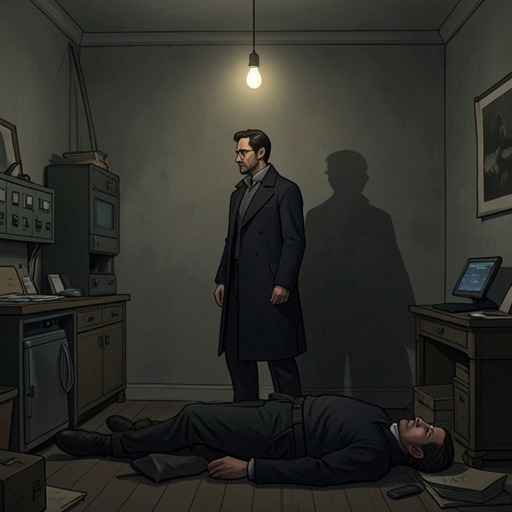
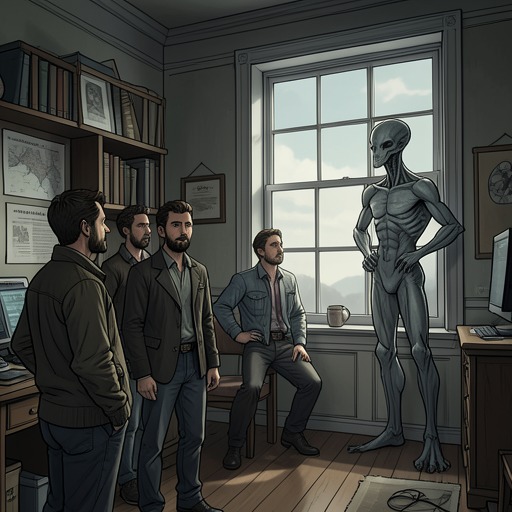
Jonathan dies from the wound Gulliver inflicts. As his body changes after death, it ceases to resemble the human form he had shared with the narrator and reveals his alien nature. For the narrator, this transformation makes the apparent double seem wholly other. The end of Jonathan’s human likeness is also the end of the replacement’s ability to continue the mission: he is disconnected not only from the hosts but from life itself.
Jonathan’s brief appearance brings several strands of the conflict into one room. He confirms that the hosts can still monitor events, demonstrates how an alien agent can use an assumed identity to enter human relationships, and reveals that the narrator’s prohibition against directly killing another Vonnadorian does not prevent the hosts from sending a successor to attack those who know his origins. His death, brought about through Gulliver’s resistance and the narrator’s intervention, closes that immediate threat while making the alien concealed beneath his human resemblance impossible to mistake.