Mortality
The HumansMortality is the boundary between the Vonnadorian narrator’s effortless, deathless existence and the vulnerable human life he comes to choose. At first he treats death as a problem that a sufficiently advanced civilization should have solved. Human beings unsettle that reasoning: they know their lives end, yet still hope, form attachments, and take pleasure in moments that cannot last. As death becomes personal rather than abstract, the narrator’s understanding shifts. Finitude remains frightening, but it also gives urgency to care, courage, and the present.
Death as a difference between civilizations
The narrator describes a society that has overcome both death and fear. Vonnadorians can renew their biological ingredients, and their command of mathematics has enabled technologies capable of great travel and biological change. Their permanence is not merely a medical advantage: it shapes a collective culture in which individual desire does not take precedence over the group. In his account of home, there are no families living together, spouses, names, or nightmares. Death, and the fear associated with it, belong to a form of existence his people have left behind.
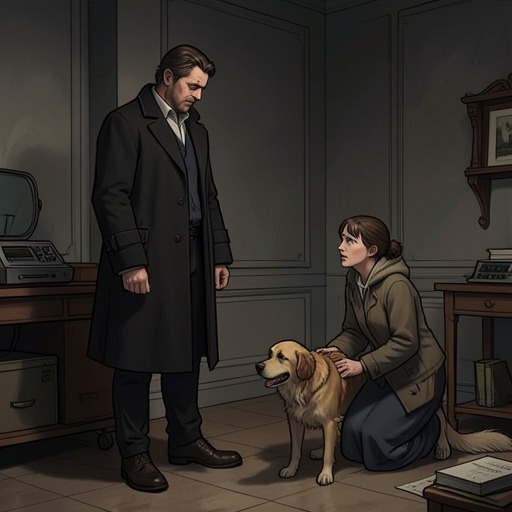
That solution carries a cost the narrator initially fails to recognize. Because Vonnadorians expect to exist indefinitely, they cannot simply accept the universe as it is; they have to manage the conditions of their future. Their habits make human grief and physical vulnerability seem irrational, even repellent. The distinction is clearest when the narrator describes a person dying while held by someone who cares for him. The man grows still and relaxes; Tabitha’s response is an anguish the narrator has never heard before. He had expected to see weakness and feel contempt. Instead, the scene troubles him. Death is no longer a tidy conclusion to an individual life: it is also an event that changes the life of the person left behind.
The narrator’s stated logic nevertheless remains severe. He argues that if human mathematical progress outruns psychological maturity, intervention is required. By this reasoning, Daniel Russell’s death and the knowledge he possessed could prevent greater loss of life; he is therefore treated as a justifiable sacrifice. The argument places the narrator’s inherited collective calculus beside the personal consequences of death. What can be described as useful from a distance becomes harder to contain within logic once grief and attachment are visible.
The first experience of fear
After witnessing death, the narrator has the first nightmare of his life. In it, dead humans fill a vast carpeted street, and he walks among them with an indifferent cat, trying to get home. He cannot leave Earth; he has become human and is subject to the fate he once regarded as a solved problem. The nightmare turns mortality from an idea into a bodily fear: he is hungry but cannot eat, and he knows he will die. The cat’s indifference recalls its appearance at the scene of loss, while the failed journey home makes his alienation inseparable from the prospect of remaining in human form.
That fear complicates his earlier judgment of humans. They are among the few intelligent beings in the galaxy who have not solved death, yet most do not spend their lives in terror. The narrator notes that those who visibly collapse under fear are treated as mad, not as representative of everyone. Human endurance is not proof that death has been overcome; it is evidence that people continue living with a condition they cannot remove.
He measures the scale of that condition in ordinary time: an average human life lasts about eighty Earth years, or roughly 30,000 days. A life may include friendship, meals, marriage or singleness, children or none, wine, sex, regret, and the recognition that time has passed; then it ends. His stark account reduces a whole lifetime to a brief interval on one planet, but he also observes that people do not remain catatonic in response. The smallness of the span and the abundance of ordinary activity stand together. Human life is neither made infinite nor rendered inert by its limit.
Ordinary time, hope, and resistance
A football match offers the narrator a modest demonstration of how attention can loosen death’s hold. He tells Ari that, while watching, he did not think about his mortality or the difficulties that aging will bring. The match ends in a four-nil defeat, but its value to him does not depend on winning. For a time, participation in an ordinary human activity displaces the calculation of how little time remains. Mortality has not disappeared; attention has moved elsewhere.
The more consequential test comes when Gulliver appears to be dying. The narrator knows that death should be beyond his power to reverse. He compares its finality not to a star whose energy might be drawn away, but to a black hole and an event horizon past which recovery becomes extraordinarily difficult. Yet he does not accept that limit as a reason to stand aside. Reading Isobel Martin, author of the unfinished novel, has shown him a history of people attempting what the odds say they cannot do. Their persistence makes hope seem irrational, but also active: it requires effort. The narrator places his gifted left hand to Gulliver’s heart and works to keep him alive.
His insistence that life is an act of defiance gives the effort its wider meaning. Life was never guaranteed, he reflects, yet exists across an immense number of solar systems. Against death’s apparent finality, persistence is not a proof that death can always be defeated. It is a refusal to let the possibility of failure determine whether one acts. Mortality thus makes hope consequential: if a life can be lost, trying to preserve it matters.
Choosing a finite life
The narrator eventually accepts mortality not only as something humans endure but as part of the life he wants. When the hosts disconnect him from his gifts, he understands what the choice entails: a body that cannot regenerate itself, aging, disease, pain, and a future without the abilities that once separated him from ordinary people. The decision is described as a punishment, but it is also the consequence he has knowingly chosen. He becomes human and stays on Earth.
The change is immediate in his experience of himself. He wakes tired, stiff, and anxious, with pain in his knee and the ordinary discomforts of a body subject to time. He feels forty-three years old. The earlier exoticism of human existence gradually gives way to a routine of washing, eating, checking the Internet, working, watching television, reading, and sleeping. Losing immortality does not make every day profound; it makes him answerable to the unremarkable duration through which a human life is lived. Anxiety about what the hosts might do next fades as nothing happens, while lesser questions about coping with ordinary life take its place.
Mortality’s final connection is to love and the present. The narrator understands love as helping another person survive, but also as a way of ceasing to demand a grand meaning from existence. To care for someone is to hold a hand and inhabit the moment with them. Past and future cannot be lived in the way the present can: the past has passed, and the future, when reached, will be another present. The narrator lets go of the demand to master time and the universe. In this account, mortality is not redeemed by pretending it is harmless. Its limit makes the present precarious, and that precariousness gives attachment and attention their force.