Newton
The HumansNewton is the Martin family’s English Springer Spaniel and a steady, observant presence in the lives of Isobel Martin, Gulliver, and the narrator. He cannot resolve their conflicts, but his recurring acts of accompaniment—going to Gulliver when he is hurt, remaining quiet beside the narrator, and approaching him again years later—give care a form that needs neither explanation nor argument. His return to the narrator in pain also marks what has changed: the narrator can now offer comfort, but no longer has the power to heal him.
Identity and Place in the Family
Newton belongs to the household shared by Isobel Martin and Gulliver. The evidence presents him through small, particular actions rather than an account of his history: he climbs the stairs to be with Gulliver, makes the narrator feel guilty with a look, sniffs through a garden, and brings a stick to be thrown. These gestures make him part of the family’s everyday life while placing him at its emotional edges, where he notices distress without joining the arguments that produce it.
His presence also links separate places and periods in the story. The park where the narrator later sits with Winston Churchill is the same park where Gulliver walks Newton. The connection is domestic and concrete: the dog’s routine gives the park a place in the Martin family’s life before it becomes the setting for the narrator’s unexpected reunion with Gulliver.
Care During the Family’s Crisis
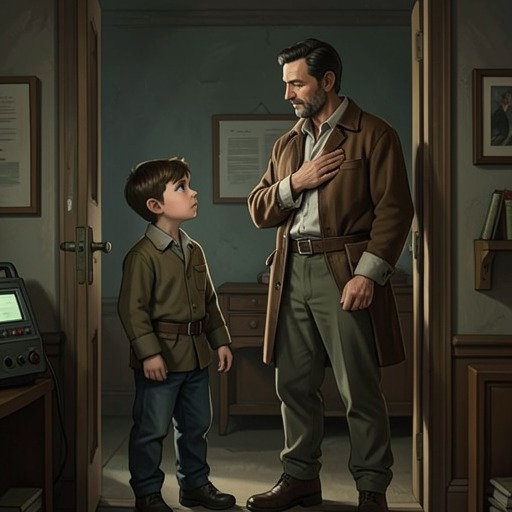
When Gulliver’s situation leaves Isobel uncertain and upset, Newton responds differently. He goes up three flights of stairs to be with Gulliver while Isobel opens cupboards, stares into them, and closes them again. The contrast is understated but telling: Isobel is at a loss for what to do, whereas Newton’s action is simple and directed. He does not solve the problem; he makes his way to the person who needs company.
The narrator’s own response to Isobel exposes a different kind of failure. He insists that Gulliver will have to find his own way and make his own mistakes, while Isobel wants to discover who inflicted violence on him. Newton’s quiet presence upstairs stands apart from the narrator’s appeal to distance and self-reliance. Later, as Isobel confronts Gulliver about not going to school, Newton’s eyes make the narrator feel guilty. He remains a silent witness to a conflict in which the narrator has withheld information and Isobel is demanding answers; the look registers the strain without turning the dog into another speaker in the quarrel.
The Hidden Narrator and the Night in the Garden
Newton’s most intimate encounter with the narrator occurs when the narrator is hiding behind juniper bushes in the garden, struggling for air and considering the possibility of returning home. Newton comes outside and sniffs among the plants and flowers until he senses someone there. The narrator expects him to bark and draw attention. Instead, Newton looks toward the hiding place and stays quiet; to the narrator, he seems to know exactly who is behind the bushes.
That silence has immediate importance: Newton does not expose the narrator. It also becomes an emotional turning point. The narrator recognizes Newton as a good dog and realizes that he loves him. In the surrounding passage, the narrator is choosing risk and pain over the safety of returning to his own people. Newton’s quiet companionship is part of the human attachment that makes that choice legible, though the dog is not shown understanding the larger conflict. His significance lies in the encounter itself: he offers no argument, yet the narrator experiences his presence as a reason not to leave.
A Witness to Death and Its Aftermath
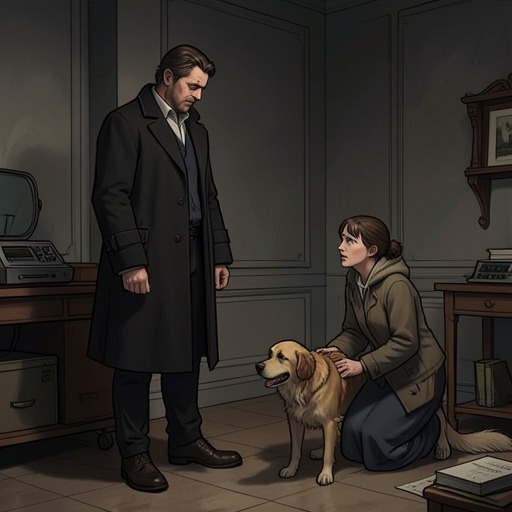
After dark, Newton is awake when the narrator and Gulliver drag a body outside. The body is that of a Vonnadorian, and the narrator thinks of the dead being as a monster; the corpse is expected to decompose rapidly in Earth’s oxygen-rich atmosphere. Newton had woken after Jonathan Roper’s technology melted away. Faced with the strange scene, he accepts what he sees without making a commotion. At one point he begins digging, apparently as if to help, though the narrator says that no grave is needed.
The physical difficulty of the task gives Newton’s ordinary behavior a particular setting: the narrator’s hand is burnt, Gulliver has to stop to be sick, and Isobel watches from outside without yet knowing everything. Newton is not presented as understanding the death or the identities involved. Instead, his uncomplicated response contrasts with the human burden of knowledge, concealment, and shock. He watches and acts according to what is immediately before him, while the people around him are caught in consequences they cannot easily explain.
Reunion, Pain, and the Return Home
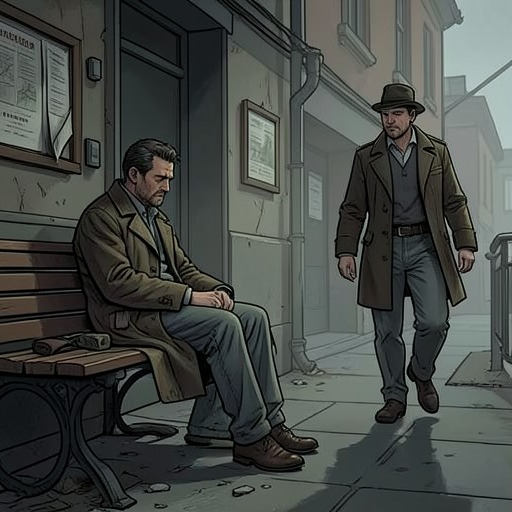
Much later, the narrator sits on a flaking green bench in the rain, having followed Winston Churchill to the park. A dog comes up and presses his nose against the narrator’s leg. The narrator recognizes him as Newton, an English Springer Spaniel, but pretends not to know him. Newton’s eyes remain on the narrator as he angles his nose toward his hip, where his arthritis has returned and he is in pain.
The narrator strokes Newton and instinctively holds a hand in place, but cannot heal him this time. The gesture recalls the narrator’s former ability to cure Newton’s arthritis, while the renewed pain makes that lost power tangible. What remains is touch: the narrator can comfort the dog, not remove the condition. Newton’s approach therefore brings together recognition, vulnerability, and the limits of the narrator’s changed life without requiring a spoken explanation between them.
Gulliver appears, and the reunion continues through familiar acts of companionship. Newton brings the narrator a stick, which the narrator throws. Later, Gulliver attaches the lead to Newton’s collar; the dog’s eyes convey a warmth the narrator describes as sad. Gulliver tells the narrator that he knows where they live, and the narrator acknowledges that he does. Newton’s lead and Gulliver’s invitation turn the encounter toward a possible return to the household. The dog is not merely a link to the narrator’s past: his continued presence makes a route back to Gulliver and Isobel tangible, while his pain reminds the narrator that care now means staying with what cannot simply be healed.
Narrative Significance
Newton’s role develops through repeated acts of attention rather than speech or dramatic choice. He seeks out Gulliver, stays quiet when he could reveal the narrator, watches the disposal of a body, and approaches the narrator again when they meet in the park. Across these scenes, his actions provide a counterpoint to the humans’ secrecy, anger, and uncertainty. The novel does not give him access to their explanations, and the account does not claim that he comprehends them; it shows instead how much companionship can be conveyed without shared language.
His encounters also measure the narrator’s transformation. In the garden, Newton’s silence and presence awaken the narrator’s recognition of love. At the park, Newton’s arthritis exposes the loss of the narrator’s healing ability, but their contact remains possible through a stroke, a thrown stick, and the renewed closeness of the family walk. Newton’s importance rests in that continuity: even as the narrator’s powers and circumstances change, the dog can still approach, be comforted, and accompany Gulliver home.