The Planets
The HumansThe Planets is the music through which the alien narrator begins to experience human listening as more than an object of detached judgment. A work he first finds primitive and faintly absurd calms Newton, affects the narrator physically, and eases his unease after Daniel Russell’s death.
First Encounter with Music
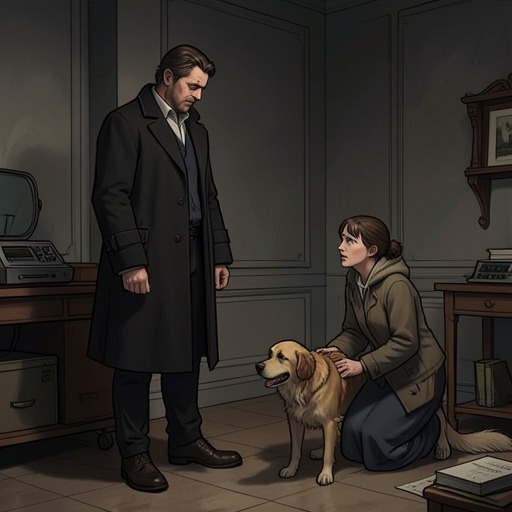
Before arriving on Earth, the narrator had no opinion of The Planets or of music more generally; he says he did not agree with the concept of music. Later, while spending hours with the dog Newton, he puts on the work by Gustav Holst. The shift from prior indifference to attentive listening makes the piece part of his gradual encounter with sensations and responses he cannot reduce to his earlier certainties.
A Human Solar System Set to Music
The narrator understands the work as being about the humans’ small solar system, and is surprised that it has an epic quality. Its seven movements are named for astrological characters: Mars is the Bringer of War, Jupiter the Bringer of Jollity, and Saturn the Bringer of Old Age. He finds the association between music and the planets amusing, particularly because the planets are dead. His response preserves the distance of an outsider even as the scale and force of the music unsettle his assumptions.
Calm and Bodily Response
The work soothes Newton. It also has an effect on the narrator, whom he describes as a kind of electrochemical response: electrical impulses travel from the neurons in his ears through his body, and he feels calm. He comes to understand the pleasure of listening as counting without consciously realizing it. The music’s effect is concrete rather than merely intellectual: it settles the strange unease that has lingered since he watched Daniel Russell die on his carpet. In this scene, The Planets becomes both a shared comfort between the narrator and Newton and an early instance of the narrator’s unfamiliar emotional life registering through the body.