The human condition
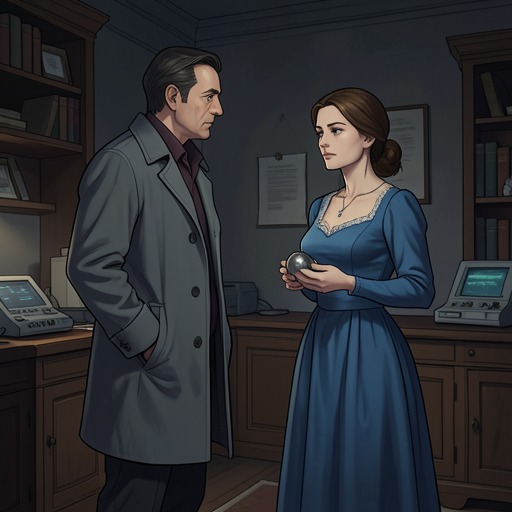
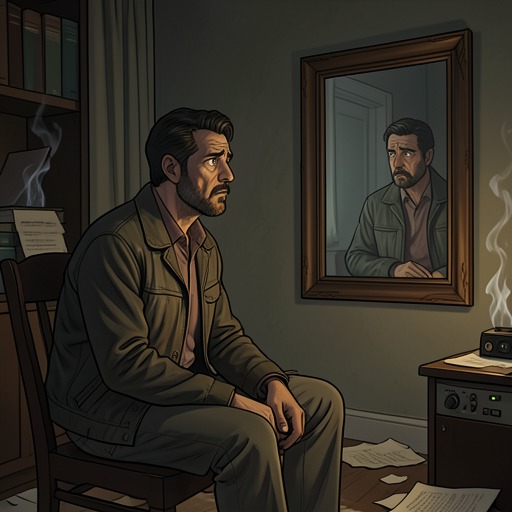
The HumansThe human condition in the novel is defined by a tension between immense vulnerability and persistent, often unremarkable, acts of living. Human beings remain mortal, capable of violence and self-deception, yet they do not spend every moment overwhelmed by the knowledge of death. To the Alien narrator, this apparent contradiction first looks irrational. As he observes human conduct and becomes involved in the Martin family’s distress, however, he finds that human complexity cannot be reduced to its worst impulses: care and connection are also central to the species’ life.
Mortality and the ordinary day
The Alien narrator measures human life against a cosmic scale. A lifespan averaging eighty Earth years—about thirty thousand days—contains a sequence of ordinary possibilities: friendships, meals, marriage or its absence, children or none, wine, sex, illness, regret, and death. From the narrator’s distant perspective, the smallness of this sequence is almost mathematically absolute: a brief interval ending in nothing, confined to one planet. The inventory makes mortality concrete not through an exceptional tragedy but through the commonplace events that fill a finite life.
That calculation does not describe how humans experience their days at ground level. The narrator recognizes that they do not remain in a state of constant terror merely because death has not been solved. They wash and carry on with other activities. The contrast matters: an abstract awareness of life’s limit does not dictate every moment of human behavior. Daily routine is not proof that people have escaped mortality; it is the form their lives take while mortality remains unresolved.
This gap between cosmic assessment and ordinary experience unsettles the narrator’s initial logic. He can call a human lifetime trivial when considered against the vastness of space, but that description does not account for how a finite life is lived from within. The novel places the scale of the universe beside the scale of a meal, a friendship, or a family memory, and refuses to let either perspective wholly cancel the other.
Violence, selfishness, and civilization
The narrator’s account of humanity does not soften its violence. At a football match, a companion relates selfishness to evolutionary inheritance and contrasts the ordinary selfish gene with the violence of an ancient human ancestor. The narrator watches the match and wonders whether its simple pleasure might itself belong to the purpose of human existence. He admits that his praise afterward is a lie, but the scene still places casual human enjoyment beside his attempt to interpret the species as a whole.
Another, more severe account of humanity emphasizes the mismatch between declared values and actual conduct. People may express support for peace while glorifying war, condemn intimate violence while honoring distant killing, or feel virtuous about recycling while continuing environmentally damaging routines. The same critique points to divisions of belief, the pursuit of money despite knowing that it cannot guarantee happiness, and a readiness to celebrate mediocrity or another person’s misfortune. In this view, civilization has not removed violence; it has changed its setting and appearance.
The image of a world that has turned inward, consuming its own hands, gives this diagnosis a collective force. Humans have dominated and reshaped their world, but their power has not brought matching self-understanding. Yet the critique remains one perspective within the novel, not a final definition of humanity. The Alien narrator argues that human beings are more often concerned for one another than violent, and that goodness outweighs the species’ cruelty. The unresolved opposition between these judgments is part of the concept: human beings can sustain care and destructive contradiction within the same civilization.
Family, vulnerability, and connection
The human condition becomes personal through Gulliver’s crisis. The Alien narrator first encounters him walking alone along a street instead of being at school, trying to hide behind his hair. Later, seeing Gulliver on the edge of a roof, the narrator confronts a question that his earlier reasoning would have treated as simple: whether he can end another person’s life. He approaches despite the difficulty of moving over the wet slate in a human body. The change is not an abstract declaration of sympathy; it appears in his decision to move toward someone whose death would, by his former logic, solve a problem.
Gulliver recalls swimming with the narrator when he was eight and being taught dominoes during a night in France. The memory asks for recognition between them. The narrator cannot genuinely supply the recognition Gulliver seeks, but claims to remember. That imperfect response exposes how a relationship can depend on shared memories even when one person’s experience of the past is not the other’s. The scene also brings the larger question of human life down to its particular attachments: a childhood holiday, a game, and the wish to be remembered by a parent.
When Gulliver later explains the pressure of being Andrew Martin’s son, he describes how teachers read his father’s books and regard him as a diminished reflection of Andrew Martin. His account also links that pressure to the family’s history: his expulsion from boarding school, his parents’ apparent loss of hope in him, his father’s absence, and the tension between his parents. He believes Andrew and his mother should have divorced years earlier. The details show how the condition of one person is shaped by other people’s expectations and choices, not only by private thought.
Gulliver also tells the narrator that before going onto the roof he had taken twenty-eight diazepam tablets. The disclosure makes the crisis more concrete, while the ensuing conversation does not resolve it into a single explanation. Later, Gulliver acknowledges that he hurt someone; the narrator reflects that human violence lies close beneath the surface people work to conceal. He also sees that Gulliver needs to bring into waking life what has emerged in sleep. The novel treats vulnerability, family estrangement, and violence as connected pressures, without making any one of them a complete account of Gulliver.
Knowledge, denial, and change
The novel extends its account of human difficulty from relationships to knowledge itself. Close study of fields such as physics, biology, neuroscience, mathematics, or love, the narrator observes, can lead not to reassuring certainty but to irrationality and upheaval. What people believe may repeatedly be disproved. This instability is not limited to scientific history: each individual may reach a crisis in which a previously trusted belief proves wrong.
The decisive difference is what follows that recognition. Many people bury what they have learned and proceed as though it were not true; the narrator presents this denial as one source of the weight that accumulates with age. Change, by contrast, demands the courage—or carries the risk—of allowing an old understanding to break. The human condition therefore includes not merely ignorance, but the struggle over what to do when knowledge disrupts identity and habit.
The Alien narrator’s own changing judgment gives that struggle a narrative shape. He admits that humans are more complicated than he first thought, that they can be violent but more often care for one another, and that he has become confused as some of his former assumptions stop making sense. The novel does not resolve humanity into either rational progress or irrational failure. It makes the capacity to be unsettled, to attend to another person, and potentially to change part of what being human means.