
The City as a Social Machine
The Hunchback of Notre DameThis supporting thread follows how the geography and institutions of medieval Paris channel characters toward encounter, conflict, and punishment.
increasing Bearing strength in each event
 decreasing
Bearing strength in each eventdecreasingThree Parisian Worlds
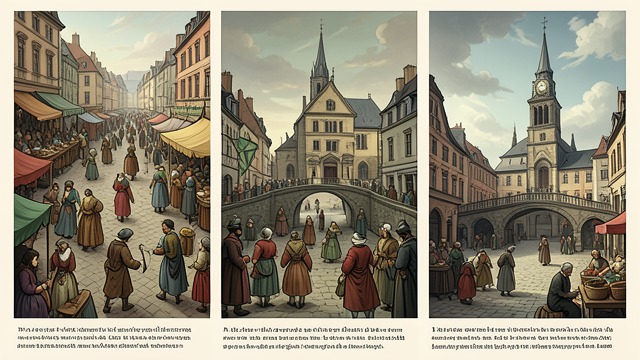
City, Town, University
Distinct social zones
The City, Town, and University each have different institutions, populations, and jurisdictions. Bridges connect them while exposing their divisions.
A shared pressure system
People, commerce, religion, and justice cross these boundaries constantly. The city’s structure creates both opportunity and conflict.
The Crowd at the Palace
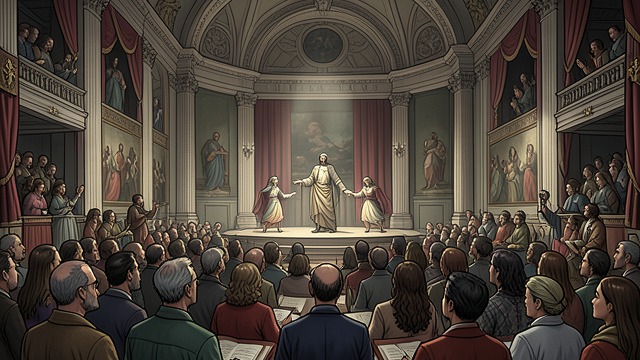
A Gathering Without Control
The Grand Hall fills
Citizens, scholars, officials, and visitors converge at the Palais de Justice for the mystery play and the Feast of Fools. The crowd becomes a force that no organizer fully controls.
Attention shifts rapidly
The people abandon Gringoire’s work for new spectacles. Public opinion is volatile, collective, and easily redirected.
The Court of Miracles
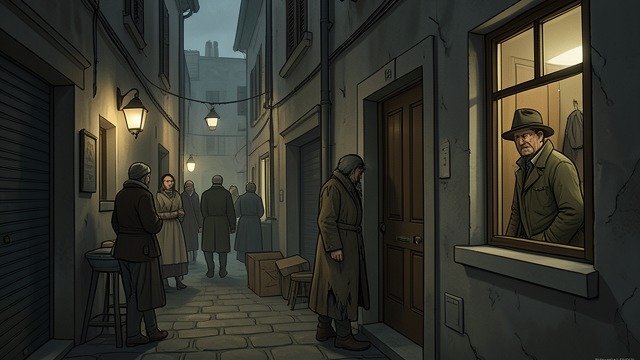
A Hidden Community
Day and night identities
Gringoire enters a quarter where beggars and performers gather and where assumed infirmities are discarded after dark. The settlement operates by its own rules.
Another order of power
Clopin judges intruders and offers Gringoire survival on terms of membership. The city’s excluded people create a society that mirrors, mocks, and opposes official authority.
Streets to the Scaffold
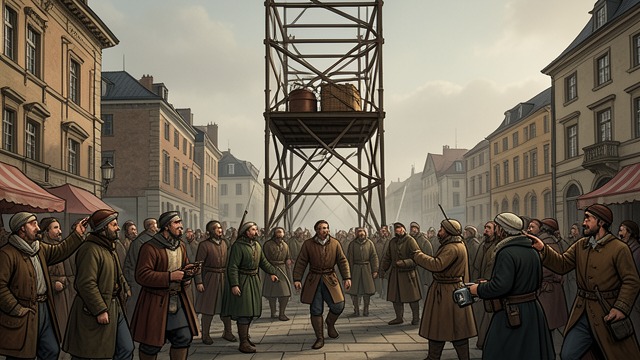
Public Space as Punishment
Justice on display
Pillories, gibbets, processions, and crowds make punishment part of ordinary urban life. Esmeralda’s case moves through the same spaces where citizens gather for entertainment.
The city participates
The public watches, comments, and often mocks. Paris is not a neutral backdrop; its streets help make coercion visible and ordinary.
A City Awake
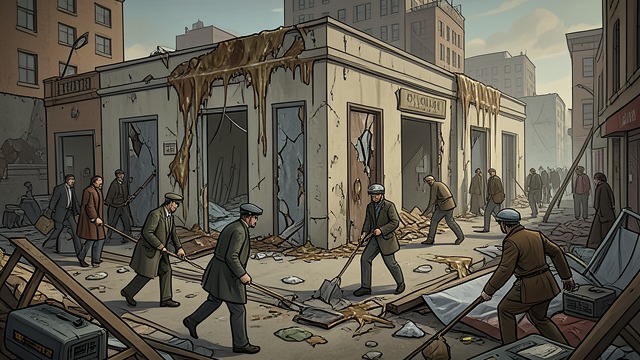
Morning After Violence
Signs of disorder
The city awakens to damaged doors, melted lead, and the aftermath of a failed assault. The visible evidence of conflict survives longer than the explanations people give for it.
Ordinary life resumes
Officials clear the square and the city returns to routine. The rapid restoration of appearances contrasts with the lives destroyed in the night.
The narrator’s portrait of fifteenth-century Paris
January 6, 1482
Night of January 6, 1482
Spring 1482, before Esmeralda’s execution
Dawn after the Notre-Dame siege
