
The Bellringer’s Soundless World
The Hunchback of Notre DameThis supporting thread traces how Quasimodo’s deafness reshapes communication, deepens isolation, and becomes both a vulnerability and a source of distinctive perception.
increasing Bearing strength in each event
 decreasing
Bearing strength in each eventdecreasingThe Bells Take His Hearing
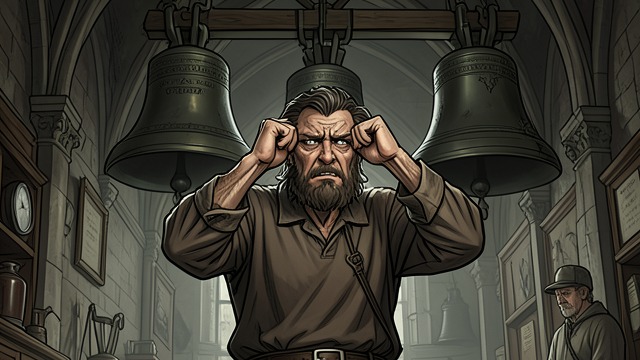
A Costly Calling
Daily exposure
Quasimodo rings Notre-Dame’s bells with extraordinary energy. Their immense sound gradually damages his hearing.
The door closes
He responds by choosing silence rather than inviting ridicule. His disability narrows his access to other people and strengthens his dependence on the cathedral.
A Language of Signs
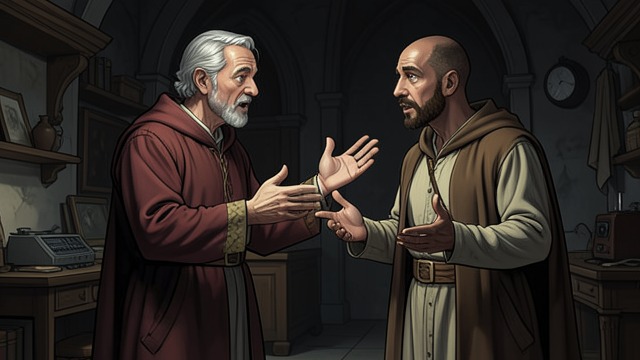
Communication by Gesture
Claude as interpreter
Claude Frollo teaches Quasimodo to communicate through signs. The archdeacon becomes his primary human connection.
Dependence and control
Their private language enables closeness but also reinforces Claude’s authority. Quasimodo’s ability to communicate remains concentrated in one relationship.
A Courtroom Mishearing
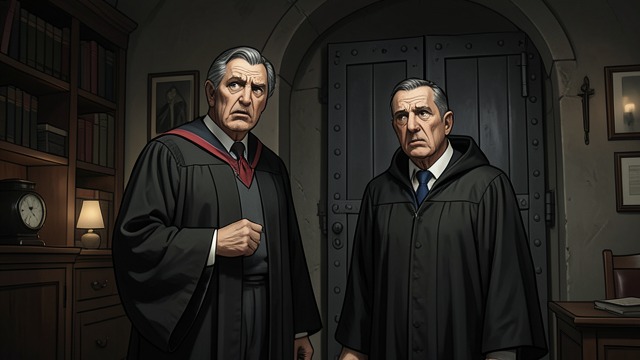
Silence Misread as Defiance
Questions without access
At the Châtelet, Quasimodo cannot hear the judge, and the judge cannot hear him. Each believes the other has answered, making the examination absurd.
The cost of miscommunication
The court treats confusion as contempt and extends the punishment. Deafness becomes a vulnerability exploited by procedure rather than accommodated by it.
A Silent Defense
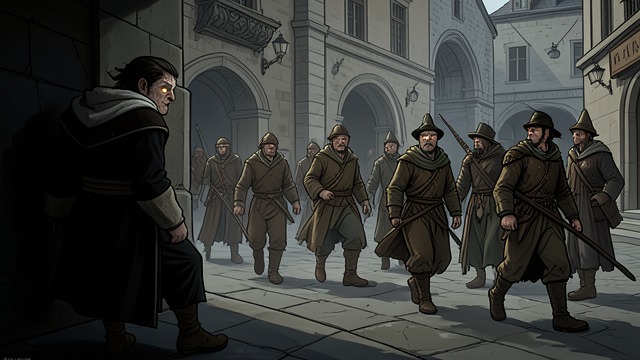
Sight Replaces Hearing
An unseen approach
Quasimodo observes the outcasts gathering in the square but cannot hear their demands or the battle cries. He must infer danger from movement and light.
Action without explanation
He defends the cathedral through quick observation and physical skill. The same deafness that isolates him also makes the silent assault appear ghostly and unreal.
The Tear He Cannot Hear
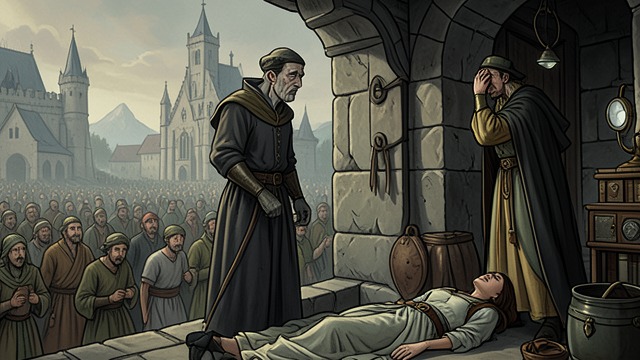
Grief in Silence
The execution witnessed
Quasimodo sees Esmeralda die from the tower but hears neither the crowd nor the sounds of the gallows. His perception is visual and utterly solitary.
A wordless aftermath
He pushes Claude Frollo to his death and remains with the image of Esmeralda. His final grief finds no spoken language.
Around age fourteen
During his adult life before 1482
January 7, 1482
The night of the Notre-Dame siege
The final morning at Notre-Dame
