Louis XI’s suppression of the Notre-Dame revolt
The Hunchback of Notre DameLouis XI’s suppression of the Notre-Dame revolt turns a struggle over sanctuary into a demonstration of royal force. The king sends troops against the Court of Miracles outcasts who have besieged Notre-Dame Cathedral to take Esmeralda from its protection; yet his orders also call for her execution. The resulting battle breaks the siege, but its apparent victory offers Quasimodo no assurance that the person he has defended is safe.
Causes and Legal Background
The revolt unfolds in a Paris where authority is divided among overlapping jurisdictions. The City, the University, and the Town each have distinct privileges and governing institutions: the island, with Notre-Dame, belongs to the bishop; the left bank is associated with the Rector; and the right bank with the provost of the merchants. Above these sits the provost of Paris, a royal rather than municipal officer. This arrangement makes disputes over judgment and punishment more than local quarrels: several authorities can claim a role, and their jurisdictions do not neatly coincide.
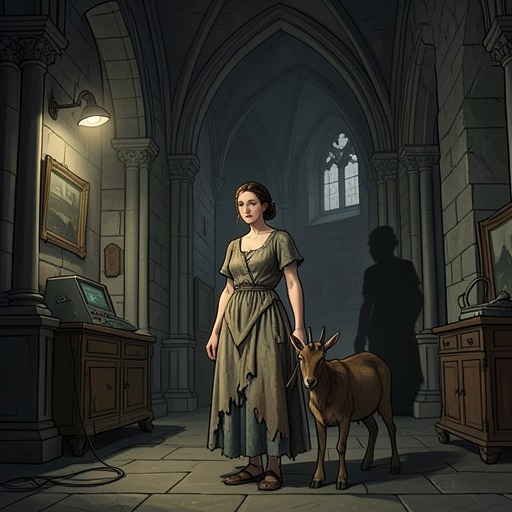
Sanctuary adds another boundary to that fragmented order. Churches and other recognized refuges protect those who enter them, but the protection depends on remaining within the asylum. The narrative describes sanctuary as both a shield from ordinary punishment and a confinement, since the condemned may be unable to leave without falling back into the reach of the courts. In this case, Esmeralda has already been sentenced to death, and the authorities’ announced punishment includes execution at the Place de Grève. Her refuge in Notre-Dame therefore places church protection directly against the sentence imposed by the court.
The attackers are not presented as a crowd without a stated grievance. They are identified as vassals of the bailiff, whom they have long complained against and refuse to recognize as either judge or officer responsible for the highways. When the king first hears that the gathering is directed against the bailiff, he misunderstands its immediate significance. Once told that the crowd is trying to remove a condemned woman from Notre-Dame, he interprets the siege as a challenge to the church and, through the church, to himself.
The King’s Decision and Orders
Olivier Le Daim reports that Esmeralda, condemned by the court, has taken refuge in Notre-Dame and that the populace is trying to seize her by force. Louis XI responds by identifying the church’s protection with his own authority. His anger replaces his earlier amusement: he sees the attack not merely as disorder around the bailiff but as an assault on the cathedral and the crown. That shift determines the scale of his response.
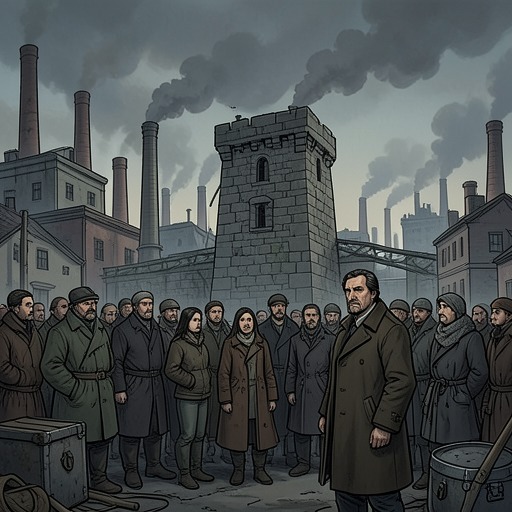
The king orders Tristan l’Hermite to assemble a force from several sources. At the Bastille are the fifty lances of the Vicomte de Gif, described as amounting to three hundred horse. Louis also directs Tristan to take Captain Phoebus de Châteaupers’s company of unattached archers, the men of the provostship of the marshals, and forty archers of the dauphin’s new guard at the Hôtel Saint-Pol. The command is not limited to dispersing the crowd: Louis demands that the rebels be exterminated, with survivors reserved for the gallows at Montfaucon.
His decision concerning Esmeralda exposes the limit of the sanctuary he claims to defend. Asked what should be done with her, Louis first considers the matter, then orders that the people be punished and Esmeralda hanged. In this way the king opposes the crowd’s attempt to carry out the sentence by force while endorsing the sentence itself. The distinction is political and jurisdictional, not a reprieve for the woman under the church’s protection.
Battle at the Cathedral
As the royal force reaches the square, Quasimodo is still moving along the gallery, trying to protect Esmeralda. He cannot hear the arrival of the cavalry, but he sees the torches, weapons, and mounted men, and recognizes Phoebus at their head. The sudden intervention turns the attackers’ attention toward the new force. Its arrival gives Quasimodo enough renewed strength to drive back assailants already climbing into the gallery.
The outcasts resist, and the fight spreads around the cathedral. Royal troops catch them from different directions, including by the Rue Saint-Pierre-aux-Boeufs and the Rue du Parvis, while the outcasts remain pressed against the building they had come to attack. The narration presents them as both besiegers and besieged: they attack Notre-Dame as Quasimodo defends it, but now the king’s forces surround them. The conflict is not a controlled arrest. The royal cavalry gives no quarter, while the poorly armed crowd fights back; people watching from nearby buildings also join the fighting, and gunfire comes from the windows.
The outcasts eventually break and flee. The narrative attributes their defeat to the surprise of the attack, exhaustion, inferior weapons, fire from the surrounding buildings, and the force of the royal assault. The square is left strewn with the dead. This ends the siege as an organized assault, but it does not resolve the fate of the woman whose sanctuary occasioned Louis’s intervention.
Aftermath and Significance
Quasimodo sees the rout and, believing the danger has passed, falls to his knees and raises his hands in gratitude. He hurries back to the cell he has so fiercely defended, with one purpose: to reach Esmeralda. The cell is empty. The scene thus separates the military outcome from the personal one. The cathedral has not been taken, and the crowd has been driven off, but Quasimodo’s defense has not secured the person he meant to save.
The episode makes royal authority appear both protective and coercive. Louis’s troops defend Notre-Dame’s sanctuary from seizure by an armed crowd, but Louis himself orders the execution of the woman sheltered there. The king’s appeal to the church’s protection therefore does not settle the conflict between ecclesiastical asylum, judicial sentence, and royal power; it makes that conflict visible. The defeat of the attackers restores the king’s control of the square, while the empty cell leaves the central human consequence unresolved.