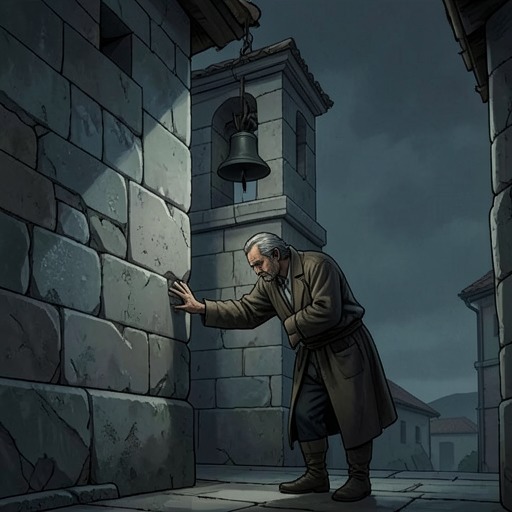
Quasimodo loses his hearing
The Hunchback of Notre DameQuasimodo loses his hearing at fourteen, after becoming the bellringer of Notre-Dame Cathedral. The damage from the bells permanently deafens him, turning an already difficult life into one of deeper isolation. The episode also shapes how he communicates: although Claude Frollo had patiently taught him to speak, Quasimodo responds to his deafness by choosing silence rather than risking mockery.
Circumstances of the Loss
Quasimodo had been born one-eyed, hunchbacked, and lame. As a foundling, he was taught to speak by Claude Frollo, but only with great difficulty and patience. At fourteen he became the bellringer of Notre-Dame Cathedral. The bells then broke his eardrums, adding deafness to his existing impairments; the account presents this as a permanent loss, not a passing injury.
Silence and Communication
The narrative connects deafness to Quasimodo’s decision to stop speaking. It describes his hearing as the only gate nature had left open to him, and its sudden closure as cutting off his remaining ray of joy and light. Deafness also made him, in the narrator’s account, to some extent dumb. Yet his silence is not described as wholly involuntary: once he understood that he was deaf, he resolved not to speak for fear that others would laugh at him, and broke that silence only when alone.
That choice reversed Claude Frollo’s painstaking effort to teach him speech. When necessity did compel Quasimodo to talk, his tongue was torpid and awkward, compared by the narrator to a door whose hinges had grown rusty. The episode thus marks both a bodily change and a change in how Quasimodo allows himself to meet other people: he withdraws from speech to avoid becoming an object of ridicule.
Lasting Effects in the Narrative
The narrator describes Quasimodo’s misery after the loss as complete, and portrays his soul as falling into profound night. The passage extends the consequences beyond communication: it depicts his mind as shaped by the “knotted envelope” of his body and by a life of isolation, with impressions and ideas distorted before they can be understood. These are the narrative’s characterizing claims, not a separate account of Quasimodo’s later actions. Within this portrait, the bells that make him the cathedral’s bellringer also inflict the injury that closes off his remaining avenue of connection.