The little embroidered shoe
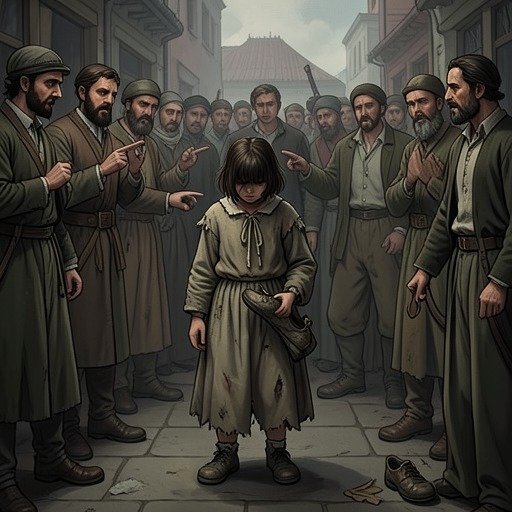
The Hunchback of Notre DameThe little embroidered shoe is at once a keepsake, a substitute for an absent child, and the focus of a grief that has not diminished with time. For the recluse at the Tour Roland Hermitage, its smallness makes the lost infant imaginable; after the child’s disappearance, that same power turns the shoe into a continuing source of anguish. The object does not change, but the life and meaning the mother reads into it have been transformed by loss.
Design and Original Meaning
The shoe is described as a special occasion shoe, intended for festivals, Sundays, or baptism. It is embroidered all the way to the sole and so delicate that the infant has not yet taken a step in it. Its grace and impracticality are central to its meaning: it preserves an image of childhood before the child has begun to move through the world independently. The mother can look at the shoe and imagine not merely a possession, but the small person who might have worn it.
That imagined child is rendered through ordinary scenes of care and play. In winter, the mother pictures the infant crawling across a carpet and laboriously climbing onto an ottoman, with the danger of the fire calling forth a parent’s watchfulness. In summer, she imagines the child exploring a yard or garden, pulling grass from between paving stones, looking without fear at large animals, and playing among shells and flowers. The scenes include small disruptions—the gardener finding sand in the flower beds and earth in the paths—which make the imagined life feel domestic and particular. The shoe supplies a point of departure for a whole world of childhood that the mother can no longer witness.
From Keepsake to Grief
The child’s loss reverses the shoe’s emotional function. The memories it once summoned as consolations become painful because they sharpen the contrast between the imagined living child and the absent one. The narrative presents this reversal not as a change in the object but as a change in the mother’s relation to it: the same tender associations that once gave the shoe its charm now repeatedly expose what is missing. Its smallness no longer offers comfort by itself; it makes the missing foot and child more palpable to her.
The mother has kept the shoe for fifteen years, and her attention remains fixed upon it. On a May morning, the sounds of wheels, horses, and iron in the Place de Grève briefly rouse her. She knots her hair over her ears, then returns to her kneeling contemplation of the shoe. The gesture shows how completely this object governs her attention: even the noise of the world outside the hermitage is something to shut out so that she can resume the private act of remembrance. The cave has heard her prayers, complaints, and sobs addressed to heaven over the keepsake; the shoe has become the focus of a long, repeated practice of mourning.
Memory, Faith, and the Absent Child
In her lament, the mother speaks of the child as stolen and pleads for her return, even for only a brief moment. She imagines the child grown older after all these years, yet the shoe preserves the infant whose tiny foot it was meant to cover. The contrast between the unchanged keepsake and the passage of fifteen years gives the object a double role: it keeps the child close in memory while making the time that has passed impossible to ignore.
The shoe also gathers the mother’s religious hope and anger. She recalls that love for her child had made her devout and that the child’s smile had opened her sense of heaven. Now she challenges the justice of a world in which a mother must endure this loss, while continuing to pray for the child’s return. Her plea that she would accept damnation in exchange for even a minute with her daughter makes the depth of her attachment clear without resolving her conflict with faith. The shoe remains before her as the material center of that conflict: it is tangible evidence of the child she remembers, but it cannot restore the child herself.
Narrative Function and Significance
The narrator contrasts the delicacy of the embroidered shoe with the scale of the grief invested in it. It is a small, inanimate thing, but its presence organizes the mother’s memories, devotional habits, and daily attention. Its significance lies not in any new use or alteration, but in the way it carries associations that the mother cannot set aside. The object holds a vivid imagined childhood and, at the same time, marks the absence that makes those images unbearable.
The mother throws herself upon the shoe, and the narrative stresses that her grief feels as immediate as it did at the beginning. Her mourning clothes may grow faded and threadbare, but the passage of years has not softened the pain. This contrast gives the shoe its final force in the scene: it is not a relic that has settled into the past, but a continuing point of contact with a loss that remains present. The account establishes the shoe as both consolation and torment, without suggesting that it can answer the mother’s longing or bring her child back.