Tesserae
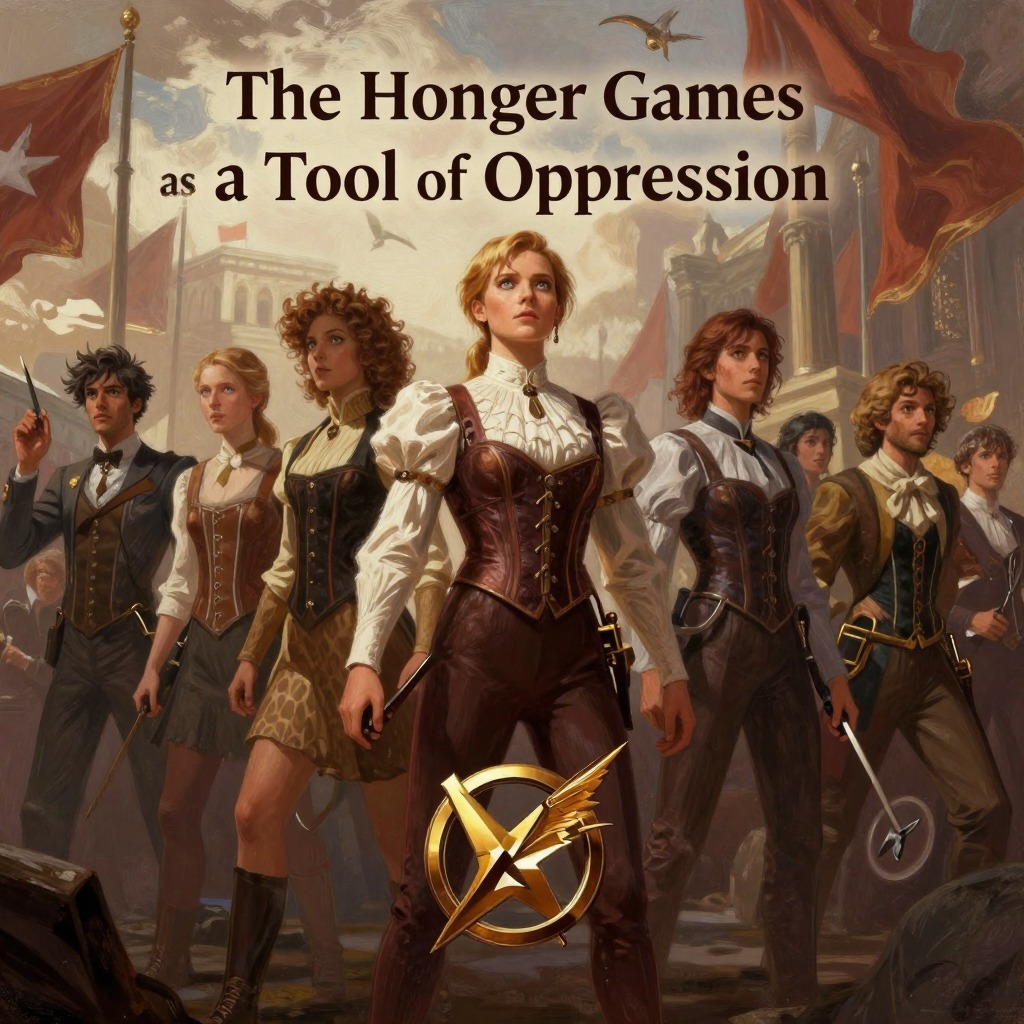
The Hunger GamesTesserae is a voluntary system in Panem that allows families in need to exchange additional entries in the reaping for a year's supply of grain and oil, institutionalizing hunger as a tool of control and division. By forcing the poorest citizens to multiply their chances of being selected for the Hunger Games in exchange for basic sustenance, the Capitol ensures that starvation and fear keep the districts compliant while pitting the desperate against one another.
Definition and Mechanism
Tesserae is a program that permits a citizen between the ages of twelve and eighteen to receive a meager year's supply of grain and oil for one person in exchange for having their name entered into the reaping pool an additional time. This can be done for each family member as well. The entries are cumulative: a child who takes tesserae at age twelve will have their name entered four times that year—once because they are eligible, and three times for the grain and oil for themselves, their mother, and their younger sister. By age sixteen, Katniss Everdeen, who has taken tesserae every year since her father's death, has her name in the reaping twenty times. Gale Hawthorne, at eighteen, has been feeding a family of five for seven years and has his name entered forty-two times. In contrast, a merchant-class girl like Madge Undersee, who has never needed tesserae, has only her single mandatory entry each year, making her odds of being selected dramatically lower.
Social and Political Consequences
The tesserae system creates a deep and deliberate rift within each district. The starving workers of the Seam, who must multiply their entries to survive, resent those who can generally count on supper and never sign up for tesserae. Gale Hawthorne articulates this bitterness, recognizing that the tesserae are "just another tool to cause misery in our district" and "a way to plant hatred between the starving workers of the Seam and those who can generally count on supper and thereby ensure we will never trust one another." The Capitol benefits from this division, as it prevents the districts from uniting against their common oppressor. The reaping itself is a good opportunity for the Capitol to keep tabs on the population, as twelve- through eighteen-year-olds are herded into roped areas marked off by ages and must sign in.
The Hunger Games as Punishment and Reminder
The Hunger Games themselves are framed as punishment for the uprising known as the Dark Days, when the districts rebelled against the Capitol. Twelve districts were defeated, and the thirteenth was obliterated. The Treaty of Treason gave the new laws to guarantee peace and, as a yearly reminder that the Dark Days must never be repeated, it gave the Hunger Games. The rules are simple: each of the twelve districts must provide one girl and one boy, called tributes, to participate. The twenty-four tributes are imprisoned in a vast outdoor arena and must fight to the death until only one remains. The Capitol requires the districts to treat the Hunger Games as a festivity, a sporting event pitting every district against the others. The last tribute alive receives a life of ease back home, and their district is showered with prizes, largely consisting of food. All year, the Capitol will show the winning district gifts of grain and oil and even delicacies like sugar while the rest battle starvation. The real message is clear: "Look how we take your children and sacrifice them and there's nothing you can do. If you lift a finger, we will destroy every last one of you. Just as we did in District Thirteen."
Thematic Significance
The tesserae system embodies the Capitol's strategy of using hunger as a weapon of control. It forces the poor to gamble with their lives for the most basic necessities, ensuring that the districts remain fragmented and that the threat of starvation is ever-present. Katniss's decision to take tesserae for her family after her father's death is a direct consequence of the Capitol's economic oppression, and her eventual defiance—culminating in the berry incident—is a rejection of the entire system that uses hunger and fear to maintain power. The tesserae are not merely a plot device but a structural element of Panem's tyranny, illustrating how the Capitol turns survival itself into a tool of subjugation.