
Trust Under Counterintelligence Pressure
The IPCRESS FileAs every service monitors the others, suspicion becomes a practical weapon that redirects friendships and investigations.
increasing Bearing strength in each event
 decreasing
Bearing strength in each eventdecreasingA Maze of Agencies
A Maze of Agencies
Rival Institutions
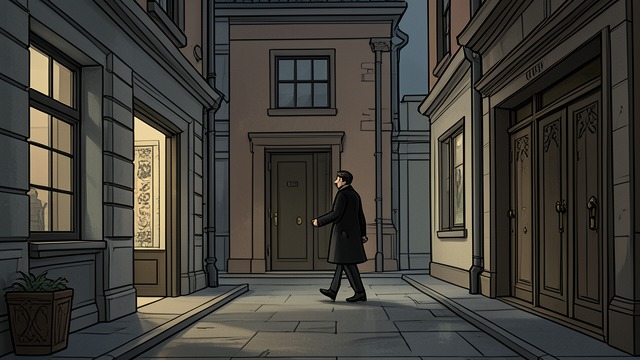
The narrator moves between military intelligence, WOOC(P), the Home Office, and police contacts, each guarding its own files and authority. Cooperation is limited by rivalry and classification.
Compartmented Knowledge
Even senior officials know only fragments of some operations. The narrator learns that asking the wrong person may be as dangerous as asking no one.
The institutional conflict makes uncertainty a structural feature of the investigation rather than a temporary obstacle.
A Police Channel
A Police Channel
Security Meets Law
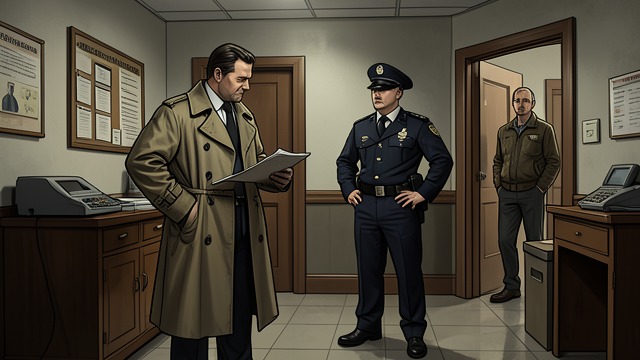
The narrator uses Keightley and the Criminal Records Office to move quickly after Housemartin is arrested. He demands secrecy, armed support, and control over how police information is shared.
Friction of Authority
The operation depends on ordinary officers while treating their normal procedures as potential leaks. The narrator’s authority is asserted through urgency rather than a transparent chain of command.
The scene shows how security work borrows public institutions while remaining anxious about their independence.
The American Suspicion
The American Suspicion
A Convenient Suspect
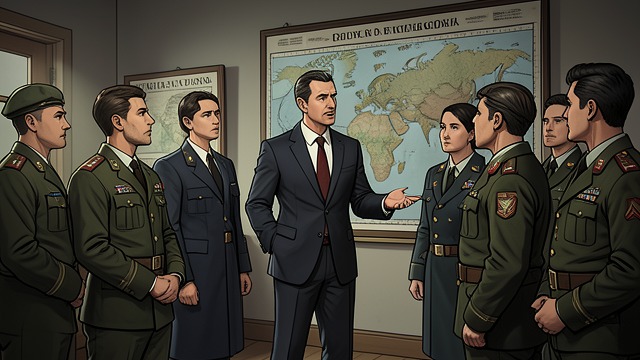
The Americans believe that the narrator may have supplied information to the KGB and interpret his actions through that suspicion. His British colleagues cannot easily rebut the accusation without revealing their own secrets.
A Divided Command
The narrator is interrogated by officials who do not share a single view of what happened. The uncertainty allows an engineered frame-up to appear credible across institutional boundaries.
Distrust between allies creates the conditions in which a false account can travel farther than the truth.
The Murray Reversal

The Murray Reversal
A Familiar Face Changes Role
The narrator finds Murray near Dalby and initially assumes the statistician has joined the conspirators. Murray then identifies himself as a senior intelligence officer and orders the narrator to leave.
Trust Without Certainty
Before the narrator can understand the explanation, Waterman strikes Murray. The scene shows that even a correct warning may arrive too late to prevent another mistake.
The reversal undermines easy judgments about who is acting under whose authority.
A Coordinated Arrests Plan
A Coordinated Arrests Plan
Shared Action at Last
Ross organizes arrests and separates detainees as the evidence converges. The departments that had withheld information now cooperate because the threat can no longer be managed as a private rivalry.
Cooperation Without Trust
The narrator benefits from the coordinated response but remains alert to the limits of official explanations. The network is exposed, yet the Henry file and other unresolved questions remain outside settled authority.
The conflict shifts from competing suspicions to a temporary alliance whose success depends on continued scrutiny.
Early in the novel, during the narrator’s transfer
During the response to Housemartin’s arrest
After the Tokwe explosion
After the narrator returns to Dalby’s farmhouse
Near the ending, after Ross receives Murray’s report
