
The 4:22 Time Motif
The IPCRESS FileThe repeated broken time on the narrator’s watch expresses the collapse of ordinary chronology during his detention and recovery.
increasing Bearing strength in each event
 decreasing
Bearing strength in each eventdecreasingThe Broken Watch
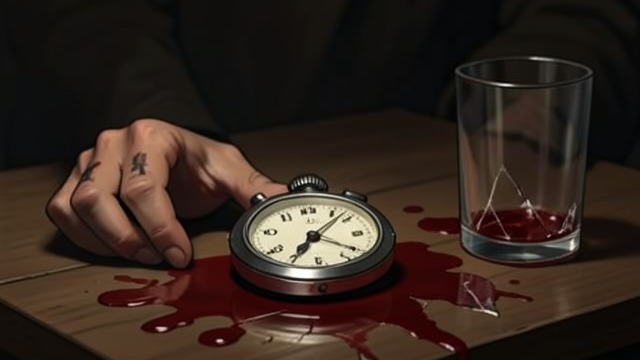
The Broken Watch
A Stopped Measure
The narrator’s watch is smashed during the beating after his arrest and stops at 4:22. Its fixed hands provide no reliable measure of how long the interrogation continues.
Time Taken Away
The damaged watch becomes a small physical record of violence. The narrator can see a time but cannot use it to restore order or predict what comes next.
The object turns a familiar tool into a symbol of the loss of control over personal time.
A Room Without Morning
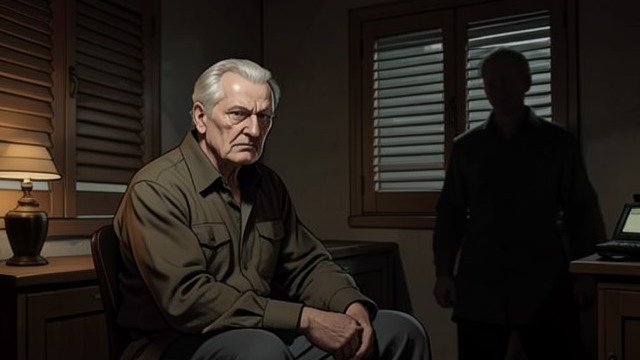
A Room Without Morning
Light and Confusion
The narrator is kept under artificial conditions, with shutters and lights obscuring the natural passage of day. His sense of duration weakens alongside his body.
Repetition as Pressure
The same stopped time and repetitive routines return without offering a genuine calendar. The detention system makes uncertainty itself part of the punishment.
The setting shows how control over time can erode the distinctions between waiting, interrogation, and recovery.
The Watched Clock

The Watched Clock
A Temporary Reference
The narrator notices clocks and meal times in the Brigadier’s office, briefly encountering an environment more orderly than the cell. Even there, access to time depends on the interrogator’s choices.
Order as Tactic
Food, conversation, and measured attention contrast with the earlier beating, but they remain part of a controlled interview. The clock offers structure without granting freedom.
The contrast makes humane treatment meaningful while keeping its power imbalance visible.
The Calendar of Captivity
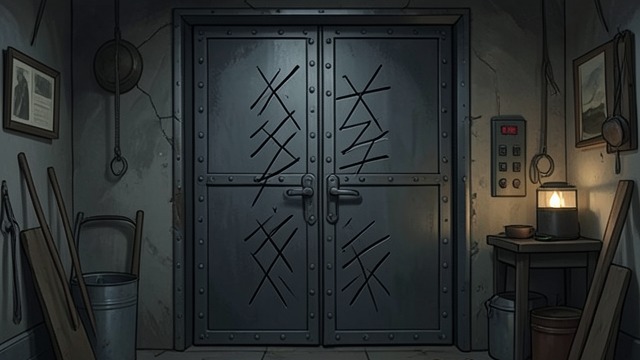
The Calendar of Captivity
Days Cut into Wood
The narrator secretly scratches marks into a door to count the days in his cell. The marks preserve a personal chronology against the captors’ shifting rules.
Time as Resistance
Counting does not make the confinement bearable, but it helps the narrator keep an independent record. The calendar becomes a small act of mental ownership.
A prisoner’s private measure challenges the artificial time imposed by the conditioning system.
Time Returns Imperfectly

Time Returns Imperfectly
Ordinary Hours Resume
After escaping, the narrator encounters familiar streets, appointments, and routines. He can again use external clocks, but his body and memory remain shaped by captivity.
A Memory That Persists
The fixed 4:22 remains attached to his experience of interrogation and confusion. The clock does not restart simply because the narrator has regained physical freedom.
The motif closes as a reminder that survival restores movement without erasing the psychological duration of captivity.
At the beginning of the Tokwe detention
During the first days in the detention room
During the narrator’s interrogation with the Brigadier
During the later Wood Green confinement
After the narrator escapes and reaches London
