
The Narrator’s Escape Craft
The IPCRESS FileThe narrator survives by combining observation, improvisation, and small deceptions, though each escape leaves him exposed to new uncertainty.
increasing Bearing strength in each event
 decreasing
Bearing strength in each eventdecreasingNoticing the Details

Noticing the Details
Observation as Skill
The narrator studies clothing, mannerisms, entrances, and the movement of people through the city. His attention to mundane detail gives him an advantage over those who rely on official authority alone.
Instinct and Error
The same confidence sometimes leads him to act too soon, as when he disrupts the planned sequence around Raven. His instincts are useful but not infallible.
The story frames improvisation as a strength that must be balanced by patience.
Escaping the Test Island

Escaping the Test Island
A Warning and a Weapon
Barney gives the narrator a gun and urges him to leave before suspicion becomes irreversible. The narrator must decide whether to follow the warning without knowing how much of the story is true.
The Road Is Closed
The test-night explosion and the guard’s death prevent a straightforward escape. The narrator is arrested before he can convert Barney’s warning into safety.
Improvisation is not enough when the opponent controls the roads, records, and custody.
Escaping the Cell

Escaping the Cell
A Guard’s Opening
The narrator uses a moment of access to overpower an elderly guard and take his clothing. He then uses a crude electrical trick to create confusion and get through a window.
Strength Replaced by Timing
Weak and injured, he cannot fight his way out. The escape succeeds because he studies the building’s routines and acts before exhaustion erases his ability to plan.
The episode shows intelligence as practical attention under extreme physical constraint.
The Story of a Brother-in-Law
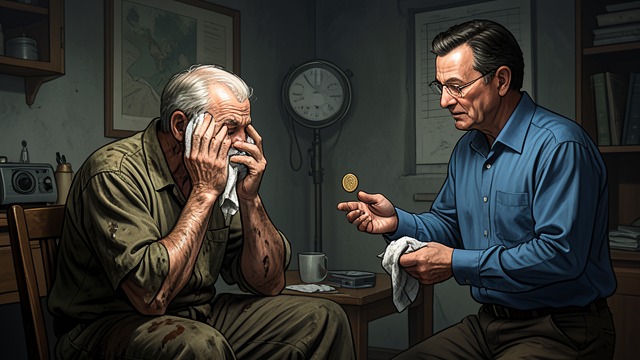
The Story of a Brother-in-Law
A Plausible Lie
The narrator invents a drunken family quarrel to explain why he is muddy, injured, and wearing a guard’s clothes. He relies on Alf’s assumptions about ordinary trouble to avoid questions about the detention house.
Help Without Full Knowledge
Alf lets him wash, gives him money, and accepts enough of the story to let him leave. The narrator’s lie succeeds because it fits the listener’s ordinary expectations.
A small domestic fiction provides the opening through which a dangerous escape continues.
Returning to Dalby
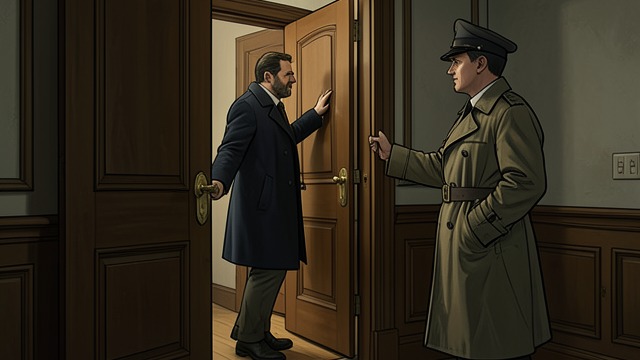
Returning to Dalby
Choosing a Dangerous Contact
The narrator decides to approach Dalby because no other institution seems able to protect him. He uses a detective to control his route and keep watch while he asks for help.
A Partial Answer
Dalby provides files and practical hospitality but not a complete explanation. The narrator leaves with new evidence and a renewed suspicion that his escape has placed him inside another trap.
Survival depends on choosing an imperfect ally and remaining ready to flee again.
During the narrator’s early work in Soho
After the narrator discovers the Tokwe frame-up
About thirty-five days into the Wood Green confinement
Immediately after the escape, at Alf Keating’s house
Several days later, after Charlie’s murder
