Burgess and Maclean defections
The IPCRESS FileThe Burgess and Maclean defections haunt the novel less as a fully reconstructed escape than as an intelligence failure whose unanswered questions continue to shape later investigations. The affair brought Jay under scrutiny, but a concealed instruction prevented his arrest; years later, evidence of his movements and financial dealings made him appear connected to the departures, while still stopping short of proof. Its afterlife is institutional as well as personal: the scandal prompted new statistical inquiries and made officials wary of another public exposure.
Background and Institutional Aftermath
After the affair, the department was assigned to work with the missing-persons registry at the Metropolitan Police’s headquarters. Carswell obtained permission to process the figures before looking for patterns, rather than starting with a suspected explanation. He and a sergeant clerk tried different breakdowns, then moved beyond missing-person reports to search for common features among the highest security clearances. The resulting inquiry began as an exercise in sorting data, not as a targeted hunt for Jay or a predetermined theory of espionage.
The affair also remained a warning about the political cost of a security failure. When a biochemist from Porton research institute disappeared, the British Home Office kept names out of the press, with officials anxious to avoid another Burgess and Maclean controversy and the parliamentary questions it would bring. In this way, the earlier defections altered how later disappearances were handled: secrecy protected an investigation, but also kept its subjects and suspicions out of public view.
Jay in the Investigation
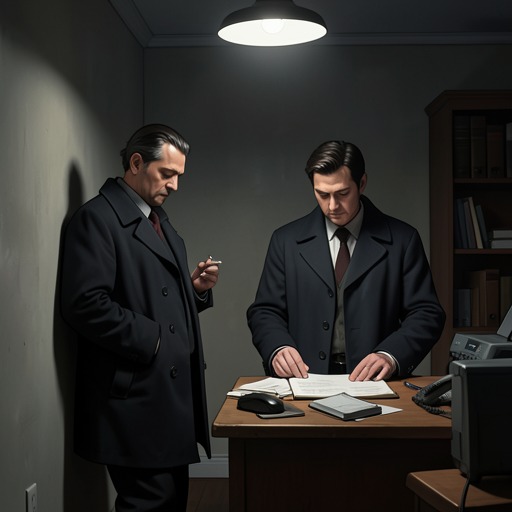
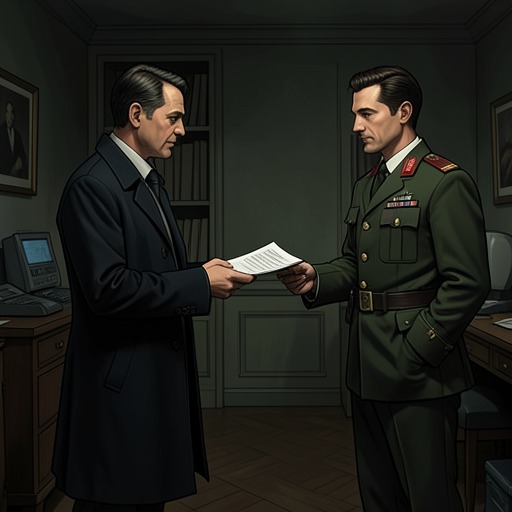
Jay had settled in London in 1950 and was doing small-scale espionage for the Americans, alongside economic and industrial work. Dalby said that the department had not initially wanted Jay for that work and that the choice was not theirs. The Burgess and Maclean affair first drew the department’s attention to him. A memorandum then instructed officials not to arrest him over the affair. Dalby said the memorandum had neither been written nor recorded, and that he had not been in charge at the time. He described it as an unresolved mystery and said Jay had friends at a higher level.
Dalby identified that higher level as the Cabinet, but carefully limited the allegation: the department had no evidence connecting Jay with illegal dealings since 1950. The combination is central to the affair’s continuing ambiguity. An extraordinary intervention protected Jay from being pulled in, yet the record supplied no definitive explanation for who arranged it or what Jay’s precise role had been. The Cabinet connection remained Dalby’s inference about the source of Jay’s protection, not proof of a conspiracy.
Movements and Financial Evidence
The department’s checks placed Jay in Cairo twice while Maclean was head of chancery at the British embassy there. Investigators found no trace that Jay had visited or telephoned Tatsfield, where Maclean lived, but Dalby said the two men had crossed paths. The evidence establishes overlapping movements and contact, not the substance of their relationship or what was discussed.
A more pointed link came on 25 May 1951. Maclean drove with Burgess in a hired car to Southampton; they and Jay then travelled aboard the Falaise on a round trip to St Malo and the Channel Islands. Of the three, only Jay returned to England. The episode gives the affair a concrete itinerary, but the account does not explain the men’s arrangements or establish what Jay did after the voyage. His return, set against the others’ absence, is presented as an important fact for investigators rather than a complete account of the defections.
The financial trail added suspicion without resolving it. Two bank drafts, each for £1,000, were made out to Maclean’s mother-in-law and drawn on separate Swiss banks. A later draft for £25,000, also drawn on a Swiss bank, was paid into a London bank account belonging to Mr Aristo, an alias Dalby identified as Jay. Dalby suggested that Jay had learned information was an exceptionally valuable commodity, but acknowledged that receiving the money was not itself illegal. The transactions supported a theory of Jay’s profitable intelligence work; they did not prove that the funds were payment for the defections.
The Affair’s Continuing Reach
The case file offered a further qualification: Jay was not receiving regular sums from the Russian government. His income was described as very large, but derived from diverse sources and irregular amounts. The same file placed him in a wider world of intelligence and commercial reporting: C-SICH shared information among appropriate British branches, while industrial-espionage teams at large commercial firms submitted monthly reports. Jay’s finances therefore resisted a simple explanation, even as the affair made his connections difficult to dismiss.
Later, the department’s statistical work acquired importance beyond the original missing-persons exercise. Carswell’s analysis began to reveal patterns relevant to the wider plot, and Ross concealed him because he feared for Carswell’s safety. The narrator later explained that the statistical clues initially emerged by coincidence, while their possible value grew once investigators recognized that Carswell might help indicate the scale of operation IPCRESS. The connection is indirect but consequential: the scandal had led officials to examine patterns across security clearances, and that method eventually helped expose a larger scheme.
The affair thus persists as both evidence and warning. Jay’s presence on the voyage, his crossings of Maclean’s path, the unexplained order protecting him, and the money paid into his account form a troubling chain, but not a conclusive one. The novel preserves that gap between correlation and proof. At the same time, the government’s response to later disappearances shows how the old scandal changed the terms of investigation: officials pursued patterns and guarded information, conscious that another public failure could be as damaging as the secrets they were trying to uncover.