Charlotte Street
The IPCRESS FileCharlotte Street is the London address of WOOC(P), a covert intelligence operation housed in a run-down building whose public-facing businesses disguise its single institutional purpose. The street’s layered offices first make the organization seem like a collection of unrelated workplaces; as the plot advances, the same rooms become an operational center for arrests, investigations, and the uncertain reconstruction of trust after Dalby’s exposure.
Setting and Concealment
The narrator first describes Dalby’s office as occupying a dirty building on a long, disreputable street in a district that might be compared with Soho. Its worn brass signs advertise an employment bureau for former officers, film-editing rooms, a theatrical tailor, and the Dalby Inquiry Bureau, supposedly staffed by former Scotland Yard detectives. A notice directs visitors to ring on the third floor. The mixture of businesses gives each floor its own apparent identity, but the whole building belongs to WOOC(P); the separate fronts exist for the organization’s convenience.
The approach to Dalby’s rooms establishes the building’s cramped, makeshift character. The narrator climbs at 9:30 each morning, avoiding large cracks in the lino, past ageing paint that changes from dark brown to dark green. The third floor is described as dark white, and an old woman guards the entrance to Dalby’s office. This is not a purpose-built command center announcing its importance. Its authority is hidden behind ordinary signage, worn interiors, and an office name that suggests private inquiry work.
Daily Work and the Building’s Interior
The daily routine carries the narrator from Dalby’s office through the back stairs and into the small projection room associated with Acme Films. By 9:40, the narrator is usually there to watch films. The room has tip-up cinema seats, and the narrator repeatedly chooses seat twenty-two, whose bolt is loose. Film tins, a raincoat, and the projector’s regular use make the space part of an established working ritual rather than a one-time disguise. The route through the building links the apparent film business to the hidden organization behind it.
The second-floor dispatch office gives the building another working identity. Drivers and cipher clerks gather there as a small fraternity, playing brass-band music on a loud gramophone. The narrator remembers the music from childhood in Burnley; for Dalby, it evokes Horse Guards Parade. That difference in association makes the sound a modest counterpoint to the building’s secret work: the same music connects the office to the employees’ ordinary habits and to distinct memories beyond Charlotte Street.
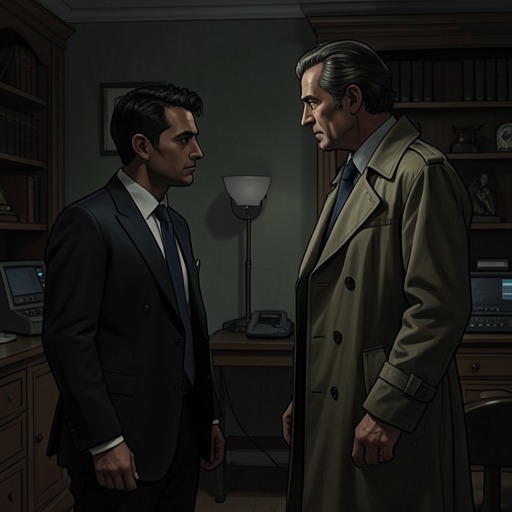
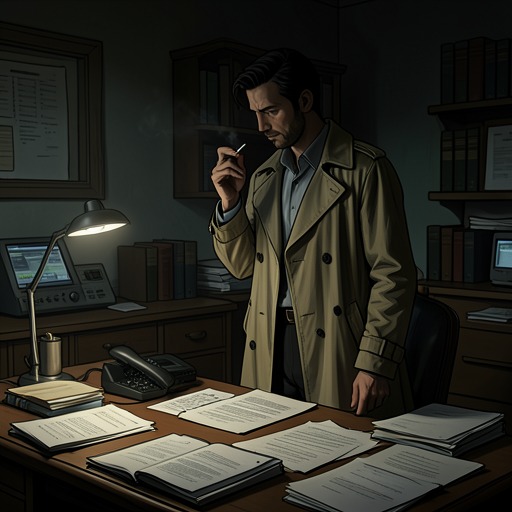
Dalby’s office is the building’s lightest room, though reading by the window is possible only within a few feet of it. Its respectable brown veneer, military prints, and newspapers contrast with the damaged, makeshift surroundings elsewhere. Beneath the windows sits WOOC(P)’s IBM machine, central to the department’s ability to assemble information that would otherwise appear unrelated. Names, house numbers, street names, and photographs become useful when the machine correlates them; it can also sort a list according to categories known to Dalby. Charlotte Street therefore houses not only an intelligence team but the apparatus through which scattered records acquire operational meaning.
Operational Center
By the events of Chapter 31, Charlotte Street is working at full pressure. The narrator arrives at midnight to find the building active, gives Alice a list of names to enter into the IBM machine, and sees Jean there as well. During the arrests, detainees are being taken to Carshalton. At 3:30 in the morning, the center there is full, so Ross arranges an alternative detention site to keep those arrested separate. The machine continues running while staff manage the expanding operation.
The work extends beyond the building. At six, a meeting takes place at Scotland Yard, where the police are worried and a fourth secretary from the British Home Office is also present. By eight, the most urgent phase is over. Murray then reports from Liphook that he is holding Swainson, the real name of K.K., and the narrator dispatches a car. These developments show Charlotte Street functioning as a coordination point: lists are processed there, staff respond to reports from elsewhere, and the operation’s next movements are organized from the office.
After the roundup, the address remains central to the effort to understand and contain the IPCRESS network. Cables arrive from Washington, Calcutta, and Hong Kong, with Alice handling most of them. When Painter, the psychiatrist who had helped restore Raven toward a more normal state, is brought into the work, the narrator gives him a room with Carswell on the building’s top floor. Their task matters because the plan to bring Jay down may depend on what they can establish. Charlotte Street thus accommodates both administrative intelligence work and the close, ongoing work around people affected by the conspiracy.
Aftermath and Significance
The narrator’s return to Charlotte Street with Alice after confronting a senior military official marks a change in authority. Alice observes that even Dalby would not have attempted the narrator’s challenge; the narrator hands her a green file to number, only for Alice later to bring in two other files left in Waterman’s car. The exchange presents the office as a place where control is exercised through records and procedure, but also where Alice’s competence can outmatch the narrator’s attempts to manage the paperwork.
Charlotte Street remains active after Dalby’s fall. The narrator describes further work passing through the department and a monthly conference with Jay and Ross to prepare the Army Intelligence Memoranda Sheet. Jay is not allowed to handle reports that might otherwise pass through him, reflecting continuing caution about the network and its loyalties. Even the unresolved question of how Dalby placed the narrator’s fingerprints on the High Speed TV camera leads back to the address: the narrator suspects Dalby took prints from a handle or another object at Charlotte Street and transferred them to the camera at Tokwe. The suspicion is not confirmed, but it makes the building part of the plot’s final uncertainty as well as its operational history.
The office’s significance lies in this double character. Charlotte Street is an unremarkable, divided-up workplace by appearance, yet it contains the machinery, staff, records, and working routines through which WOOC(P) conducts its business. After the organization’s internal rupture, the same address becomes a place of hurried coordination and guarded continuity. Its ordinary fronts conceal the system that gives the department its reach, while its accumulated paperwork and unanswered questions show that the exposure of a conspiracy does not immediately make its consequences legible.