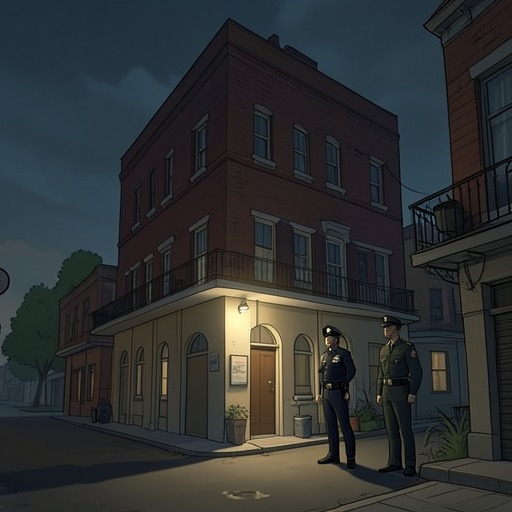
Housemartin’s killing at Shoreditch Police Station
The IPCRESS FileHousemartin’s killing at Shoreditch Police Station is the abrupt reversal of an attempted arrest: a man wanted for questioning is identified, brought into custody, and subjected to special precautions, yet is found dead before the narrator can question him. His death removes a suspect from the investigation and redirects attention from the police station to the street and houses from which he may have come.
Identification and Arrest
The events begin with a record check at the Criminal Records Office. Housemartin has no white card, the record associated with a criminal record, but he does have a green card marking a person suspected without a criminal record. The card is endorsed to the narrator’s department and marked for top priority. The police ask whether to tell Shoreditch about the card and whether they should retain Housemartin; the possibility of an Interpol card is raised, but is not confirmed.
Housemartin had given no name. Instead, he was wearing a Metropolitan Police Chief Inspector’s uniform. The constable who stopped him recognized his face because he had worked at the Criminal Records Office for a year and remembered Housemartin from there. That recognition made the arrest possible despite the absence of a white card. The uniform, which could have lent him authority, instead became part of the deception that prompted scrutiny.
Precautions and Discovery
On learning that Housemartin had been taken in, the narrator ordered that he be held and searched, with particular care to watch for cyanide pills. He stressed that the chief at Shoreditch would be personally responsible for the prisoner’s safety, demanded that Housemartin remain locked up under constant observation, and asked that the arresting constable be kept available. The narrator also said he was leaving immediately and expected to arrive before 7.30.
As the narrator and Murray travelled to the station, the rain grew heavier and reflected traffic lights and neon across the streets. Three policemen stood at the station entrance. The driver came in with them, and the sergeant who had spoken with Keightley greeted the party by assuring them that everything was under control. The narrator’s first indication that this assurance was misplaced came when the sergeant mentioned two other people who were parking their car. The narrator understood that they had arrived too late to protect or question Housemartin.
At 7.33, they found Housemartin naked, lying horizontally and dead. The narrator turned the body over. He was a strong, good-looking man of about thirty-five, and appeared older at close quarters than the narrator remembered. The account establishes the death and the failure of the custody arrangements, but gives no cause or manner of death. The narrator immediately asked for the constable who had brought Housemartin in, rather than treating the event as a completed arrest or waiting for a formal account.
The uniform was gone, but a few possessions remained: a packet of cigarettes, a handkerchief, and £3 15s 0d. Their small specificity contrasts with the larger unanswered question of how Housemartin died while in police custody. The narrator notes that Jay’s people were also, at that moment, crossing Housemartin off their files. His death therefore matters to more than the immediate police inquiry: it removes a person from both sides’ calculations, without disclosing who caused the death.
The Constable’s Account
PC Viney had already begun a report, writing with a small stub of pencil. The narrator questioned him about the arrest. Viney said he had distrusted Housemartin’s demeanour from the first, but would not have approached closely enough to recognize him if Housemartin had not hit a traffic light. Viney’s account links the chance recognition to a mundane interruption in traffic; without it, the false uniform might have carried Housemartin past the constable.
The narrator asked whether Housemartin might have come from one of the nearby houses, and encouraged Viney to offer even a tentative impression rather than hold back for lack of proof suitable for court. Viney thought Housemartin might have been pulling out into traffic. The question does not establish that Housemartin had come from a particular house, but it turns the circumstances of the stop into a lead about his possible movements immediately before the arrest.
From the Station to the Street
The narrator narrowed the inquiry to houses with recent tenants or unfamiliar visitors, particularly a secluded property with a garage allowing a driver to enter the house directly. Viney described the houses as set back from the street and singled out one unusually secluded property because its owner had bought the undeveloped sites on both sides. He contrasted it with number 40, occupied as flats mostly by young married couples, and number 44, a low building where the husband worked as a West End waiter and was seen on the night beat.
Viney could not recall the occupants of the secluded house. He remembered substantial building work there, apparently a conversion into flats, around February; there were no letting signs, though he thought word of mouth could explain the absence. His account also mentioned that Mr Edwards of the Car Mart had offered to buy one of the adjoining sites after repeated obstruction penalties for leaving cars in the road, but that the sites were not sold. These details supply possible lines of inquiry, not proof that Housemartin came from the property or that its occupants were involved in his death.
The killing thus changes the investigation from an effort to hold and question Housemartin into a search for the circumstances of his last movements. His false police identity, the green-card record, the failed safeguards at Shoreditch, and Viney’s traffic-light recognition remain distinct parts of the chain. The nearby-house inquiry begins with a possibility, while the central fact is already irreversible: the man the narrator ordered protected is dead before he can be questioned.