IPCRESS
The IPCRESS FileIPCRESS is the name given to a thought-reform operation and the conspiracy built around it. The name comes from a distorted clinical phrase, but the operation’s significance lies in its method and purpose: to destabilize people through controlled conditions and turn a network of well-placed information holders into assets loyal to Jay. The account also shows how those methods could leave their mark beyond the operation itself, in the narrator’s own experience of confinement and in the intelligence network’s troubled aftermath.
Name and Scope
The narrator explains that IPCRESS is not an allusion to Greek mythology. One of Ross’s men coined it from Induction of Psycho-neuroses by Conditioned Reflex with Stress, a clinical description of the treatment carried out in the haunted house. The coined name gives a technical label to what is, in practice, a deliberate assault on a subject’s confidence in ordinary experience.
The operation’s scope is wider than a single place or episode. The narrator connects the haunted-house methods with what was later begun against him at Wood Green, while distinguishing those methods from the American treatment he experienced after his arrest on Tokwe: the latter shared basic characteristics, but the account does not identify it as the same operation. IPCRESS therefore names both a specific conspiracy and a system of coercive techniques whose effects could recur in different settings.
Methods of Thought Reform
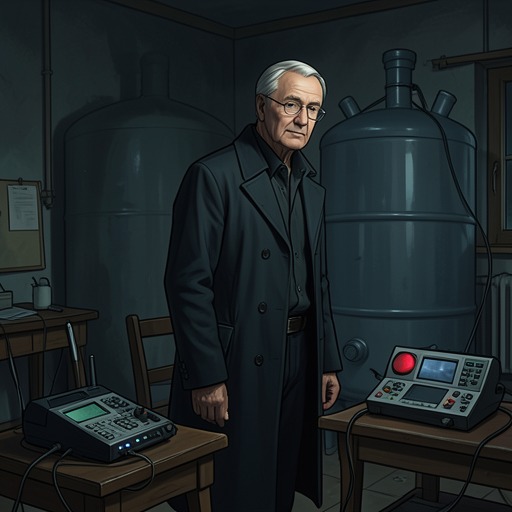
The haunted-house system works first by severing the subject’s sense of connection to the outside world. Its operators use false ambassadors to persuade prisoners that they are entirely alone; they also tried false policemen, though abandoned that approach after a man was accidentally caught at Shoreditch. Civilian clothing was considered safer. At Wood Green, radiant heating and cooling let the operators alter the temperature at will, while switched lights could make a day last an hour or a night last thirty-six hours. Isolation, disorientation, and physical weakness were not incidental hardships: the narrator presents them as conditions that made the mind easier to unsettle.
His account of confinement under K.K. gives that coercion a daily texture. The room has an earth floor and no furniture; food arrives as rough porridge-like gruel, and the same short-haired, fair-haired man in a grey tracksuit brings it. K.K. tests him with elementary statements about colours and materials, expecting him to repeat them. When he refuses or answers incorrectly, food and warmth are withheld, and he is struck. Gradually, hunger makes compliance feel rewarding: after he gets the responses right, K.K. gives him cold meat, and he sobs with what the narrator describes as pleasure rather than sadness.
Control also reaches into time and routine. The narrator marks days with his fingernails on the hidden side of a wooden door, recording some nights with a double stroke because of the human groans and screams he hears nearby. Slips of paper impose rules about sleep, including orders not to sleep during the day and to keep his arms above the blankets at night. After twenty-five days, he is allowed a visitor for six minutes. These details show how deprivation, arbitrary instruction, and restricted contact work together to make the prisoner’s world smaller and less dependable.
The Operation’s Design and Jay
IPCRESS is not presented as a simple scheme for converting its subjects into Russian agents. The narrator corrects that interpretation: the central design revolves around Jay, and the people subjected to brainwashing were intended to serve Jay personally. They would return to their positions and pass information through him, their apparent convictions and loyalties no longer a reliable guide to whom they served.
The account places this plan within Jay’s history of political upheaval and information dealing. Having seen governments change repeatedly, he learned to move with the prevailing current rather than rely on lasting political allegiance. He sold information associated with Klaus Fuchs, Alan Nunn May, and the Rosenbergs, and later helped arrange the eastward journeys of Otto John, Bruno Pontecorvo, and Burgess and Maclean. The narrator describes money, rather than commitment to a particular power, as the consistent motive. Jay’s further step was to build a network of well-placed people whose information would be channelled through him. Their personal loyalty to Jay would give him a dependable route to intelligence while the discovery of such a network would make its opponents suspicious of one another.
The operation’s psychology depends on progression. The narrator describes an opening phase of severed connections, isolation, fatigue, and uncertainty about what will earn approval. He then identifies the search for weaknesses, preferably weaknesses the subjects discover in themselves, before a final phase of intense mental work, indoctrination, meetings, overwork, and stress. He calls the resulting breaking point abreaction: a nervous collapse marked by physical distress and loss of control. Once one person in a group reaches that state, the others may follow in turn. This account makes the process cumulative: confusion and exhaustion prepare the subject for pressure, while the collapse of one person can become leverage against the rest.
Exposure and Continuing Consequences
The operation’s exposure does not restore everyone it affected. At Charlotte Street, Painter has a medical research laboratory working on ways to reverse the effects, but it has found no means of de-brainwashing people. Many members of the original network remain under the threat of the Treason Act. Others continue sending reports in the belief that the information is passing through Jay to a foreign power, even though the narrator no longer lets Jay handle those reports.
Jay remains inside the intelligence routine after the conspiracy has come to light. He attends the monthly conference with Ross, where they prepare the Army Intelligence Memoranda Sheet, and the narrator finds him efficient. That continued proximity is an unresolved consequence of the operation: knowledge of Jay’s role does not simply remove him from the system. The narrator thinks of Dalby’s remark about moving from opposite ends toward the same conclusion whenever he is with Jay, but doubts that this was what Dalby meant. The image leaves their relationship unsettled rather than offering a clean separation between former opponents and present colleagues.
The final note is practical as well as wary. Jay invites the narrator and Jean to dinner, offering to cook, but the narrator decides not to go because close friendships are unwise in their line of work. IPCRESS thus ends not with a claim that trust has been repaired, but with its continued calculation: the conspiracy has been exposed, some of its effects remain untreated, and its central figure still works alongside those who know what he did.