Narrator and Charlie Cavendish: close friendship
The IPCRESS FileThe narrator’s friendship with Charlie Cavendish is defined less by a history of shared scenes than by a small, consequential exchange: Charlie lends him clothes, and the return of one garment places Charlie in the path of a killer. The narrator identifies Charlie as a friend who helped him, but the friendship carries an unequal cost. Charlie’s kindness becomes entangled with the danger surrounding the narrator, while the narrator is left to explain how an act of lending ended in a fatal mistake.
Friendship and Practical Trust
Murray has described Charlie as a close friend of the narrator, and the narrator confirms the essential point: Charlie had warned him when he was in danger. That warning establishes a direct act of care, though the narrator does not tell Jean that anyone else had also warned him. The omission limits what Jean learns about Charlie’s place in a wider pattern of protection; it also shows that the narrator distinguishes between acknowledging Charlie’s friendship and disclosing everything he knows about the danger around himself.
The friendship is made concrete through borrowed clothes. Charlie lent the narrator several things, among them a light-blue raincoat. The detail matters because the coat is not merely a token of intimacy: it travels from Charlie to the narrator and back again, carrying a visible connection between the two men into the circumstances of Charlie’s death. Their trust appears in an ordinary transaction, but the story turns that transaction into a perilous link between them.
The Raincoat and Charlie’s Death
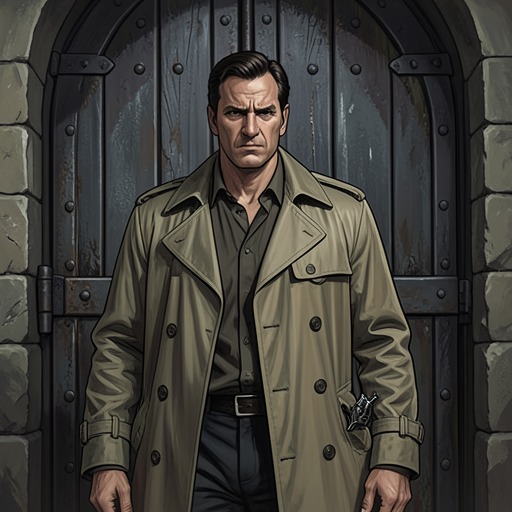
The narrator explains that he returned the raincoat to Charlie at Fortes. Charlie wore it when he left the narrator and went home. According to the narrator, the killer mistook Charlie for him. The resulting murder is presented as a case of mistaken identity, with the borrowed garment helping to explain how the wrong man was targeted. The precise sequence makes the tragedy inseparable from the friendship: Charlie had lent the narrator clothes, and after returning them, he was killed while wearing one of them.
This account also clarifies the narrator’s sense of responsibility without claiming that he intended or could have foreseen the outcome. Jean asks whether Charlie was killed for helping him; the narrator rejects that explanation and describes the death as more tragic. The distinction matters. Charlie’s warning and assistance connect him to the narrator, but the stated cause of his death is not a deliberate punishment for that friendship. It is a mistake produced by the resemblance or association created by the coat, within a larger world of threats directed at the narrator.
The Murder’s Wider Connections
The newspaper coverage calls the case the London Club Murder and reports that police are examining the membership books of the Tin-Tack Club, where Charlie worked part-time as a barman. The public account gives the death a club-centered label, while the narrator’s explanation locates its immediate cause in the raincoat and the mistaken identity. The difference between these accounts shows how the circumstances known to the narrator exceed the version circulating in the papers.
When Jean asks who arranged the killing, the narrator identifies a hoodlum working for Jay’s network and says that the man will be picked up. He specifically denies that Jay personally arranged Charlie’s death. Instead, he says Jay learned of Charlie’s connection with C-SICH and hurried to speak with Dalby, bringing the narrator into that encounter. The account therefore separates the person said to have arranged the murder from Jay’s subsequent intervention. Charlie’s friendship with the narrator places his death within the same intelligence conflict, but the narrator does not equate that connection with proof that Jay ordered the killing.
What the Friendship Reveals
The scene presents the relationship retrospectively, through the narrator’s explanation to Jean after Charlie’s death. The sequence is not a sustained portrait of the two friends together: it is reconstructed from Murray’s description, Charlie’s warning, the loan and return of the coat, and the questions raised by the murder. That compressed account gives ordinary acts of trust unusual weight. A warning briefly protects the narrator; lending clothes later helps make Charlie vulnerable to mistaken identification.
The narrator’s disclosure is also selective. He tells Jean that Charlie warned him, but withholds that others did too; he names a hoodlum in Jay’s network while denying Jay’s personal responsibility. These distinctions preserve the narrator’s careful accounting of what he knows and what he chooses to say. Charlie remains more than a casualty in that account: he is the close friend whose practical generosity and warning are remembered, and whose death forces the narrator to explain the consequences of their connection.