Narrator and Charlie Cavendish: espionage friendship
The IPCRESS FileThe relationship between the Unnamed narrator and Charlie Cavendish joins private loyalty to the informal networks on which espionage depends. Their friendship reaches back to the narrator’s Army service with Charlie’s son, but it is tested most sharply when the narrator, pursued and short of safe allies, turns to Charlie for help. The narrator tries not to expose him to the case; when he returns, Charlie is dead, and their friendship has become one of the losses through which the danger of that world is made personal.
A friendship formed through loss
The narrator describes espionage as a life that requires friends, despite the saying that a spy has none. Those friendships are built through past actions and deliberate omissions, and form overlapping networks that cross professional and national loyalties. They provide a kind of informal insurance, sustained not by explicit agreements or codes but by mutual understanding. Charlie is one of these friends, though their connection is more than a useful professional contact.
The relationship began through Charlie’s son. The narrator had served in the Army with him; after the son was killed, the narrator told Charlie. He and Charlie then grew close enough that the narrator saw him often. The bond thus carries a grief that predates the immediate crisis, and the narrator’s account of it is notably personal: even later, he finds it difficult to use Charlie’s first name, because he had been the son’s friend before he became the father’s.
Charlie’s character is present in the narrator’s affectionate description of his humour. It could illuminate dark situations, but, the narrator suggests, also helped keep Charlie from attaining a senior position. Charlie lived in a small Bloomsbury flat, saying he stayed there to be near the British Museum, and could have difficulty finding even a little money for a cable. These details place him outside the glamour of intelligence work: his importance to the narrator comes from steadiness, shared history, and wit, not rank or wealth.
Messages and recognition
The relationship also functions within the narrator’s covert world. Charlie works undercover for C-SICH, and one cable sent to the narrator is signed Artemidorus. Its message is phrased as an oblique instruction about reading a paper at a specified place and time. The narrator identifies Charlie as its source and calls it the most sobering of the two cables he has received. The contrast matters: the message is not an open declaration of friendship, but a discreet signal carried through a channel that outsiders would find unremarkable.
Later, when the narrator makes a reversed-charge call, he identifies himself as a friend of Reg Cavendish. Charlie recognizes his voice. The exchange shows how their personal connection can authenticate contact without the narrator needing to explain himself over the telephone. The narrator then admits he is in serious trouble. Charlie agrees to come, says he will arrive within half an hour, and offers to pay for him before asking what else he needs. The narrator’s answer is a job: even at a moment of urgent reliance, the request combines personal rescue with the need to find a way forward.
Shelter, assistance, and restraint
Charlie offers practical care without demanding a full account first. He makes room for the narrator to wash and sleep, and the narrator tells him that there was no one else he could approach. Their familiar joking helps preserve the friendship’s ordinary texture under pressure: the narrator refers to Charlie as an uncle, while Charlie’s earlier recitations of Paradise Lost in the steam room are part of their shared repertoire. Charlie notices the narrator’s condition and responds gently. The scene makes care concrete, but it does not turn Charlie into an uninformed confidant: the narrator is conscious that he has told him only what he needs to know.
That caution reflects the narrator’s wider predicament. He believes his pursuers are trying both to recapture him and to remove confidential material, and he worries that drawing a personal friend into the matter would be bad enough; involving someone employed within the service would be worse. Charlie is therefore both a refuge and a person the narrator feels responsible for protecting. The narrator’s dependence on him is real, but so is his fear that friendship could make Charlie vulnerable to consequences he has not been told about.
Charlie nevertheless takes risks on the narrator’s behalf. He searches for Carswell in records, even repeating the inquiry under another office name, but cannot find a matching person with the initials the narrator expects. When the narrator tells him not to take any more chances, Charlie replies that helping has been a pleasure. The gesture is small and specific: rather than promise that he can solve the larger danger, Charlie carries out a search and accepts the limits of what it can establish. The narrator offers to tell him the whole story, yet the offer comes after a period of selective disclosure, and the difficulty of calling him by his first name remains.
Protection and its tragic limit
When Charlie leaves, he tells the narrator to let himself in and leave the key, since Charlie must return by two. He says he has grown used to the narrator dropping in and repeats three times that the narrator should contact him if he needs help. The narrator recognizes both Charlie’s discretion and his willingness to assist, but also judges him too willing to be exploited. He is tempted to use Charlie’s help, then decides against it. Instead, he hires a private detective for another matter and returns to Charlie’s flat to give back the key. His choice is an effort to keep the friendship from becoming an operational liability, not a withdrawal of affection.
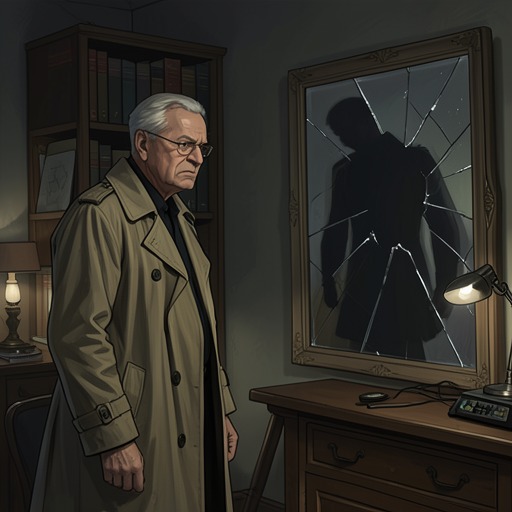
At the flat, the narrator hears a woman sobbing and goes upstairs rather than leaving. He finds Charlie dead in a home thrown into disarray. A familiar white porcelain coffee-pot has been smashed; books lie scattered, and the only object left undisturbed on the writing cabinet is a photograph of Reg. The narrator takes Charlie’s wallet, intending to provide the police with a motive, but the woman sees him. He leaves, believing that Charlie’s killer will pursue him and that the police will also come after him. He concludes that Dalby’s organization is the only contact with enough power to help.
The sequence does not establish why Charlie was killed, or that his assistance to the narrator was the motive. Its force lies instead in the collision between the narrator’s attempt at restraint and the violent outcome: despite choosing not to involve Charlie further, he encounters the consequences at the very place where their friendship had offered shelter. The informal network that the narrator describes as a spy’s insurance can provide recognition, refuge, and practical aid, but it cannot guarantee safety. Charlie’s death makes that limit intimate.