Reg Cavendish
The IPCRESS FileReg Cavendish is remembered as a quiet, observant schoolboy who became one of the British Army’s youngest regimental sergeant-majors and an airborne leader whose men kept returning with him. The Unnamed narrator’s account holds together two versions of Springer: the resourceful soldier who repeatedly survived the worst fighting, and the friend whose manner and body changed under the weight of it. His death in Brussels, after he had survived campaigns in which thousands of his comrades were lost, gives that apparent invulnerability its tragic limit.
Identity and Background
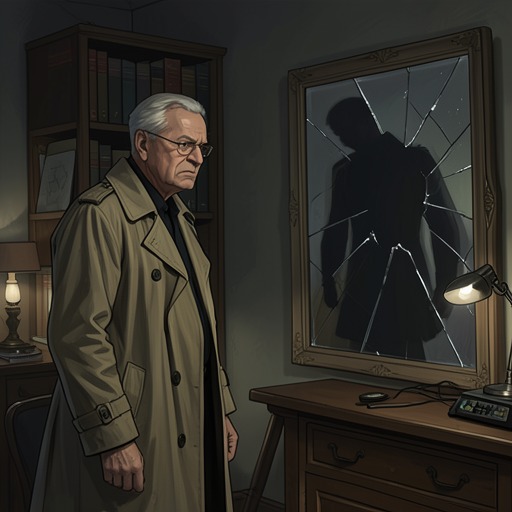
The account begins with a sepia photograph of Reg, Charlie Cavendish’s son, displayed above a writing cabinet. In the photograph he wears the boat-shaped forage cap that the narrator and their contemporaries had worn as boys. The image prompts a recollection of a tall, gangling pupil with ginger hair, who habitually lowered his head in a gesture the narrator understood as sympathy for shorter people. Reg was the brightest pupil in the sixth form, but was passed over for prefect because a teacher judged his gentleness as slackness. He answered the slight with a small smile rather than an argument; he was never much of a talker.
That reserve made Reg a natural companion for the narrator, who remembers himself as the most vociferous boy at school. Their friendship did not depend on matching temperaments: with the narrator beside him, Reg did not have to fill the silences. The recollection presents this childhood ease as a bond that survived a radically different adult world, even as war altered the friend the narrator had known.
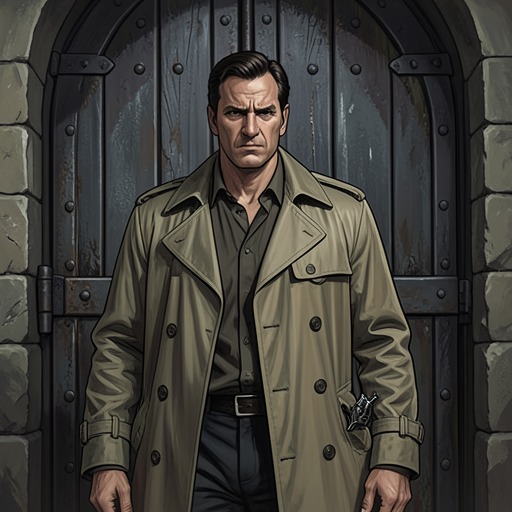
Reg’s knowledge was rooted in the countryside. He understood cumulonimbus clouds and isobars, could distinguish a Song Thrush from a Fieldfare at fifty yards, and knew about moles, foxes, and the Latin names of wild flowers. The narrator contrasts this precision with his own inability to tell a Barn-Owl from a Buzzard. Reg’s competence was not confined to natural history. In the army he quietly did things better than those around him, and led by going first into the hardest and most dangerous places. He used firepower as economically as he used words.
Soldiering and Leadership
Airborne warfare did not require Reg to be won over. To him, leaving an aeroplane as the opening move of battle was as natural as the older soldiers’ traditional uniform and equipment. During the Tunisian campaign, when the parachute brigade was being used as infantry, he became Regimental Sergeant Major Cavendish, one of the youngest RSMs in the British Army. It was there that he acquired the name Springer.
At Longstop, amid some of the campaign’s costliest fighting, a lorry carrying Reg’s group lost its way in convoy, left the road, and struck a mine. The German engineers had planted smaller mines around the larger ones; these leapt into the air and scattered metal ball-bearings when they exploded. Mortar fire compounded the chaos. In the account’s stark aftermath, only Reg and two lance-corporals from the shattered group managed to walk back to their lines through a minefield. The survivors received promotion and a 48-hour pass. The episode establishes the pattern that would follow him: survival was not safe passage, but a passage through losses that left very few men to return.
His authority rested on action rather than display. Reg was already out in front where the danger was greatest, and his measured use of force reflected the same economy as his quiet speech. The nickname Springer came to signify more than a unit identity: it became shorthand for a leader who went into operations and brought people back.
Combat and Its Costs
By July 1943, the narrator noticed a change. Reg watched over people’s shoulders and looked down at the ground too often; he had seen extensive combat. During the airborne attack on Catania, Allied naval forces mistakenly shot the airborne force out of the sky, and Reg’s Dakota crashed. He survived with two superficial wounds, received the Distinguished Conduct Medal, and developed a twitching muscle near his left eye. Sent on leave in Tunisia that autumn, he looked nearer forty than twenty, seldom smiled, and spent his time writing letters to the next of kin of dead soldiers.
At one in the morning on the D-Day landings in Normandy, Reg dropped into the River Dives in full equipment. He got fifty men and an officer through chest-deep swamp and undergrowth, striking the slowest as he drove the group forward. By then the narrator found him tense and irritable, and Reg used every minute of leave to visit the families of the dead. When the narrator objected that these visits were doing no good, Reg told him to mind his own business; the narrator went along all the same. The episode connects Reg’s operational insistence on getting men through danger with the private burden he carried afterward. He had also developed a stammer, and his coordination was no longer as good as it had been.
Friendship, Survival, and Death
Springer nevertheless continued to survive, and soldiers still drew lots to join his aircraft, operations, and stick. The narrator makes the name feel almost like a promise: Reg brought others back with him, too. One return was especially incongruous amid the campaigns—a songbird in a cage bent almost flat, with both bird and soldier whistling. The damaged cage and shared music offer a small, vivid counterpoint to the repeated movement through battle and loss.
Weeks after Arnhem had grown quiet, Reg and four other airborne soldiers paddled across the lower Rhine in an inflatable boat taken from the Wehrmacht. The scale of the losses gave his survival a terrible context: the 1st Airborne had lost 7,605 of the 10,000 soldiers who went in. To the narrator, Reg seemed indestructible. Four days before VE Day, a rations lorry struck him as he came out of the Montgomery Club in Brussels. The ordinary accident abruptly ended a life that the major dangers of war had failed to end.
The Adjutant telephoned the narrator to ask what he should tell Reg’s father, because he could hardly believe what had happened. He repeated that Reg had been with him on his first jump. The narrator was going to London that night and said he would tell Charlie Cavendish. The final task falls to the childhood friend who had once supplied most of the conversation between them: now he must carry the news to Reg’s father. The photograph that began the recollection thus leads not to a heroic homecoming but to an act of intimate witness, placing Reg’s death within the continuing obligations of friendship.