Ross
The IPCRESS FileRoss is a career military intelligence officer whose stiff manners conceal a more adaptive and calculating operator than the narrator initially credits him with being. First introduced as the embodiment of bureaucratic routine and personal antagonism, he later proves central to the counter-operation against Dalby and Jay: he tests the narrator’s loyalty, protects Carswell, and helps bring Jay into a new arrangement after the conspiracy is exposed. Ross’s importance lies partly in that reversal. The narrator dislikes and distrusts him, but the evidence eventually shows that Ross’s caution has been serving a purpose beyond departmental self-interest.
Identity and Early Working Relationship
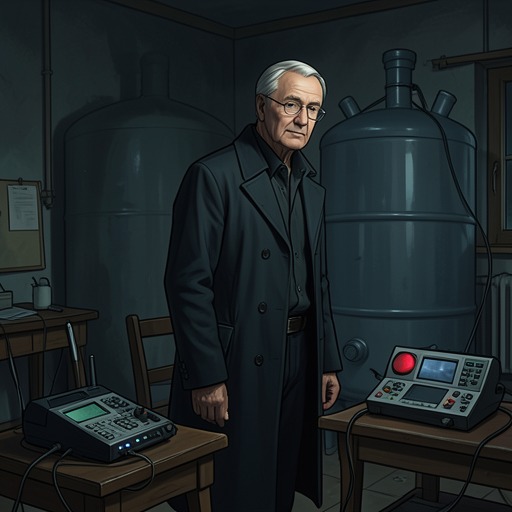
For nearly three years, the narrator has worked in Military Intelligence, where Ross is regarded by some as the department’s defining figure. He is a quiet intellect who accepts the limits imposed by his department and works comfortably among rubber stamps and carbon paper. His ordinary routine is rendered with deliberate precision: an early start at Waterloo, a rosebud in his buttonhole, and an umbrella held at the high port. The detail makes Ross appear less like a field operative than a man perfectly fitted to institutional procedure.
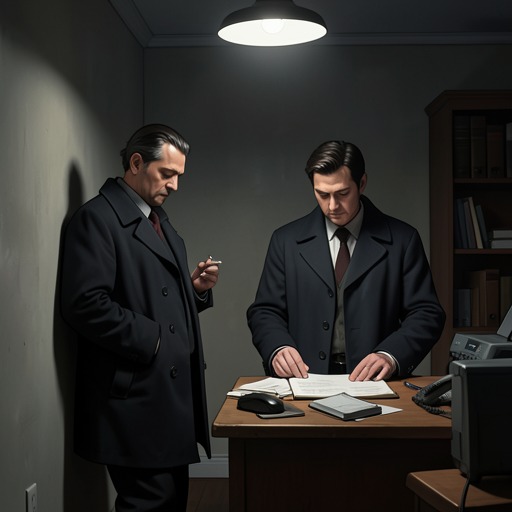
The narrator’s first meeting with him takes place in Room 134 at the War Office, among green filing cabinets, metal cupboards, and face-to-face desks. Their relationship is already long established: they have, by mutual understanding, decided to hate one another. Being English, the narrator says, they express this antagonism through oriental politeness. Ross’s ritual offer of a cigarette is especially telling; the narrator has declined it repeatedly for two years, yet Ross continues to present the cheap box from Singapore’s change-alley market. The exchange makes their dislike feel practiced, even ceremonial.
Ross’s appearance reinforces the impression of a settled regular officer. He has a long thin nose, sparse hair carefully combed, a distinctive moustache, and the complexion the narrator compares to a Hovis loaf. His rules of decorum are described in the same dryly comic register: he does not drink gin after half past seven and would not strike a woman without first removing his hat. The portrait is not merely a joke at his expense. It establishes a man governed by convention, whose later involvement in a dangerous intelligence operation is easy to underestimate.
The Gumhuria Offer and the Narrator’s Suspicion
After the narrator leaves Military Intelligence for WOOC(P), Ross remains a regular point of contact. Their weekly meetings involve agreeing on the Army Intelligence Memoranda sheet for the Cabinet and exchanging information about overlapping departmental finances. Later, when the narrator considers whether to pursue leads connected to Jay, he seeks Ross’s view over a meeting in a private drinking club off Jermyn Street. The setting is unusual for Ross: the narrator finds him at least half an hour early, drinking pink gin, and looking as though he has already had several. Ross asks for a cigarette, another departure from his familiar habits.
In this encounter Ross makes an offer involving the Al Gumhuria file. The narrator reads it as an attempt to sell information for urgently needed money, and accuses him of choosing a buyer on his own side who lacks the social scruples that might prevent a genteel officer from doing business with an outsider. He argues that Ross is prepared to sell material gathered by others, regardless of what the narrator might do with it. This is the narrator’s interpretation in the moment, not an established account of Ross’s motive. The exchange shows how their mutual distrust shapes the evidence: the narrator sees the offer through his belief that Ross despises him and is willing to exploit him.
Later, the narrator wonders whether declining to buy the file had anything to do with the disasters that followed. The question remains part of his attempt to reconstruct how the plot reached him, rather than proof that Ross was selling secrets to an enemy. The eventual explanation reframes the offer as a loyalty test. Ross wanted to know whether the narrator was working with Jay and Dalby; if he were channeling information through them, Ross reasoned, he would seize the opportunity to obtain the Gumhuria material. The narrator refused and told Ross to keep it. Ross’s proposal thus served as a probe, and the narrator’s refusal helped secure his future standing.
The Investigation and Ross’s Counter-Operation
Ross’s caution belongs to a broader institutional crisis. At a Senior Intelligence Conference, Dalby reports that the Home Office is alarmed by the disappearance of leading biochemists. One scientist has left home at 7:45 in the morning and never reached the laboratory. The Raven disappearance is subject to a security blackout, but Dalby tells the narrator that eight top-rank disappearances have occurred in six and a half weeks. These circumstances establish the stakes against which Ross’s methods later become legible: information is fragmentary, departments guard their access, and a seemingly small decision can affect the larger investigation.
A separate statistical inquiry by Carswell also becomes important. After the Burgess and Maclean affair, Carswell’s department is tasked with analyzing missing-person figures alongside the registry at the Yard. Rather than search for a preselected pattern, Carswell processes the figures first and looks for common features afterward, eventually shifting from missing persons to combinations among the highest security clearances. His findings help reveal the plot. The narrator later explains that Ross arranged for Carswell to be hidden as soon as the patterns became useful. The concealment was not simply an effort to suppress an inconvenient analyst: Ross feared for Carswell’s safety, and Carswell might become the only guide to the reach of IPCRESS if Jay remained silent.
The crisis also encompasses the leakage of American scientific intelligence. Skip tells the narrator that material from EW 192 is returning word for word in American files: as soon as a discovery is made in a laboratory, the other side of the world appears to receive it. The extraordinary precision of the leak makes ordinary information-sharing seem compromised. Ross’s actions unfold in a world where intelligence must be gathered, processed, and circulated across institutions, while the conspiracy exploits the very channels meant to protect it.
The narrator eventually says that Ross had partly guessed what was happening when he transferred him to WOOC(P). Ross placed Murray to investigate the situation and, after hearing of the narrator’s near-arrest in a strip club, let Dalby understand that he suspected him. It was a dangerous move: Dalby might have recognized that he was being tested. According to the narrator’s later account, it worked because Dalby responded by proving his loyalty through an efficient operation in Lebanon. Ross’s approach was indirect, using the suspicion between men inside the service to make Dalby act. But the narrator also stresses the cost and uncertainty of that episode: Dalby shot everyone in the car with Raven, and the extent to which this violence ran against Jay’s wishes cannot be known.
Confrontation, Exposure, and Settlement
When Ross’s operation closes around Jay, its authority becomes visible in the street. Jay watches two taxis and a bus from his window, while police communications coordinate the movements outside. Ross’s voice comes over the police radio directing the team to pay particular attention to the back and the roofs, block the streets, and hold everyone. Ross then enters with two policemen. The narrator, who has never been pleased to see him before, is glad of his arrival. The street blocks remain in place for another hour, and Ross is searched and taken to Carshalton, a house owned by his department for purposes the narrator does not know.
Jay’s arrest does not erase the danger or settle every question. In a later conversation, the narrator tells Jean that Ross had feared for Carswell and had hidden him away. He also explains that the CIA contact Charlie could find no trace that Carswell had ever existed at C-SICH, because Ross had concealed him so effectively. This secrecy, intended as protection, also illustrates the cost of compartmentalized intelligence: even allies can be unable to locate a person whose safety depends on remaining unrecorded.
At the War Office, Ross appears before the narrator in a stiff new uniform, wearing a Sam Browne belt and an array of decorations. A senior military figure calls the narrator the hero of the hour and thanks Ross and Alice as well. The narrator initially assumes that Ross is taking over Charlotte Street, and the prospect makes the timing feel like a reward for his competence during the IPCRESS affair. But the meeting is actually an explanation of Ross’s role in testing the narrator. Ross wanted to establish that the narrator was not working for the Jay and Dalby operation, and his offer of the Al Gumhuria work was designed to reveal whether the narrator would take information back to them. The senior officer’s presence makes clear that Ross wants his own hands understood to be clean, while also publicly confirming the narrator’s loyalty.
The narrator uses the meeting to raise another matter: eighteen months of overseas and detachment pay remain outstanding. The senior officer promises to act on the claim, and Ross is embarrassed by the oversight. Before leaving, the narrator asks when Henry will be arrested, forcing Ross to close the door and return to the desk. The moment punctures the formal ceremony with a practical reminder that the business is not over. Ross may have helped expose one conspiracy, but further questions and consequences remain.
Ross’s Position at the Ending
That evening, Ross calls the narrator about Jay. Ross, Carswell, Painter, and the narrator confer, and the result is an arrangement under which Jay is paid £160,000 to open a department working directly between Ross and the narrator. The settlement does not make Ross and the narrator friends; rather, it converts their strained professional connection into a new working channel. Ross, who had once been the face of a department the narrator was eager to leave, is now one of the people shaping the post-conspiracy structure.
Dalby’s death follows on the same day: a Jensen 541S leaves the Maidstone bypass at extreme speed, and its sole occupant dies instantly. The account establishes the coincidence in timing, not that Ross caused the crash. The narrator’s relationship with Ross remains marked by suspicion, irritation, and an awareness of institutional maneuvering, but the ending gives Ross a consequential role in what comes next. His defining method is neither open trust nor simple bureaucratic obedience. He tests, conceals, and acts through channels that may look compromised until their purpose becomes clear.