Skip Henderson
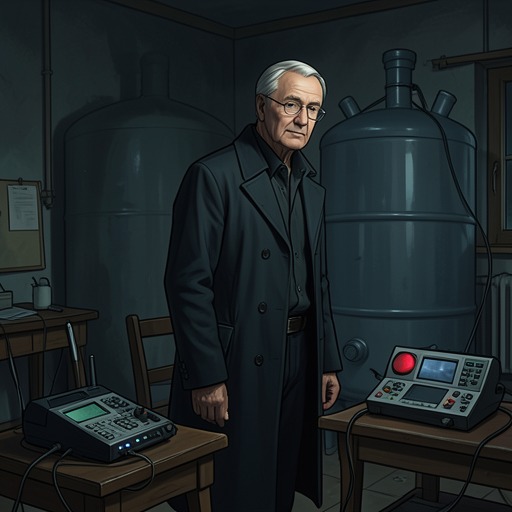
The IPCRESS FileSkip Henderson is a U.S. intelligence officer whose public geniality sits beside a record of risk, institutional resistance, and hard-earned knowledge. At a conference on a Pacific island, he gives the narrator a stark account of scientific secrets leaking abroad: material from a U.S. intelligence channel is returning word for word in files, and discoveries are being transmitted to the other side with startling speed. His role joins personal warning to professional evidence, while the contrast between his light social manner and the seriousness of his past makes him one of the narrator’s most vivid intelligence contacts.
Identity and Career
When the narrator sees Skip at the island conference, he has been promoted to major. The narrator remembers him from an earlier stint with the U.S. Central Intelligence Agency’s financial operations and regards him as one of the brightest intelligence officers he knows. Skip is accompanied by Lieutenant Barney Barnes, his assistant, although Barnes is absent from this particular meeting.
The promotion has come slowly. Skip remained a captain for a long period after returning from Korea, and the narrator dryly observes that, after two decades, he has finally become a major—only to be assigned someone to listen to his nightmares. The line points to the costs of his work without diminishing his standing as an experienced officer.
Korea and Barney Barnes
Skip’s record in Korea explains why the narrator takes his warnings seriously. He allowed himself to be captured so he could investigate collaboration in the prison camps. He returned with three bayonet wounds, tuberculosis, and a dossier that helped bring senior former prisoners before a court-martial. His long delay in promotion is presented against this background: the investigation had consequences for powerful people, and the narrator notes that those implicated had friends of their own.
Skip’s partnership with Barney Barnes is another measure of his willingness to withstand pressure. The narrator describes Barnes as the Central Intelligence Agency’s only Black officer at the time and says Skip kept him as his assistant despite opposition. Skip’s loyalty is therefore not just a matter of personal affection; it is shown through a working relationship he maintained in the face of institutional resistance.
Warning About the Scientific Leaks
At the island conference, Skip explains that the intelligence picture is incomplete: no one can yet provide the whole account because the material has not been assembled. But he identifies an alarming pattern. Information coming back through East Wing Room 192 matches discoveries in American files verbatim. As soon as a laboratory makes a discovery, he says, the other side appears to learn of it. The problem extends across the scientific program, not merely military research, and has been evident across a broad front for roughly eight months.
Skip shares this assessment with the narrator in private, opening a steel-lined briefcase as he speaks. The detail underscores the guarded setting, but his warning is not a solved case or a named source: the scale of the leak is clear to him, while its full mechanism and extent remain unresolved. He also raises the danger that nonmilitary discoveries are compromised, a particularly painful implication for the Americans gathered to discuss the losses.
Temperament and Narrative Role
Skip’s manner is remembered through affectionate, comic particulars. The narrator recalls a smiling man with stories for every bar, generous with a laugh and a couple of dollars, who carried an old camera and approached attractive women while pretending to be from Life magazine. At the conference, he gives the narrator a friendly signal; later, as he prepares to return to the United States, he asks after the narrator’s cigarettes and apologizes for not having sherry. These gestures preserve the familiar warmth of their connection even as the substance of their conversation darkens.
Jean reads Skip’s attention differently. She thinks he looked at the narrator as if he wanted to remember him thoroughly, almost as if it were a final look. The narrator initially wonders whether Skip himself was frightened, but Jean suggests he may have been concerned for the narrator instead. This exchange leaves Skip’s precise intention uncertain, while making his warning feel personal as well as professional. He departs for the United States the next day, carrying the weight of a crisis that his friendly manner cannot make less urgent.