The IPCRESS conspiracy and its exposure
The IPCRESS FileThe IPCRESS conspiracy is exposed not by a single confession or intercepted document but by converging lines of evidence: missing scientists, statistical patterns in security clearances, scientific secrets reaching the other side, and an unexpected meeting between Jay and Dalby. Its revelation turns the narrator’s investigation inside out. The supposed search for an external enemy becomes a struggle to identify who within the British intelligence system has been shaping the evidence, directing information, and making trust itself dangerous.
Causes and Background
The crisis first takes shape as a succession of disappearances. At a Senior Intelligence Conference, Dalby tells the narrator that the British Home Office is alarmed by the loss of senior biochemists; another person has left home for the laboratory and vanished en route. When the narrator receives the Raven file, Dalby counts eight top-rank disappearances in six and a half weeks. The case is officially under a security blackout, but the scale and pace of the losses make secrecy increasingly difficult to sustain.
Jay is already present in the investigation as an object of surveillance. Films made under Warren Three authority show him moving through crowded streets, sometimes accompanied by Housemartin. The footage gives the narrator a visual file on a man few members of the department have seen in person. It also establishes how much of the inquiry depends on mediated knowledge: hidden cameras, photographs, file numbers, and interpretations of people who remain physically out of reach.
A second line of inquiry begins with Carswell’s statistical work after the Burgess and Maclean affair. Rather than start with a particular suspect or theory, he processes missing-person figures and then searches broadly among top-grade security clearances for recurring features. The patterns cross occupational and geographical groups, directing attention away from isolated disappearances and toward relationships among people who might otherwise appear unrelated. His method is initially described as an abstract exercise; its importance lies in revealing a structure the investigators had not known to look for.
From Dispersed Clues to a Network
The scale of the information leak becomes clear through reports received from East Wing Room 192 of the U.S. Central Intelligence Agency. Skip explains that discoveries made in American laboratories are returning verbatim in files held by the other side. Room 192 is a large suite relaying material from the highest levels of foreign governments, making its output a way to test whether American secrets are being lost through privileged sources. The exact repetition of laboratory discoveries turns a general suspicion of espionage into evidence of an active channel for scientific intelligence.
The investigation also encounters an institutional network that does not fit a simple model of state-to-state spying. C-SICH gathers information available in Britain and receives monthly reports from the industrial espionage teams of large commercial concerns. A file on Jay, whose Polish identity is recorded under the name WOWC, includes intercepted calls with the U.S. Embassy concerning London merchant banks and the Common Market. The C-SICH assessment says he is not receiving regular payments from the Russian government; his income is large but comes from diverse, irregular sources. That detail complicates the assumption that a single foreign power pays and therefore commands him.
The narrator’s own contacts show another way information and support travel across borders. At Tokwe, two cablegrams arrive through different channels. Grenade’s coded message warns that the narrator’s position is compromised and points him toward funds held in a numbered Swiss bank account. The other, sent by Charlie Cavendish, is a brief warning whose significance depends on the personal history between sender and recipient. These messages exemplify the narrator’s account of intelligence work as reliant on overlapping circles of contacts, indirect language, and assistance without a formal agreement. Such connections can protect an agent, but they also make the network difficult to map from official records alone.
The Conspiracy Revealed
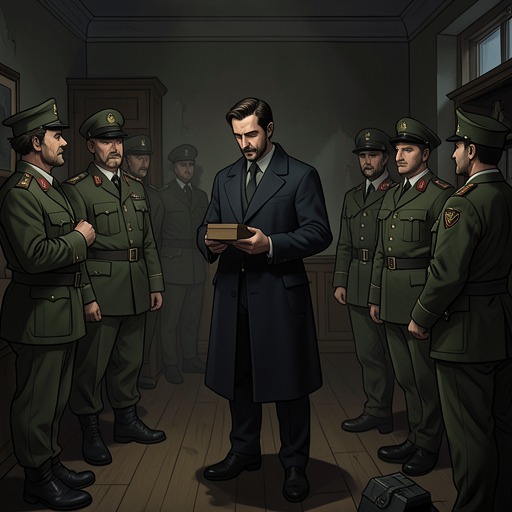
The decisive personal connection emerges when the narrator watches Dalby, Murray, and K.K. inside Dalby’s house. Jay then enters the narrator’s view. Having studied the surveillance films, the narrator recognizes him; what had seemed to be separate lines of investigation now meet in the same room. The sight directly contradicts Dalby’s earlier assurance that the investigators were approaching the same conclusion from opposite ends. The narrator’s discovery is not yet a full account of the plot, but it identifies a concealed relationship at the center of the inquiry and forces a reassessment of Dalby’s role.
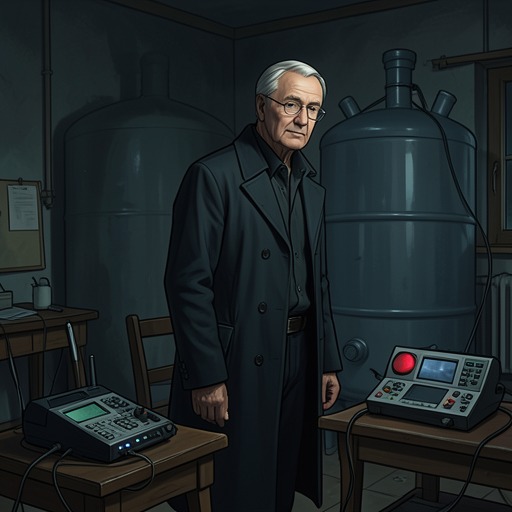
The narrator later explains that IPCRESS is a distorted abbreviation for Induction of Psycho-neuroses by Conditioned Reflex with Stress, a clinical description of the methods used in the so-called haunted house. The operation’s purpose is not simply to turn each subject into a conventional agent loyal to a foreign government. As the narrator explains it, the system is organized around Jay: people are subjected to thought reform, then their information can be passed through a network loyal to Jay personally. The revelation links the missing people and compromised intelligence to a mechanism for acquiring information while making its subjects’ loyalties and knowledge difficult to assess.
The account also clarifies why Carswell’s findings were so consequential. His statistical analysis began by coincidence, but Ross recognized the danger and concealed Carswell for his safety. The narrator had therefore been unable to find a trace of him through Charlie at C-SICH. By the time of the final discussion, Carswell may be the only guide to the operation’s extent if Jay refuses to provide an account. A data pattern that first appeared impersonal has become both the means of exposing the conspiracy and a reason to hide the analyst who found it.
Arrests and Aftermath
The roundup is conducted across several locations, with the detainees kept separate. Carshalton fills beyond capacity, so Alice informs Ross and he arranges another detention centre. At Scotland Yard, police and a Home Office representative respond to the growing operation. Murray, who has arrested Dalby after being struck on the head, later reports that he is holding K.K. under his real name, Swainson. Chico is also recovered and brought to Millbank Military Hospital; he had recognized a friend of his cousin in a film and gone to visit him rather than report the recognition. That contact leads Ross to another person in the IPCRESS network.
Painter, who had been with the team on the Lebanon operation, is identified as a psychiatrist who has brought Raven, only partly recovered from thought reform, toward something like normalcy. The narrator gives Painter a room with Carswell at Charlotte Street. Their presence there concentrates two kinds of unfinished work: recovering a witness whose condition has been altered by the operation, and establishing how extensive the network was. The arrests therefore stop neither the need for investigation nor the consequences for those caught within it.
The final settlement is an uneasy accommodation. Jay is paid £160,000 to open a department working directly between Ross and the narrator. On the same day, Dalby dies when his Jensen 541S leaves the Maidstone bypass at high speed. The narrator reports the death as instantaneous, but the coincidence in timing does not resolve the questions around Dalby’s conduct or the full extent of his dealings with Jay. K.K., meanwhile, attempts to claim diplomatic immunity and fails.
The conspiracy’s institutional aftermath remains incomplete. Painter leads a medical research laboratory, but it has found no way to reverse thought reform. Some members of the original network remain under threat of prosecution under the Treason Act; others continue sending reports under the mistaken impression that their information passes through Jay to a foreign power. The narrator does not let Jay handle those reports, wary of what renewed control might permit. He sees Jay at monthly conferences with Ross, where they prepare the Army Intelligence Memoranda Sheet, and finds him efficient and apparently content. The final caution is personal as well as political: Jay invites the narrator and Jean to dinner, but the narrator declines, unwilling to turn a working accommodation into close friendship. The operation is exposed and disrupted, yet its damaged loyalties, unresolved cases, and surviving channels prevent the ending from becoming a clean restoration of trust.