United States Air Force
The IPCRESS FileThe United States Air Force occupies a pivotal role in the book’s account of Joe One: its long-running aerial monitoring first registers the Soviet atomic explosion, and its intelligence assessment illustrates how institutional forecasts failed to keep pace with the evidence. The episode makes the Air Force both a technical instrument of detection and one of the agencies forced to confront how little it had anticipated.
Monitoring and Detection
Near the Holo Archipelago, a United States Air Force B-29 flew a carefully calculated Pacific route in August 1949. Its special attachments carried photographic plates designed to register cosmic rays; the unit had been charting the region for months. The work was usually routine, but the plates returned from this flight were blackened by an intense concentration of radiation rather than showing the familiar patterns. The anomaly brought the crew back to the briefing room and gave the Air Force’s monitoring work an immediate strategic meaning.
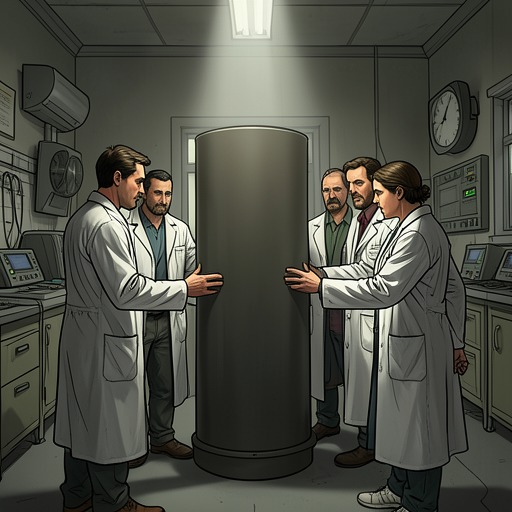
The result was not treated as proof in isolation. The base mobilized the Atomic Bomb Detection Unit, formed the previous year, and sent aircraft back along the flight path to collect dust particles from the atmosphere. Those samples went to two Atomic Energy Commission laboratories for analysis. The sequence shows a practical division of labor: Air Force aircraft gathered the evidence in the air, while laboratory testing and subsequent reporting established what the atmospheric traces meant.
The Joe One Discovery
The plates’ unusual darkening was identified as the effect of an atomic explosion. The first inference in the briefing room was sharpened by the fact that no American bomb had been detonated that year: the event could not be explained as a known United States test. Five days later, Washington received a detailed report concluding that the explosion was almost certainly a bomb. The sampled particles pointed to a plutonium device, and the estimated yield was six times that of the Hiroshima bomb.
The detection account presents the Air Force’s aerial work as an early link in a wider intelligence chain, not as the final analysis. Photographic evidence triggered the response; airborne collection supplied material that could be tested; the resulting report transformed an unexplained radiation reading into an assessment of a major foreign weapons test. In this episode, the value of persistent surveillance lies in making an event legible that had not been directly observed.
Intelligence Estimates and Reversal
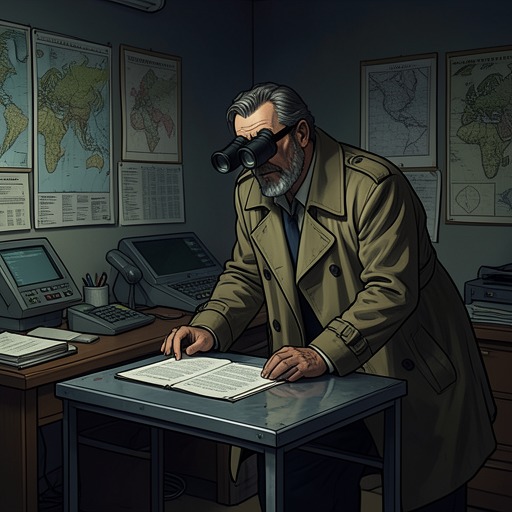
The Air Force also appears through the expectations its intelligence service had set before the explosion. Estimates across the United States government differed: Major-General L. R. Groves had predicted a fifteen- or twenty-year interval from 1945, Dr Vannevar Bush had forecast ten years, and naval and army assessments placed a Soviet bomb in 1965 and 1960 respectively. The United States Air Force Intelligence report was regarded as panic-stricken for naming 1952. Yet the explosion had already occurred in September 1949.
That contrast gives the Air Force a double place in the episode. Its specialized aircraft and detection unit help establish what has happened, but the service’s own forecast shows how even formal intelligence estimates can lag behind a rapidly changing strategic reality. The narrative does not present the Air Force as possessing a complete picture: detection, scientific confirmation, and advance prediction remain distinct tasks, and success in the first does not mean the third was accurate.
Narrative Significance
Joe One turns the Air Force’s technical routine into a measure of geopolitical surprise. The long Pacific flight routes, cosmic-ray plates, and dust-sampling aircraft are not incidental machinery; they are the means by which a distant explosion becomes actionable knowledge. At the same time, the gap between the Air Force estimate of 1952 and the evidence from 1949 underscores the limits of prediction. The service’s importance rests in that tension: it helped detect the event, while its earlier expectations reveal how unprepared the intelligence system had been for it.