WOOC(P) changing-papers procedure
The IPCRESS FileThe WOOC(P) changing-papers procedure is a four-day process for replacing an agent’s identity documents and revising the surrounding record of that person’s life. When Dalby tells the Unnamed narrator to change papers, the instruction leads not to a single passport appointment but to a closely controlled administrative operation that alters and removes evidence across multiple records.
Purpose and use
Dalby orders the Unnamed narrator to change papers during the investigation. The narrative does not specify a separate immediate reason for the order, but presents it as part of the agency’s work with agents and their identities. The procedure’s scale makes clear that a change of papers is not a cosmetic adjustment: it means rebuilding the documentary version of a person that ordinary institutions can consult.
Administration and security
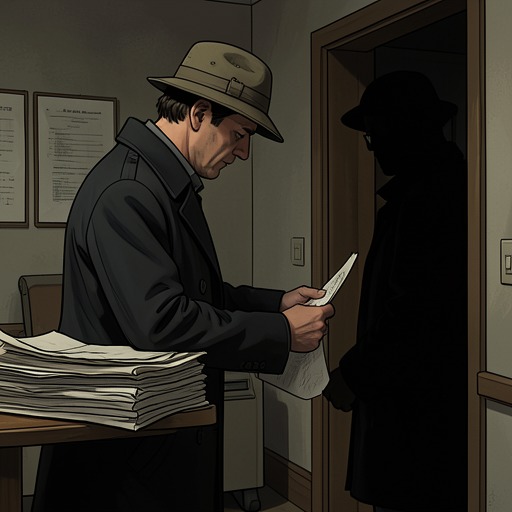
The process is handled at the War Office by a small roomful of civilian clerks whose work is devoted to changing papers throughout the year. The Unnamed narrator visits the department run by Mr Nevinson, located in a small room at the top of the building. Its door bears a label for documents, personnel reclassifications, and personnel deceased. The clerks have the highest security clearance in government employment, yet they are themselves under continuous security surveillance. The same department handles papers for every important agent in government service, placing the operation inside a tightly monitored system rather than leaving it to an individual officer.
The procedure gathers identifying material as well as issuing documents. The narrator is photographed, signs forms repeatedly, and supplies fingerprints through a series of instructions to look at the camera, sign, and bring his thumbs and fingers together. Only after this collection is complete is he told he can wash his hands; the soap and towel are left on a filing cabinet. The clipped, courteous routine makes an extensive identity overhaul feel like an ordinary office transaction, even as the security surrounding the clerks marks its exceptional stakes.
Reconstructing and erasing a record
A new passport is only one part of the change. The narrator explains that the process also produces a new birth certificate, radio and television licences, and marriage certificates, while the old documents are thoroughly destroyed. In his account, changing papers turns a person’s whole life over like topsoil: the operation reaches backward through records as well as forward into new identification.
The narrator illustrates that reach with his own school history. His photograph appeared in the Burnley Daily Gazette in July 1939 after he won a fifth-form mathematics prize; the following year, the whole sixth form appeared in a class photograph. He says that anyone trying to consult those issues at a library, the newspaper’s offices, or Colindale would encounter the thoroughness of Mr Nevinson’s work. The example suggests that the operation extends beyond replacing documents in the agent’s possession to suppressing accessible traces in public records.
Institutional significance
The procedure makes identity an administrative construction maintained across linked records. Its effectiveness depends on coordinated changes, high-clearance clerks, surveillance, and the destruction of superseded papers; changing only one document would leave the older identity visible elsewhere. At the same time, the narrator’s brisk account of forms, fingerprints, and filing cabinets exposes the institutional machinery behind espionage: an agent’s public past can be reorganized through routine paperwork, but only by a department whose own staff are subject to constant scrutiny.