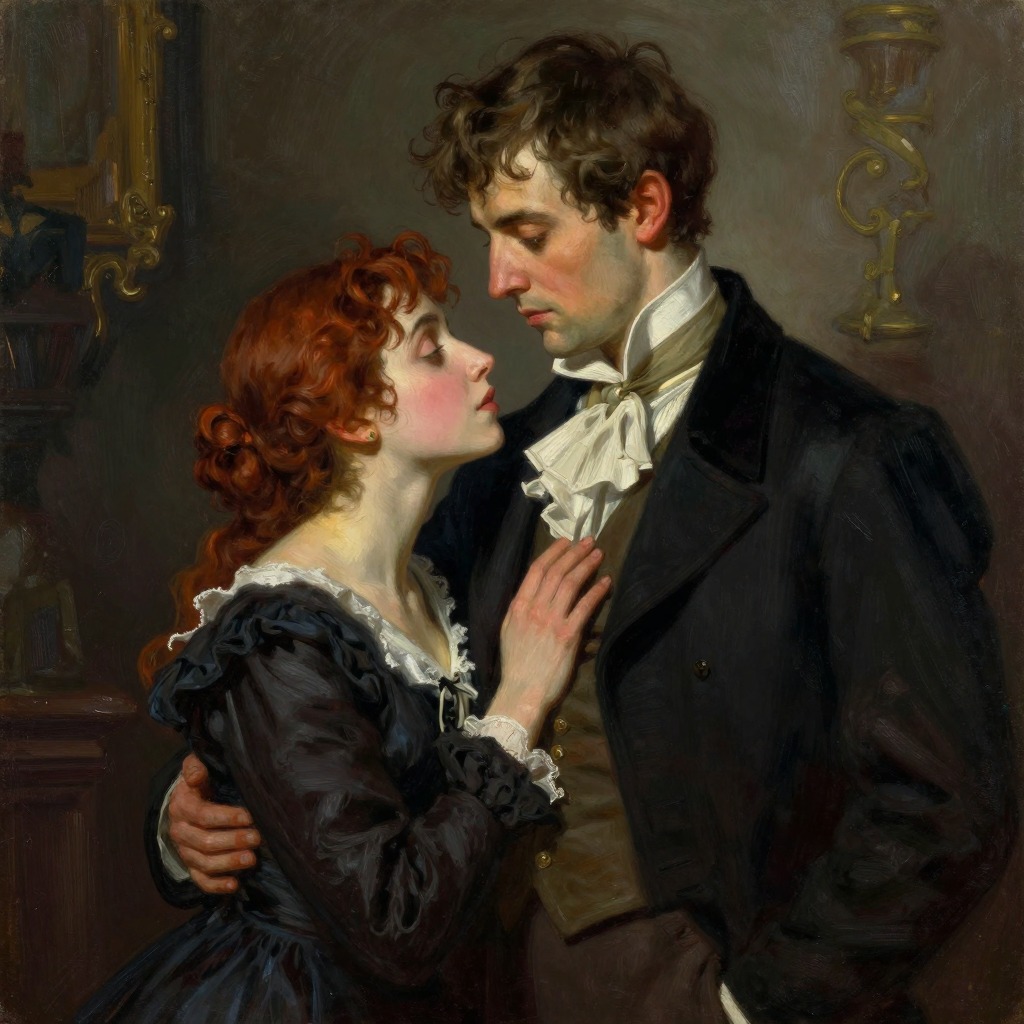
Green bench
The IdiotThe green bench in the Pavlovsk park is a deceptively simple object that accumulates immense narrative weight across the second half of The Idiot. It is not merely a piece of park furniture but a fixed point in the landscape where the most intimate and decisive conversations between Prince Myshkin and Aglaya Epanchin take place. The bench functions as a secret stage, a place outside the formal drawing-rooms where the characters can speak with a dangerous degree of candor, and where the fragile architecture of their relationship is both built and shattered.
Location and First Mention
The bench is first pointed out to the prince by Aglaya herself during their walk to the Vauxhall. She directs his attention to a specific spot in the park, "just by those three big trees," and reveals that she comes there alone early in the morning, at seven o'clock, when the rest of the household is still asleep. This confession immediately imbues the bench with a sense of private, almost sacred, significance. It is her place, a retreat from the social pressures of her family, and by sharing its location with the prince, she is offering him a glimpse into her inner world. The prince, overwhelmed by the implication, can only mutter that the spot is "lovely."
The Rendezvous and the Note
The bench becomes the site of the novel's most crucial romantic negotiation when Aglaya sends the prince a hastily written note, arranging a meeting there for the following morning. The note itself is a study in contradictory emotions: it commands his presence for a matter of "great importance" concerning himself, yet is filled with self-conscious embarrassment and a sharp awareness of the prince's "simple character." She even feels compelled to repeat the bench's location, as if doubting his ability to find it. This note, which the prince reads by a streetlamp and then kisses, transforms the bench from a passive landmark into the designated stage for a life-altering conversation.
The Morning Meeting
At the appointed hour, the prince finds Aglaya waiting for him. The conversation that unfolds on the bench is a whirlwind of declarations, accusations, and confessions. Aglaya, in a state of high nervous excitement, reveals her plan to "run away from home" and asks the prince to be her friend and accomplice. She speaks of her desire to escape the confines of her family, to see Gothic cathedrals, to study in Paris, and to dedicate herself to teaching. The prince, stunned and overwhelmed, listens as she oscillates between childish fantasy and sharp, painful insights. It is here that she confronts him directly about his relationship with Nastasya Filippovna, accusing him of coming back to St. Petersburg for her sake. The prince, in a moment of devastating honesty, confirms this, saying, "Yes, for her sake." This admission, made on the very bench where Aglaya had placed her trust, is the emotional climax of their meeting and the beginning of the end for their potential union.
Symbolic Significance and Aftermath
The green bench is more than a meeting place; it is a symbol of the impossible intimacy and the fatal misunderstandings that define the prince's relationship with Aglaya. It is where she offers him her most vulnerable self and where he, with equal honesty, reveals the depth of his commitment to another woman. The bench is also the site of a later, more bitter revelation, when Aglaya, in a fit of pique, falsely claims to have promised herself to Ganya Ivolgin on that very seat. This lie, told to wound the prince, further corrupts the bench's original promise of a private, sacred space. Ultimately, the green bench stands as a monument to a love that could not be, a place where hope was articulated and then irrevocably broken, its quiet presence in the park a silent witness to the emotional devastation that unfolds around it.