Hippolyte Terentieff
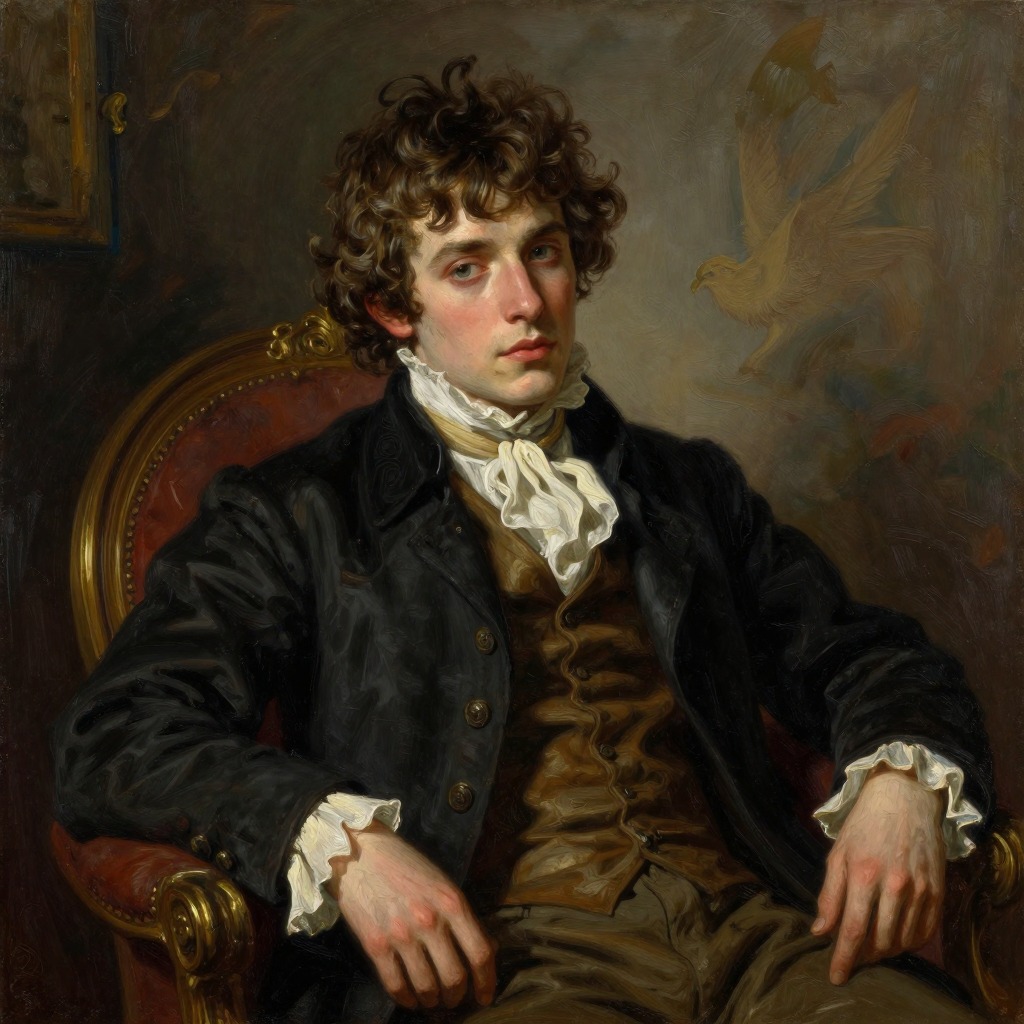
The IdiotHippolyte Terentieff is a seventeen-year-old consumptive youth whose nihilistic confession, failed suicide, and bitter intellectualism make him one of the novel's most unsettling figures—a dying man who refuses to die quietly, using his remaining weeks to expose the hypocrisy and vanity of everyone around him. He is introduced as a skeleton-like figure with a ghastly complexion, bright eyes, and red spots on his cheeks, coughing persistently and panting for breath, with only a few weeks left to live according to the medical student Kislorodoff. His presence in the novel is a constant provocation: he challenges the prince's compassion, mocks Gania's ambitions, and forces the assembled company to confront the meaning of a life that is about to end. His "Necessary Explanation," read aloud at the prince's birthday gathering, is both a philosophical manifesto and a theatrical performance, culminating in a deliberately botched suicide attempt that leaves him humiliated and enraged. Hippolyte's trajectory is one of defiance, despair, and a desperate craving for recognition, ending in a death that comes sooner than expected, about a fortnight after Nastasia Philipovna's murder.
Identity and Background
Hippolyte is the eldest son of Marfa Borisovna Terentieff, the widow of Captain Terentieff, and lives with his mother and younger siblings in a cramped flat on the fourth floor. He is a former schoolmate of Colia Ivolgin, who remains his most loyal visitor. His illness—advanced consumption—has confined him to bed for long stretches, and he has become a voracious reader and a fierce arguer, developing a worldview that combines nihilism, atheism, and a bitter contempt for the "commonplace" people he sees around him. He has been treated by the medical student Kislorodoff, a nationalist and atheist, who told him bluntly that he has about a month to live, possibly less, and that he might die suddenly at any moment. This knowledge has shaped everything about him: his speech, his actions, and his relentless need to make an impression before he vanishes.
The "Necessary Explanation" and the Failed Suicide
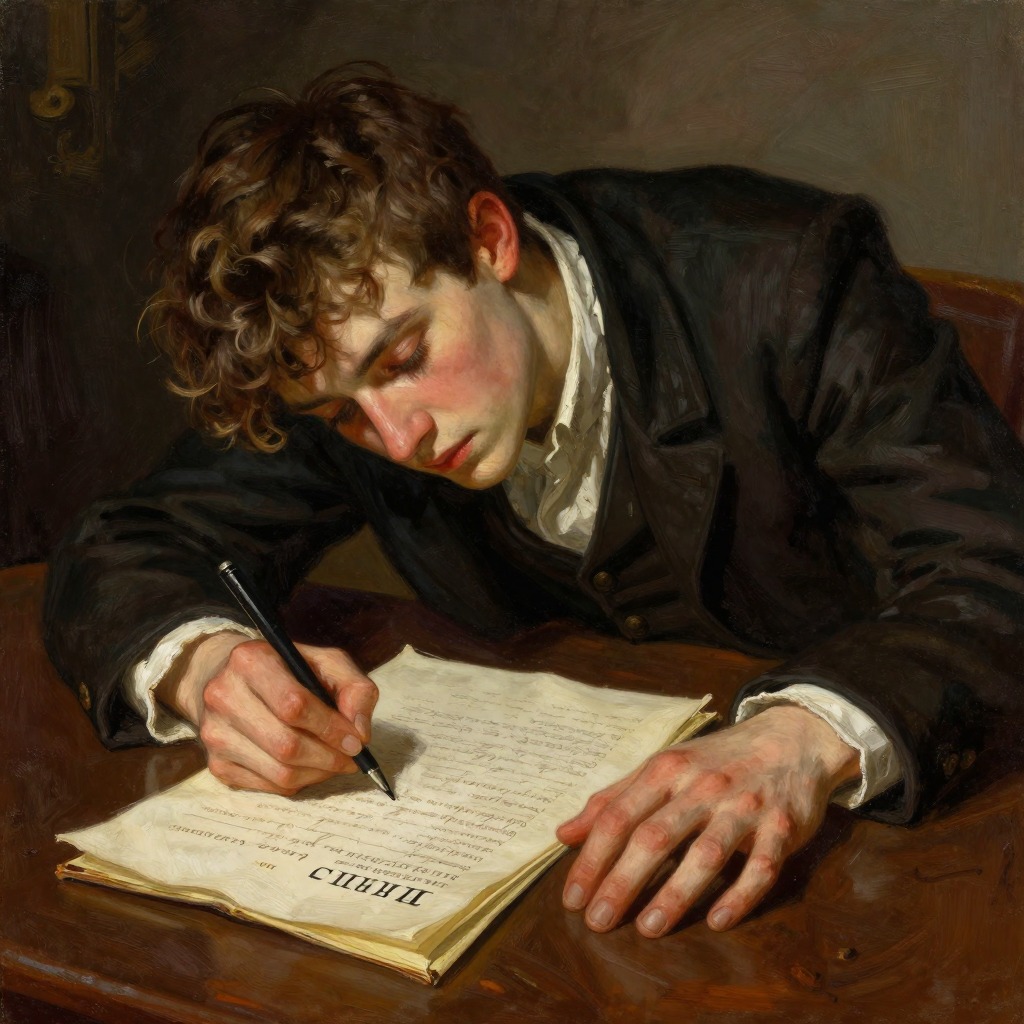
The centerpiece of Hippolyte's role in the novel is the reading of his "Necessary Explanation" at the prince's birthday party, a document he wrote over the course of a day and a night, sealed with red wax, and intended to be read at sunrise. The manuscript is a sprawling, feverish confession that ranges over his dreams, his hatred of the "commonplace," his visit to Rogojin's gloomy house, his horror at Holbein's painting of the dead Christ, and his final conviction that suicide is the only act left to him that he can begin and end of his own free will. He declares that he will shoot himself at dawn in the park, so as not to disturb anyone. The reading is interrupted by fits of coughing, by the laughter and impatience of his audience, and by his own growing agitation. When he finishes, he produces a pistol, but the cap is missing, and the weapon misfires. The scene collapses into farce: Hippolyte sobs hysterically, swears he forgot the cap accidentally, and begs for the pistol back to prove his sincerity. The company laughs, and he is carried away unconscious. The episode leaves him deeply humiliated, and he later tells the prince that he now perceives what a terrible mistake he made in reading the article.
Relationships and Conflict
Hippolyte's interactions with other characters are marked by a mixture of dependency and venom. He is a guest at the Ptitsins' house, where he torments General Ivolgin by questioning the existence of the general's invented friend Captain Eropegoff, and where he delivers a blistering farewell speech to Gania, calling him the "type and incarnation of the most impudent, self-satisfied, vulgar commonplaceness." He has a complex relationship with the prince: he tells Muishkin that he does not love him, yet he seeks him out repeatedly, asking for his opinion and even embracing him. He warns the prince about Rogojin, claiming that Rogojin will murder Aglaya Ivanovna out of jealousy, and he reveals that he has arranged a meeting between Aglaya and Nastasia Philipovna. He also claims to have written to Aglaya herself, and to have received a "slap in the face" from her—a moral rebuff. His mother, Marfa Borisovna, is terrified of him, and Colia is both his friend and his caretaker.
Change and Ending
Hippolyte does not change; he intensifies. His illness progresses, and his bitterness deepens. After the failed suicide, he becomes more malicious and sarcastic, especially about the prince's impending marriage. He dies about a fortnight after Nastasia Philipovna's murder, in great agitation and rather sooner than he expected. The novel records no deathbed conversion, no reconciliation, no softening. He remains to the end what he was: a dying boy who refused to die quietly, who used his last weeks to accuse, to provoke, and to demand that the world take notice of him before he disappeared.
Narrative Role and Thematic Significance
Hippolyte functions as a kind of anti-prince, a dark mirror to Muishkin's compassion. Where the prince offers forgiveness and understanding, Hippolyte offers contempt and exposure. His "Necessary Explanation" is a sustained meditation on death, meaning, and the right to self-destruction, and it forces the novel's characters—and its readers—to confront questions that the prince's Christian humility cannot answer. He embodies the nihilistic despair that the prince's faith is meant to counter, and his failed suicide is a grotesque parody of the prince's own epileptic "moments" of heightened consciousness. He is also a vehicle for Dostoevsky's critique of the radical youth of the 1860s: intelligent, passionate, but ultimately self-destructive and incapable of genuine love or action. His death, like his life, is a protest—but against what, he himself cannot finally say.