Idiocy
The IdiotIdiocy is a central and contested concept in Fyodor Dostoevsky's novel, functioning both as a medical diagnosis for Prince Lef Nicolaievitch Muishkin and as a social label that the narrative systematically interrogates. The term is used by characters to dismiss, patronize, and misunderstand the prince, yet his actions repeatedly reveal a moral and spiritual depth that confounds the label. The novel thus transforms 'idiocy' from a simple mark of deficiency into a complex symbol of innocence, truth-telling, and a radical, often inconvenient, form of Christian compassion that stands in stark opposition to the calculating, self-interested rationality of the society around him.
Identity and the Social Label
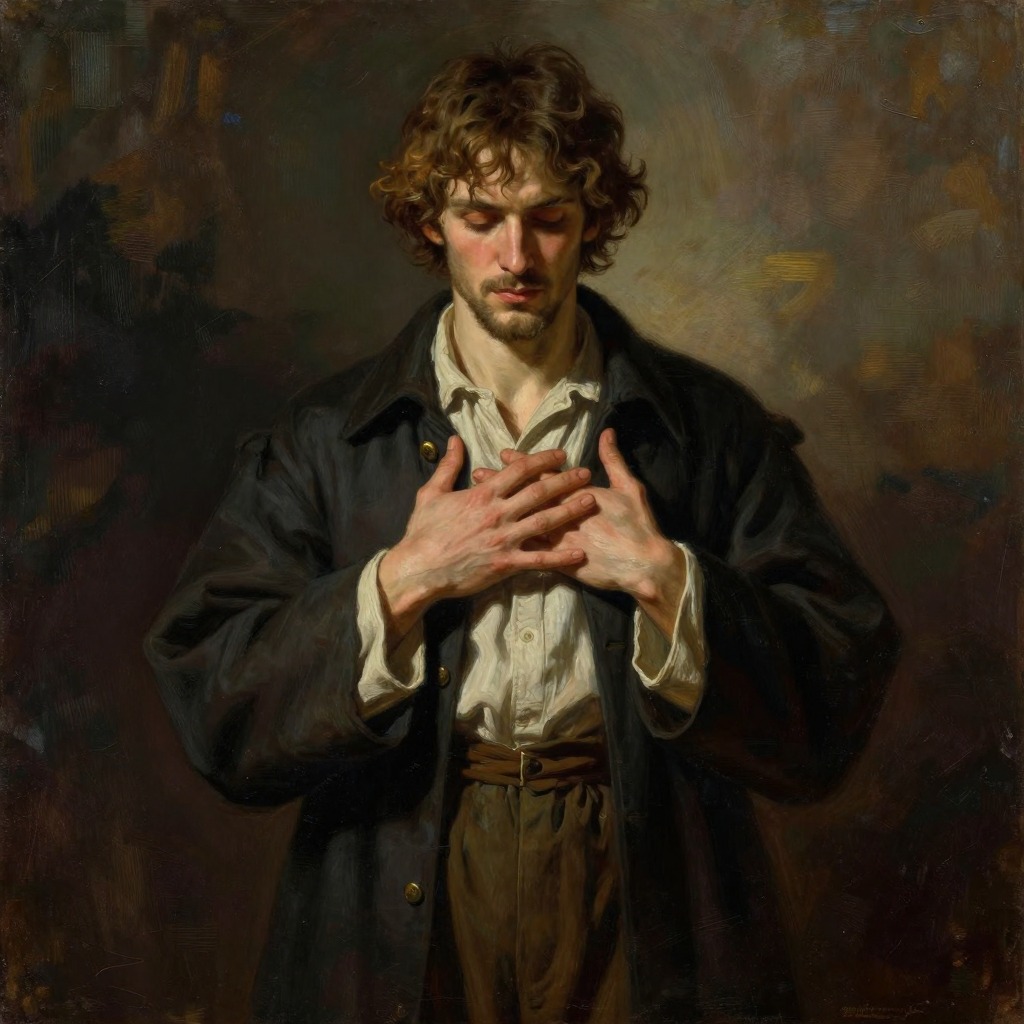
The prince himself introduces the term on the train to St. Petersburg, telling Parfen Rogojin that his fits were so frequent they made almost an idiot of him . The label immediately becomes a social weapon. When the prince gives his name to a fellow passenger, the clerk Lebedeff responds with surprise, saying he has never heard of any Prince Muishkin nowadays, as if the name itself, though historical, has become a nullity . The prince's own self-identification as an invalid and his confession that he was once so ill he was nearly as bad as an idiot provide the raw material for others to define him. His appearance reinforces this: he is described as having a thin, pointed beard, large blue eyes with an intent but heavy expression, and a face that is colourless except for being blue with cold . This physical otherness marks him as an outsider from the first moment.
The Prince's Self-Understanding and Rejection of the Label
Despite the pervasive label, the prince explicitly rejects its current applicability. He states, "I am often called an idiot, and at one time I certainly was so ill that I was nearly as bad as an idiot; but I am not an idiot now. How can I possibly be so when I know myself that I am considered one?" . This statement is crucial: it establishes that the prince possesses self-awareness and a capacity for reflection that the label of idiocy would deny him. His awareness of being called an idiot does not make him one; rather, it reveals the gap between social perception and inner reality. The prince's own narrative of his life in Switzerland, where he lived among children and found happiness in simple things, further complicates the label. He describes himself as a philosopher, perhaps, and admits he may wish to teach his views to those he meets , a far cry from the vacant mind the term implies.
The Social Function of the Label: Dismissal and Control
Throughout the novel, characters deploy the term 'idiot' to dismiss the prince's inconvenient truths and to maintain their own social and psychological equilibrium. When the prince delivers a passionate, lengthy speech at the Epanchin family party about Roman Catholicism, socialism, and the Russian soul, the old dignitary listens with a kind of condescending amusement, and the general atmosphere is one of alarm. The prince himself is aware of this dynamic, admitting that he has no sense of proportion and that his words and gestures do not express his ideas, leading to humiliation . The label thus becomes a tool for the established order to neutralize a voice that speaks from a radically different moral position. The prince's simplicity is not a lack of intelligence but a lack of the social cunning and duplicity that the world demands.
The Prince's Actions as a Refutation of the Label
The prince's actions throughout the novel consistently demonstrate a moral clarity and compassion that the label of idiocy cannot account for. His immediate and profound pity for Nastasia Philipovna, his willingness to marry her despite her past, and his forgiveness of Rogojin's murderous attack all point to a form of understanding that is not intellectual but spiritual. His offer to marry Nastasia is not the act of a fool but of a man who sees her suffering and her essential worth. His response to Gania's slap—"Oh! how ashamed you will be of this afterwards!"—is not the reaction of a simpleton but of someone who perceives the future remorse of his aggressor with painful clarity. These actions consistently refute the label, showing that the prince's 'idiocy' is, in fact, a form of radical, inconvenient goodness.
Thematic Significance: The Inversion of Values
The novel's treatment of idiocy is part of its larger critique of a society that values calculation, self-interest, and social performance. The prince, who is labeled an idiot, is the only character who consistently acts out of genuine compassion and truthfulness. The truly 'idiotic' behavior, in a moral sense, is exhibited by the supposedly sane characters: Gania's greedy pursuit of Nastasia's dowry, Rogojin's murderous jealousy, and the general social hypocrisy of the Epanchin circle. The novel thus inverts the conventional valuation of intelligence and idiocy, suggesting that a heart capable of pity and forgiveness is a higher form of wisdom than the worldly cleverness that leads to ruin. The prince's final descent into actual idiocy after the murder of Nastasia is a tragic culmination of this theme: the world's cruelty has finally overwhelmed the soul that was too good for it.