Lukian Timofeyovitch Lebedeff
The IdiotLukian Timofeyovitch Lebedeff is one of the most persistently present and protean minor figures in Dostoevsky's novel. A petty clerk with a blotchy face and a red nose, he first appears in a third-class railway carriage on the Warsaw and Petersburg line, where he immediately displays his encyclopedic knowledge of everyone's affairs by identifying Parfen Rogojin as the son of a millionaire merchant and by recounting the scandalous history of Nastasia Philipovna Barashkoff. From this moment onward, Lebedeff attaches himself to nearly every major character, serving as landlord, informant, comic foil, and occasional moralist, all while maintaining a posture of abject servility that barely conceals a sharp, self-serving intelligence.
Identity and Background
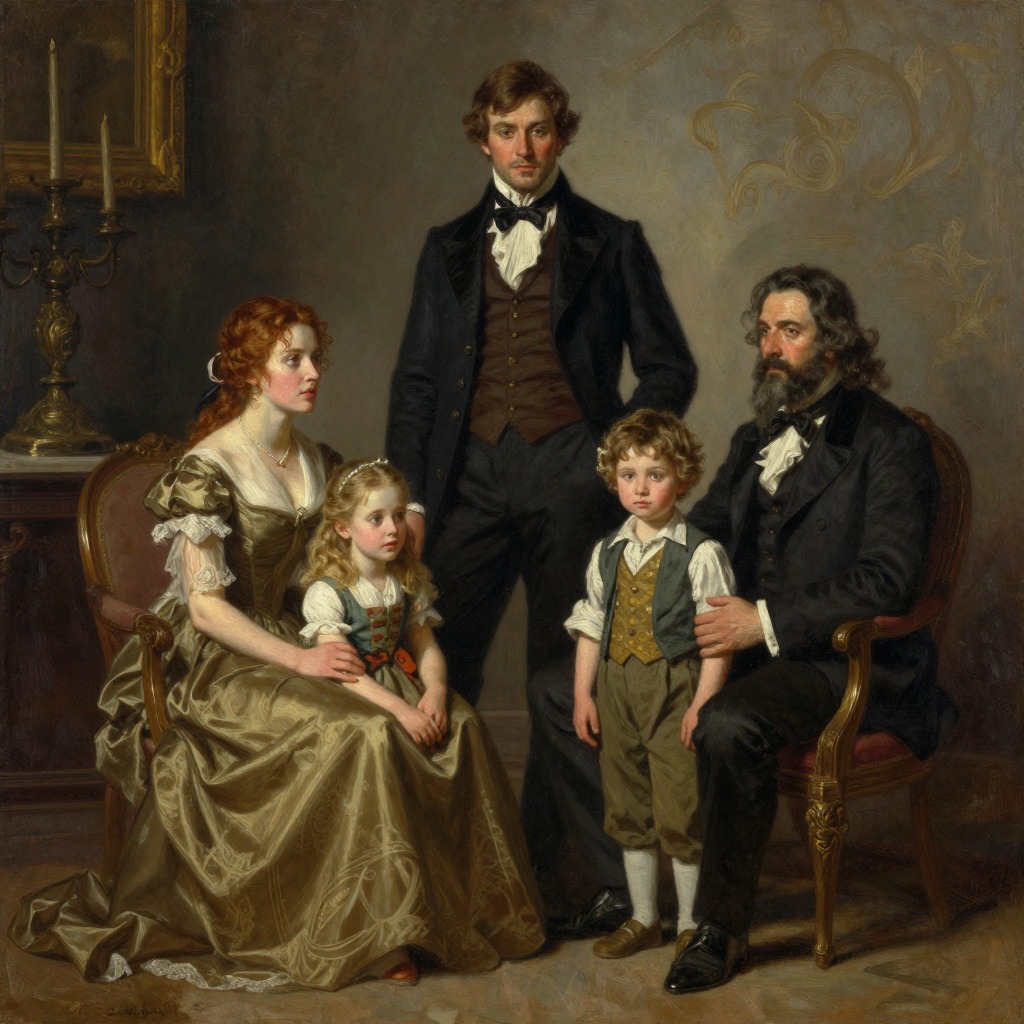
Lebedeff is a collegiate secretary, a low-ranking civil servant, who supplements his income by lending money on gold and silver articles through an agent. He is a widower with several children, including his eldest daughter Vera, who acts as a surrogate mother to her infant sister Luboff after their mother's death in childbirth. His household is chaotic and crowded: he lives with his daughters, his young son, and a nephew, Vladimir Doktorenko, with whom he quarrels constantly. Lebedeff's own account of his name is characteristically slippery — when the prince asks for it, he first gives "Ti-Ti-Timofey" and then "Lukianovitch," only to be exposed by his nephew as having reversed the order; his real name is Lukian Timofeyovitch. He explains this lie as an act of self-humiliation, a gesture that captures his entire mode of being: he debases himself strategically, often to gain advantage or to deflect scrutiny.
Apocalypse, Law, and Eloquence
Lebedeff's most distinctive trait is his obsessive study of the Book of Revelation, which he has been interpreting for fifteen years. He expounds the "star called Wormwood" as a symbol of the European railway network, and he once made a high-ranking official tremble by his numerical computations concerning the Antichrist. His Apocalypse readings are not merely eccentric; they serve as a vehicle for his genuine, if drunken, philosophical concerns about the weakening of the "springs of life" in the modern age. He also has a mania for legal rhetoric. He prepares elaborate courtroom speeches and recites them to his family, once defending a Jewish usurer named Zeidler against an old woman who had been robbed of her savings. His nephew mocks him for this, but Lebedeff takes his oratory seriously, and the prince himself notes that Lebedeff can be business-like when he chooses.
Role in the Plot and Relations with the Prince
Lebedeff becomes Prince Muishkin's landlord, first in St. Petersburg and then at Pavlofsk, where he rents the prince a villa. He is a constant presence, often appearing at the prince's door with news, warnings, or requests. He informs the prince of Nastasia Philipovna's movements, mediates between the prince and Rogojin, and even attempts to have the prince declared mentally incompetent to prevent his marriage to Nastasia — a scheme he later confesses with theatrical remorse. Despite his intrigues, Lebedeff is genuinely attached to the prince, whom he calls "most excellent prince" and to whom he makes abject confessions of his own baseness. He is also a close companion of General Ivolgin, with whom he drinks and quarrels, and he plays a key role in the episode of the general's theft of four hundred roubles, a matter he handles with a mixture of cunning and sentimentality.
Theft, Confession, and Moral Ambiguity
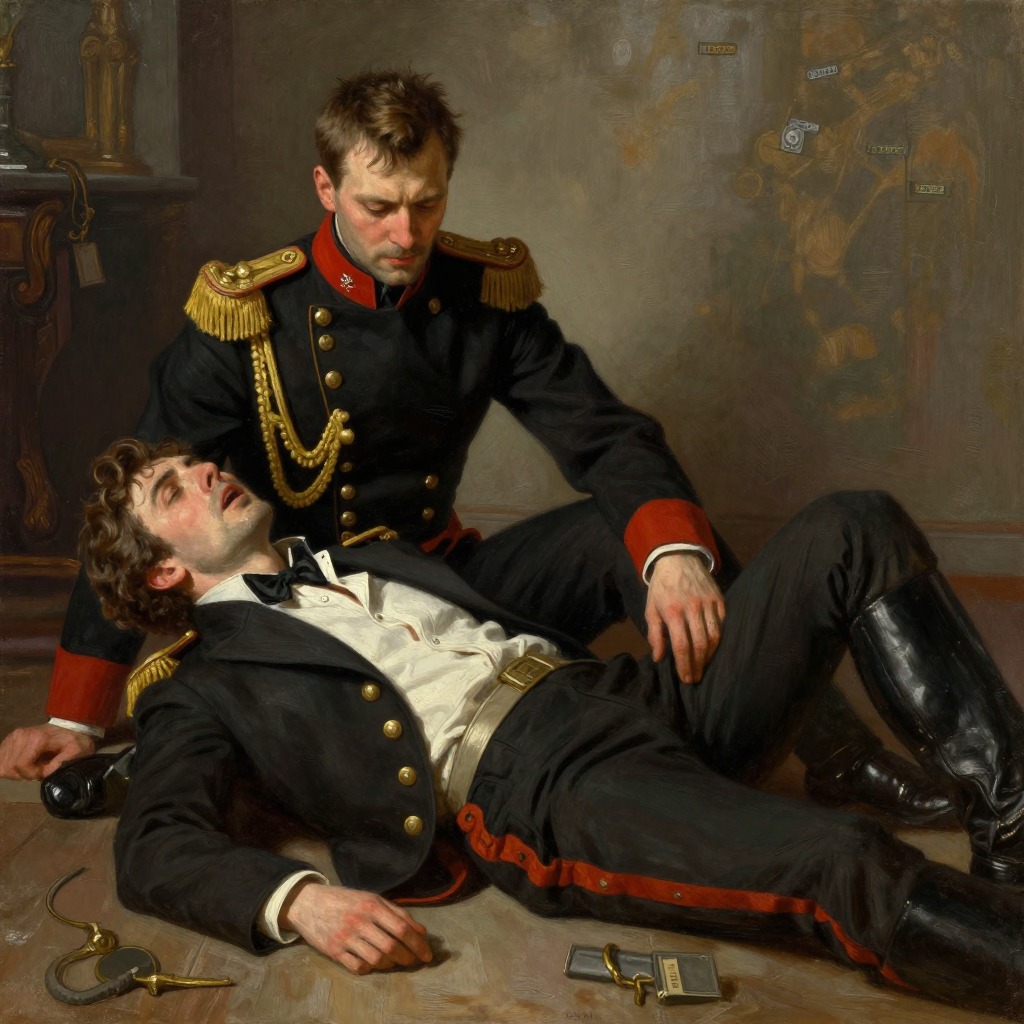
The episode of the missing four hundred roubles reveals Lebedeff at his most characteristic. He loses the money from his coat pocket during the prince's birthday party, and rather than immediately accusing anyone, he conducts a sly investigation. He plants the purse under a chair and later in his own coat lining, watching to see whether General Ivolgin will confess. When he finally reveals the truth to the prince, he does so with a mixture of shame and pride, declaring that he loves the general all the more for the affair. The prince rebukes him for tormenting the old man, and Lebedeff agrees to end the game. This episode encapsulates his method: he manipulates situations not for material gain alone but for a kind of moral theater, in which he can play the roles of detective, judge, and penitent all at once.
Final Appearance and Significance
Lebedeff appears in the novel's final pages as one of the few characters who continues his life unchanged after the catastrophe. He is present at the discovery of Rogojin's murder of Nastasia Philipovna, having helped to alert the police. His last recorded act is to attend the general's funeral and to weep over the deceased with genuine feeling. Lebedeff is a figure of the middle ground: neither villain nor hero, he embodies the novel's interest in the comic, the grotesque, and the morally ambiguous. His Apocalypse interpretations, his legal posturing, his drunken confessions, and his abject devotion to the prince all mark him as one of Dostoevsky's most vivid minor creations — a man who turns his own baseness into a kind of performance, and who, in his own words, is "base" but knows it, and thereby earns a strange, compromised dignity.