Portrait of Nastasia Philipovna
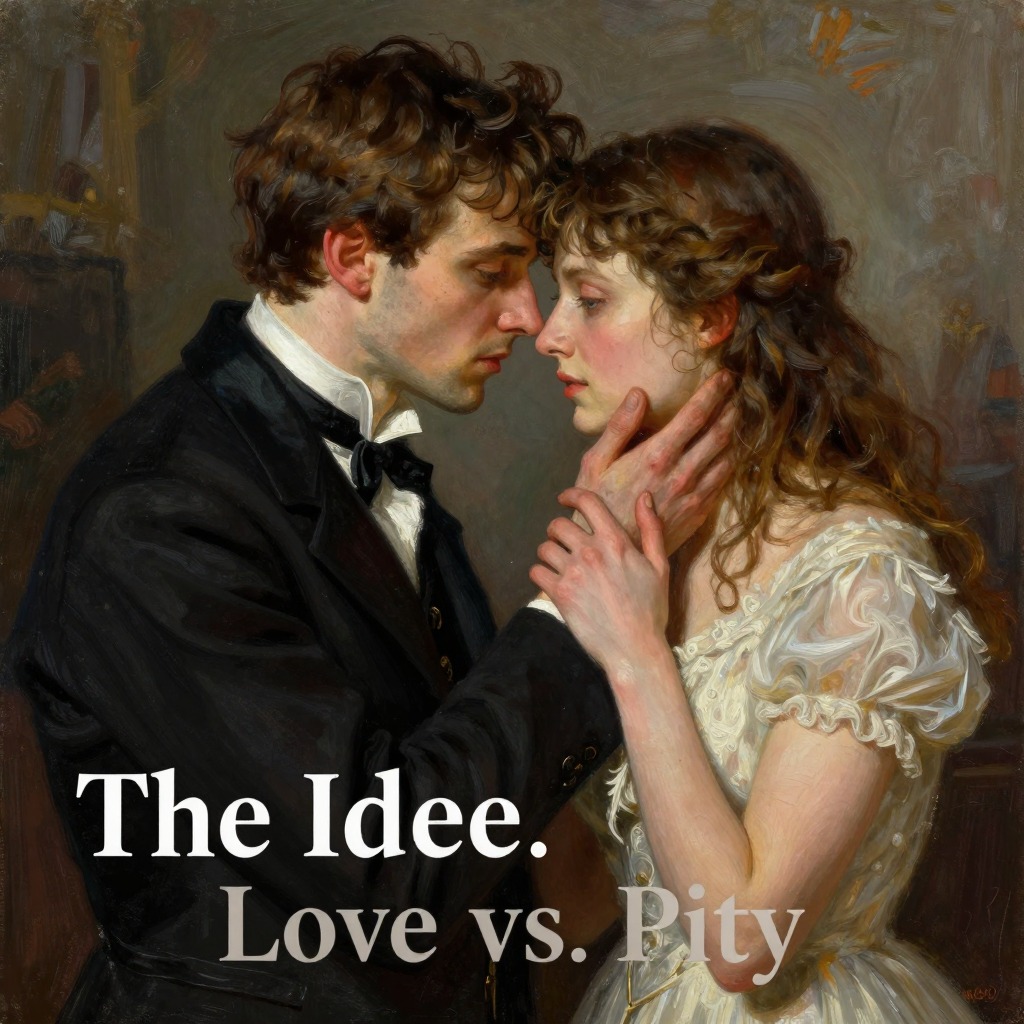
The IdiotThe Portrait of Nastasia Philipovna is a photograph that circulates among the novel's male characters, functioning as a material object that condenses her beauty, suffering, and social notoriety. It first appears in General Epanchin's study, where Prince Muishkin sees it and immediately reads in her face a destiny of profound suffering and pride. The portrait then passes to Gania, is examined by the Epanchin women, and later becomes a token in the power struggles between Rogojin, Gania, and the prince. More than a mere likeness, the photograph acts as a catalyst for desire, jealousy, and revelation, and its circulation maps the network of relationships that define Nastasia's tragic position.
Appearance and First Impressions
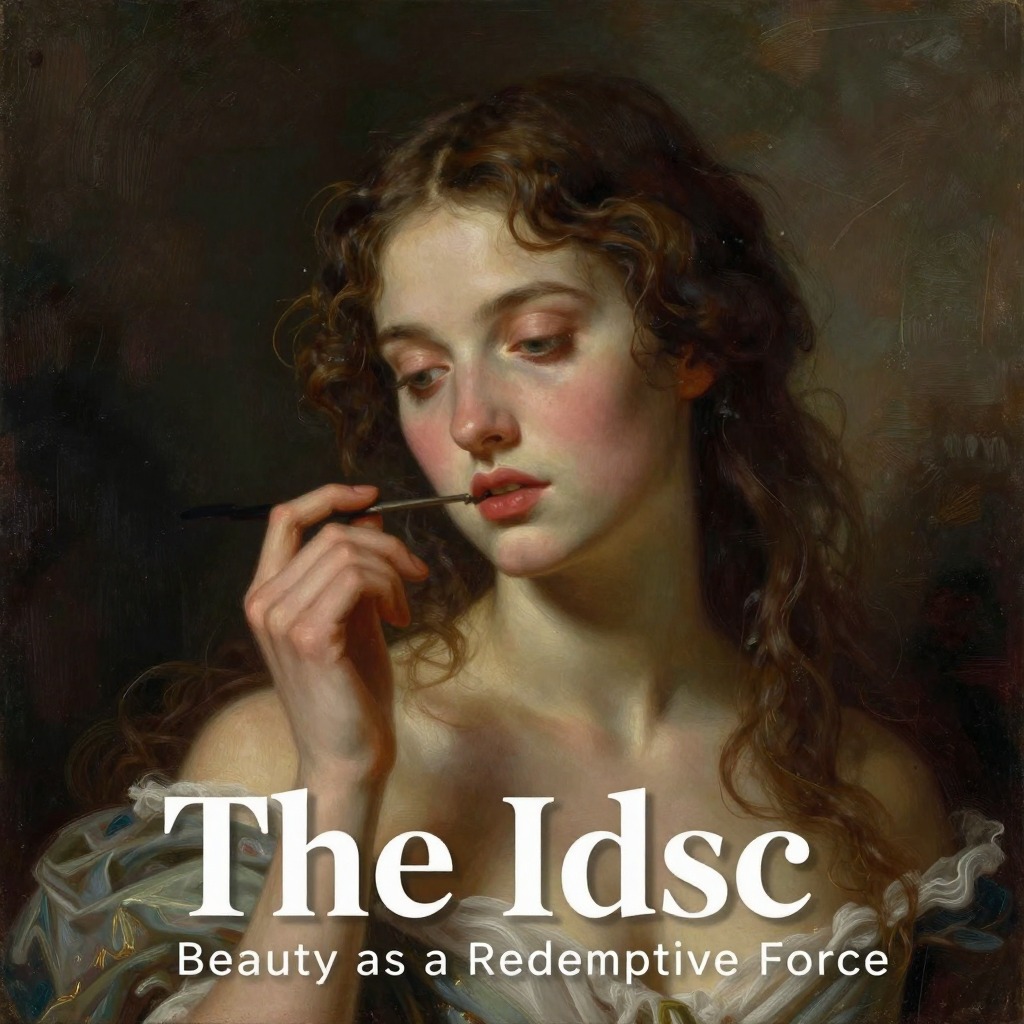
The portrait is introduced when Gavrila Ardalionovitch Ivolgin shows it to General Epanchin in his study, explaining that Nastasia gave it to him that day as a birthday present. The general examines it with great curiosity and animation, remarking that she had promised to give a decisive answer about marriage that evening. When Prince Muishkin sees the photograph, he is immediately struck: "How wonderfully beautiful!" he exclaims with warmth. The picture shows Nastasia in a simple black silk dress, with dark hair plainly arranged, deep and thoughtful eyes, and a passionate but proud expression. She appears rather thin and a little pale. The prince's reaction astonishes both Gania and the general, who ask how he knows it is Nastasia Philipovna. Muishkin explains that he heard of her beauty from Rogojin in the train, but his deeper response goes beyond report: he seems to recognize something in her face that calls to him.
The Prince's Interpretation of the Face
When Gania presses the prince on what he sees in the portrait, Muishkin delivers a remarkable analysis. He calls it "a wonderful face" and declares that her destiny is not ordinary. "Her face is smiling enough, but she must have suffered terribly—hasn't she? Her eyes show it—those two bones there, the little points under her eyes, just where the cheek begins. It's a proud face too, terribly proud! And I—I can't say whether she is good and kind, or not. Oh, if she be but good! That would make all well!" This reading reveals the prince's characteristic fusion of aesthetic perception and moral intuition: he sees suffering and pride as the dominant notes, and he makes his acceptance of her contingent on her inner goodness. Later, when he gazes at the portrait alone in the hallway, he is struck by a contrast: "There was a suggestion of immense pride and disdain in the face almost of hatred, and at the same time something confiding and very full of simplicity." The blinding loveliness is almost intolerable, and in a moment of private emotion he raises the portrait to his lips.
Circulation Among the Epanchin Women
When the prince returns to the drawing-room with the portrait, Mrs. Epanchin examines it critically, holding it at arm's length. She admits Nastasia is pretty, even very pretty, but her tone is dismissive. When she asks the prince if he admires this kind of beauty, he affirms it, and when pressed why, he murmurs, "There is much suffering in this face." Mrs. Epanchin tosses the portrait on the table haughtily. Adelaida, however, picks it up and studies it with artistic intensity, exclaiming, "What a power! Such beauty is real power. With such beauty as that one might overthrow the world." Aglaya merely glances at the portrait, frowns, and puts out her underlip, then sits apart with folded hands. The differing responses—Mrs. Epanchin's hauteur, Adelaida's aesthetic awe, Aglaya's dismissive jealousy—map the women's attitudes toward Nastasia and toward the power of beauty itself.
The Portrait as a Token of Power and Exchange
The portrait is not merely an image; it is a material token that passes between men as a sign of possession, desire, and rivalry. Gania receives it from Nastasia on her birthday, and he shows it to the general as evidence of her favor. Later, when the prince asks for it to take to the Epanchin women, Gania grows angry and confused, muttering "curse it all" and calling the prince an "idiot" under his breath. The portrait thus becomes a flashpoint for Gania's humiliation and ambition. In the Ivolgin household, Varvara picks it up from under the table and shows it to her mother, Nina Alexandrovna, who gazes at it long and sadly, recognizing that the gift of the portrait means the question of marriage is finally settled. The photograph thus functions as a proxy for Nastasia herself—a dangerous object that men covet and women fear.
The Portrait and the Exchange of Crosses
In a later scene, the portrait's symbolic weight is echoed in the exchange of crosses between Prince Muishkin and Parfen Rogojin. When Rogojin asks to see the tin cross the prince bought from a drunken soldier, and then proposes an exchange—his gold cross for the prince's tin one—the prince agrees, saying, "That makes us brothers, you know." This ritual of brotherhood is a direct counterpoint to the portrait's function as a token of rivalry. Where the portrait circulates as a sign of contested possession, the exchanged crosses signify a bond that transcends material value. Yet even this bond is shadowed by violence: Rogojin, after embracing the prince, pushes him away and says, "Well, take her! It's Fate! She's yours. I surrender her.... Remember Rogojin!" The portrait and the crosses thus form a dialectic: the photograph represents the object of desire that drives men apart, while the crosses represent the fraternity that might unite them—but the novel shows that the former force proves stronger.
Narrative Significance
The Portrait of Nastasia Philipovna is one of the novel's most potent material symbols. It condenses her identity as both victim and agent, as an object of male fantasy and a subject of her own tragic will. The prince's reading of her face—as suffering, proud, and possibly good—prefigures his entire relationship with her, which is governed by pity rather than passion. The portrait's circulation among the characters maps the social and emotional geography of the novel: it passes from Gania to the general, from the prince to the Epanchin women, and its presence in the Ivolgin home triggers the family's crisis over Gania's proposed marriage. Ultimately, the portrait is a static image that paradoxically reveals the dynamic of desire, jealousy, and compassion that drives the plot. It is the fixed point around which the characters' conflicting interpretations of Nastasia—as fallen woman, as beauty to be possessed, as suffering soul to be saved—revolve without ever reaching resolution.