the moment
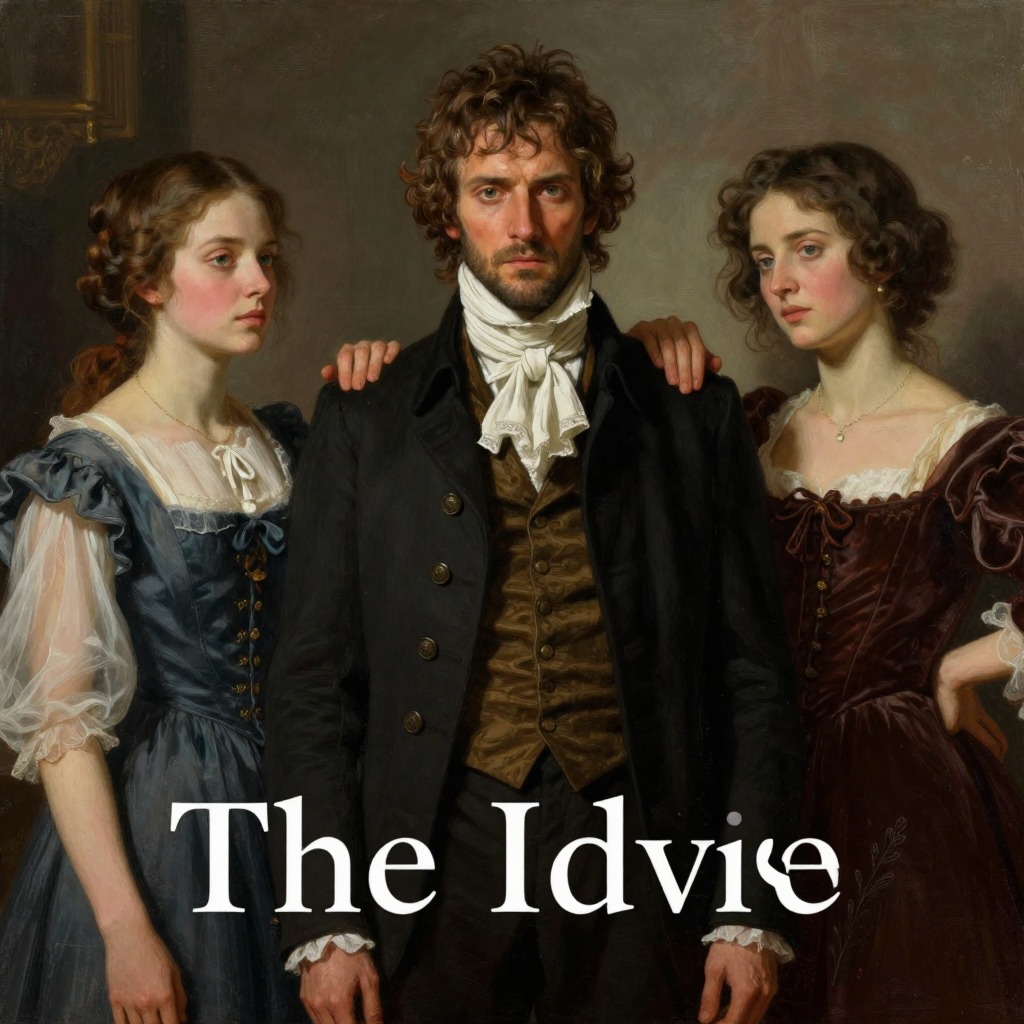
The IdiotIn Dostoevsky's The Idiot, the concept of "the moment" refers to a singular, fleeting instant of extraordinary consciousness that Prince Muishkin experiences in the seconds immediately preceding his epileptic fits. This phenomenon is not merely a symptom of his illness but a central philosophical and existential motif that illuminates the novel's deepest concerns with the nature of life, death, time, and transcendence.
The Paradox of the Moment
The prince describes this experience as a paradoxical state in which his entire being—heart, mind, and body—seems to wake up to an unprecedented vigor and light, filled with joy, hope, and a sense that all anxieties have been swept away forever. He characterizes these instants as moments of "harmony and beauty in the highest degree," an "instant of deepest sensation, overflowing with unbounded joy and rapture, ecstatic devotion, and completest life." The paradox lies in the fact that this supreme feeling of well-being is directly caused by the disease—a "sudden rupture of normal conditions"—and that its aftermath is stupefaction, mental darkness, and idiocy. The prince is acutely aware of this contradiction, yet he cannot deny the reality of the sensation. He reflects that if, in the last conscious moment before the attack, he could say to himself, "I would give my whole life for this one instant," then to him it was truly worth a lifetime.
The Moment and the Suspension of Time
A defining feature of the moment is its relationship to time. The prince recalls that during these episodes he felt as if he understood the apocalyptic words, "There shall be no more time." He connects this sensation to the experience of the epileptic Mahomet, who, according to tradition, visited all the dwellings of Allah in less time than was needed to empty his pitcher of water. The moment, therefore, is not merely a brief interval but a qualitative rupture in the normal flow of temporal experience, a glimpse into an eternal present where ordinary duration is abolished. This idea is further developed in Hippolyte Terentieff's "Necessary Explanation," where he writes that he has reached his "last conviction" and that the idea that it is not worth living for a few weeks has taken possession of him. Hippolyte's despair is the inverse of the prince's ecstasy: where the prince finds infinite value in a single second, Hippolyte finds no value in a finite stretch of time. The prince's moment thus stands as a radical affirmation of life's worth, even in the face of death and dissolution.
The Moment and the Experience of Execution
The prince's preoccupation with the moment is also deeply connected to his horror of capital punishment. He recounts witnessing an execution in France, and his narrative focuses on the condemned man's final seconds. The prince argues that the most terrible part of the punishment is not the bodily pain but the "certain knowledge that in an hour,—then in ten minutes, then in half a minute, then now—this very instant—your soul must quit your body." He imagines the condemned man's last quarter of a second, when he hears the rasp of the iron over his head, as the most awful of all. This is the moment of death, stripped of all hope, and it is the precise inverse of the prince's own moment of ecstatic life. The prince's fits, which bring him to the brink of death and then return him, allow him to experience a kind of death-in-life that gives him a unique perspective on the value of every instant. His own moment is a reprieve from the sentence of time, a taste of eternity that makes the ordinary flow of life seem both precious and unbearable.
The Moment as a Source of Understanding
The prince's experience of the moment shapes his entire worldview and his interactions with others. It is the source of his profound compassion, his ability to see into the hearts of others, and his conviction that beauty can save the world. The moment is not a retreat from reality but a heightened engagement with it. It is the foundation of his belief that one can live wisely by counting each moment, a belief that Aglaya Ivanovna challenges but that the prince maintains. The moment, in its fusion of ecstasy and suffering, becomes the novel's most powerful symbol of the human condition: a being caught between the finite and the infinite, capable of glimpsing a transcendent harmony that is inseparable from the very illness that threatens to destroy it.