
Annie and the Changing Shape of Love
The ImaginaryThis flow traces Sartre’s account of how love for Annie changes when she is absent and the real person is replaced by an imagined correlate.
increasing Bearing strength in each event
 decreasing
Bearing strength in each eventdecreasingTenderness in Presence

Feeling Fed by a Real Person
An unpredictable relationship
When Annie is present, love responds to a person whose qualities can surprise and exceed what is already known. The feeling develops through encounters with an independent reality.
Sartre distinguishes this rich emotional relation from a purely internal state disconnected from its object.
A living affection
The real person helps shape the feeling as it unfolds. This dependence gives love depth, flexibility, and a future that cannot be fully planned in advance.
Absence Produces an Image
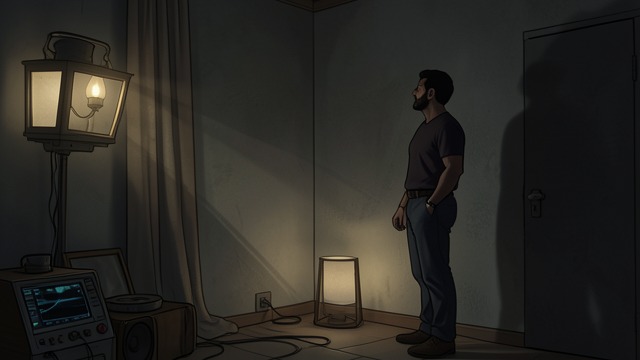
The Loved Person as Irreal
A changed relation
When Annie is absent, a person may try to recover her through memory and imagination. The imaged Annie carries knowledge and affection, but she cannot surprise the lover as the real person could.
Her image is shaped by what the lover already knows and longs to encounter.
Feeling becomes effort
The feeling increasingly requires an active attempt to sustain or reproduce it. Sartre describes this as a degradation of love’s former receptivity, not as proof that every continuing affection is insincere.
The Return of Reality
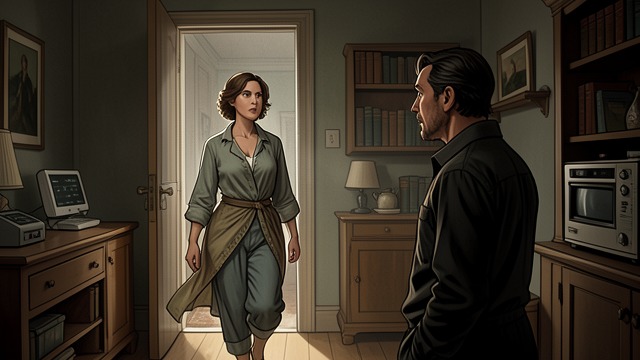
The Person Exceeds the Image
A broken fit
If Annie returns, the actual person is not simply the image made present. Reality brings new details, movements, and possibilities that the imagined version could not contain.
The lover must readjust rather than assume that the emotional construction has remained unchanged.
The consequence of absence
Sartre uses Annie’s example to show how imagination can preserve a relation while also impoverishing it. The return to reality exposes the distance between a person and the image formed in her absence.
Part IV, Chapter 2, before Annie’s departure
After Annie’s departure in Part IV, Chapter 2
Near the end of Sartre’s discussion of absent love
