
The Image Cannot Teach
The ImaginaryThis flow traces the tension between an image’s appearance of observation and its dependence on knowledge already held by the person imagining.
increasing Bearing strength in each event
 decreasing
Bearing strength in each eventdecreasingThe Seeming Invitation
An Object That Looks Observable
The perceptual appearance
An image presents its object through profiles and sensible qualities, which makes it seem as if the observer could inspect it. A mental image of a page can resemble the act of looking at printed lines.
That apparent observational stance is one reason imagery has often been confused with perception.
The first contradiction
Unlike a perceived page, however, an imaged page does not disclose unexpected details. Its apparent objecthood conceals the fact that its content is governed by the consciousness that forms it.
The Panthéon Challenge
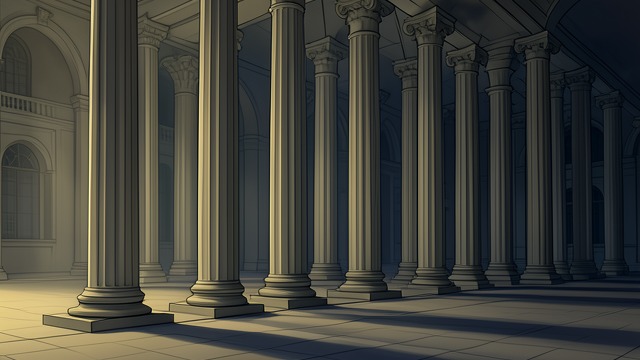
Columns That Cannot Be Counted
A test of observation
Sartre invokes the challenge of counting the columns of the Paris Panthéon from memory. The image may seem present, but the observer cannot treat it like the building before their eyes.
Its apparent details are not available for independent inspection in the way perceptual features are.
What the failure reveals
The image is neither a miniature building nor a weak perception. Its sensible character is supplied through a representative medium, while knowledge determines what can appear.
Knowledge Sets the Boundary
The Object Gives No Surprises
The principle clarified
Sartre’s examples establish that one cannot discover through an image what one did not know beforehand. A vague image can remain vague because no further observation will resolve what its matter never supplied.
The image’s certainty is therefore unlike the progressive certainty of perception.
The conflict resolved
The appearance of observation persists, but its authority is denied. This account preserves the image’s intuitive character while explaining its limits through the Principle of quasi-observation.
Early in Part I, Chapter 1, Section III
During Part II’s account of how things appear in the mental image
At the close of Part II, Chapter 5
