
Spontaneity Under Captivity
The ImaginaryThis flow traces the conflict between imagination’s spontaneous creativity and the constrained, fascinated forms of imagery associated with half-sleep and dreams.
increasing Bearing strength in each event
 decreasing
Bearing strength in each eventdecreasingA Creative Act
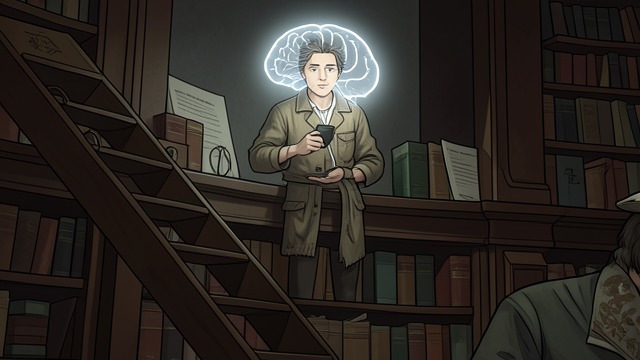
Consciousness Produces Its Image
The sense of spontaneity
Sartre argues that imaging consciousness experiences itself as active rather than as a passive recipient of an independent object. Its object is sustained by an act that is conscious of itself without making that self-awareness a separate object.
This spontaneity helps distinguish an image from a perception imposed by an encountered thing.
A fragile freedom
The imagined object does not outlast the act in the way a real object does. Its apparent life depends on consciousness’s ongoing activity.
Fascination in Half-Sleep
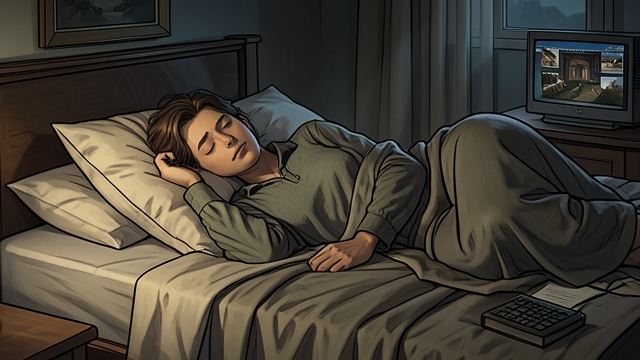
Voluntary Control Weakens
Attention loses distance
As a subject approaches sleep, ordinary observation becomes difficult. Sartre describes an altered condition in which consciousness can be captivated by impressions and interpretations rather than holding them at a distance.
The subject may remain aware in a limited way while being less able to interrupt the emerging imagery.
A constrained imagination
Hypnagogic imagery therefore complicates the idea of free creation. Consciousness is still involved, but its activity is captured by its own developing syntheses.
The Dream’s Enchantment
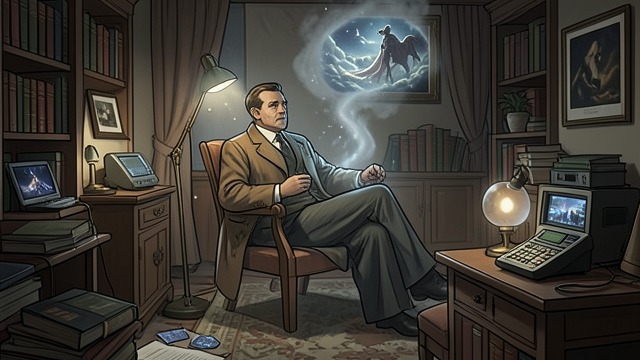
Freedom Becomes Difficult to Recover
The story takes hold
In Dream, consciousness is fascinated by the imagined sequence and cannot readily step outside it to consider alternatives. A possible interruption can become just another event within the dream.
This gives dream events a fatalistic force without turning the dream into ordinary perception.
Awakening restores distance
A reflective act or disruptive reality can break the enclosure. The struggle dramatizes how imagination can remain spontaneous while also becoming difficult to escape.
End of Part I, Chapter 1
Middle of Part I, Chapter 2, Section VI
Final chapter of Part IV
