
Art, Beauty, and the Return to Reality
The ImaginaryThis flow traces Sartre’s claim that aesthetic beauty belongs to irreal objects and that leaving artistic absorption involves a shift back to the real.
increasing Bearing strength in each event
 decreasing
Bearing strength in each eventdecreasingThe Symphony Is Not the Performance
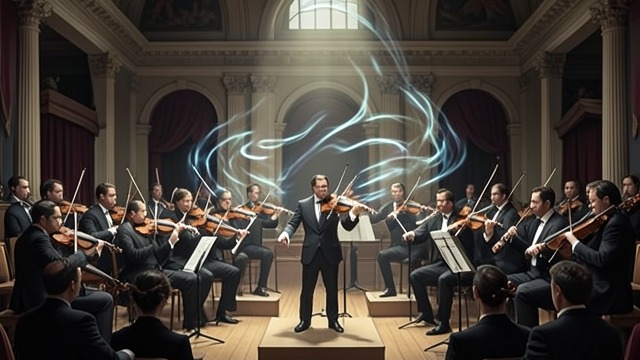
Work and Event
A dated performance
An orchestra performs Beethoven’s Seventh Symphony in a particular hall and at a particular time. Those sounds and performers are real events, yet listeners commonly attend to the symphony itself rather than treating the performance as the whole object.
A performance may succeed or fail in presenting the work, which indicates that the two are not identical.
The work as irreal object
Sartre argues that the symphony appears through its performance as an object outside ordinary time and place. The event is its representative medium, not the aesthetic object itself.
Beauty Requires Distance
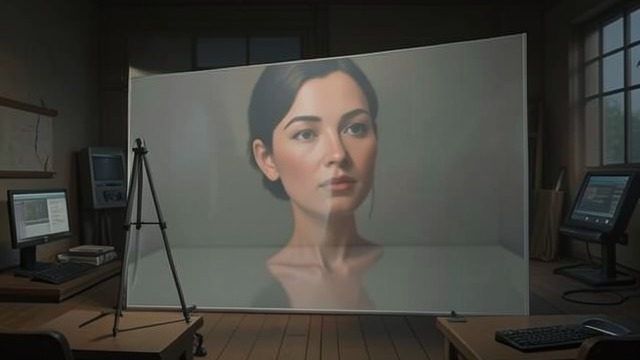
The Aesthetic Stance
Beyond practical possession
Aesthetic contemplation apprehends an object as irreal and therefore beyond ordinary practical reach. The viewer or listener can be moved by it without treating it as an available thing to use or alter.
Sensory pleasure alone does not explain this response; the artwork’s imaginative object gives its materials their aesthetic significance.
A different value
Sartre distinguishes aesthetic value from moral judgement, which concerns action and conduct within the real world. Beauty belongs to an imaginative relation rather than to reality considered simply as present.
Awakening from Aesthetic Absorption

From Imagination to Existence
The abrupt transition
Leaving a performance can feel like awakening. The viewer’s fascinated attention is released and ordinary concerns return, not because the artwork’s story has been disproved but because the mode of consciousness has changed.
The resulting discomfort can follow even an artwork whose events are not comforting.
The final contrast
Sartre presents aesthetic absorption as an induced imaginative experience and return to daily life as renewed contact with existence. Art therefore makes the boundary between irreal presence and real situation especially vivid.
Late in the Conclusion’s section on art
Immediately after the symphony example
Closing paragraph of The Imaginary
