Entrapped consciousness
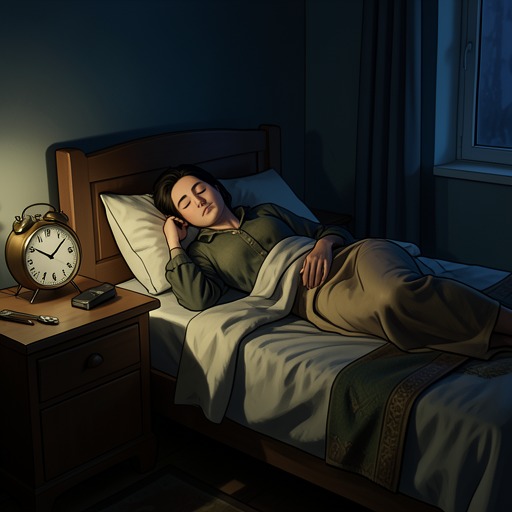
The ImaginaryEntrapped consciousness names a mode of awareness in which a person becomes fascinated by an experience and can no longer maintain the ordinary distance needed to observe and direct it. In the account developed here, it emerges around the approach to sleep: bodily relaxation and reduced capacity for voluntary attention draw thought into a self-reinforcing state, preparing the ground for hypnagogic images. Consciousness has not simply switched off; it is engaged, but its engagement has become captivity.
Definition and Structure
The state is not explained as a psychological automatism in which consciousness withdraws while phenomena unroll by themselves. Hypnagogic phenomena are themselves consciousness, not events passively watched by a separate observer. What appears to be automatic is better understood as a form of captivity: attention is not merely absent or distracted but fascinated. Consciousness remains directed toward its object, yet no longer directs itself toward that object in the ordinary attentive manner.
This distinction matters because ordinary attention depends on bodily movements, including convergence, accommodation, and narrowing of the visual field. Such movements orient a subject in relation to an object and help establish the distance from which the object can be observed. In the transition toward sleep, those movements are temporarily unavailable; to reproduce them would require emerging from the paralysed condition. The object is still present, but without the same externality. The subject cannot stand back from it, examine it, and test hypotheses about it as in wakeful observation.
The condition can begin with relaxed muscles and the inability to will a movement. In the example described, the person feels awake while lying on their back and wants to open their eyes but cannot raise the eyelids. The difficulty is not simply a peripheral sensation of loosened muscles: it includes the felt impossibility of animating the body. In Leroy’s account, this state can arise through autosuggestion and may lead directly into Dream. A worrying noise can immediately restore alertness, but in the absence of such disturbance consciousness accepts the relaxed condition instead of merely registering it. The resulting chain of constraint is described as something the person has, in a sense, forged for themselves.
Attention, Thought, and Hypnagogic Images
Entrapped consciousness changes not only what can be attended to but how thought proceeds. The person may be unable to follow a train of thought as it is diverted and absorbed by impressions. Thoughts can stagnate, recur, or carry the person around a circle of pre-logical associations. Bodily paralysis and this fascination of thought are presented as two aspects of one structure, not as unrelated symptoms.
The structure can produce strikingly incongruous combinations. While reasoning about Kantian morality, the fascinated consciousness may produce the image of a coach and confer on it a sense that preserves some continuity with the reasoning. The example shows how consciousness, no longer free to keep objects distinct, accepts the invitations of the moment and draws an unexpected image into its current course of thought. Its synthesis is not simply an error made by an otherwise detached observer: the observer’s usual power to separate and assess has itself been compromised.
Hypnagogic images appear on this already altered ground; they do not constitute an independent second stage of disturbance. A person may still reflect, but maintaining the primary experience requires the Reflective consciousness to become fascinated in turn. Instead of turning the primary state into an object for detached description, reflection must participate in its illusions and follow the objects that the primary state posits. Yet this participation is not absolute. The enchantment can still be broken, and the person can return to wakefulness. The state is therefore unstable: it is described as a dream that cannot fully form, delayed in part by awareness of the attempt to fall asleep.
Closed eyes may reveal a field of luminous spots varying in colour and brightness. Vague swirls form without definite contours, and attempts to follow the spots with the eyes are ineffective because the lights move with the eyes. These movements leave indefinite phosphorescent paths rather than clearly traced forms. If consciousness becomes fascinated by the field, more definite hypnagogic images may arise. One recurring image, seen about half an hour after lying down whenever the eyes were closed, was an irregularly circular space enclosed by a broken line of irregular saw-like teeth; it appeared in different sizes among brilliant points and bizarre forms.
Distinction from Perception and Imaging
Entrapped consciousness is not a name for every act of forming or apprehending an image. In ordinary perception, eye movements and the organization of a figure can change how lines are grouped and what they seem to show. The same schematic marks, for instance, can first be read as separate lines and points and then as a face when perceptual intention changes and the eyes and body enact a new synthesis. In such cases, the account distinguishes the perceptual organization of the marks from Imaging consciousness, which projects movements onto the lines and may make a figure appear as an image. These examples clarify that a shift toward imaging can involve active synthesis without, by itself, amounting to the captivity of half-sleep.
A similar boundary appears in the treatment of perceptual illusions. In the Müller-Lyer illusion, the structure of the figure imposes or encourages particular eye movements, and movement is attributed to the lines as a potential force. The resulting quality remains perceptual: the lines do not thereby become an image. Schematic images differ because knowledge can direct movements that are given as spontaneous and projected onto the figure as hypothetical directions. The contrast helps locate Entrapped consciousness more precisely: its defining feature is not simply that movement, interpretation, or imagery is involved, but that consciousness loses its ordinary freedom to stand apart from what it is experiencing.
The method for studying images reinforces this distinction. An image is first encountered as an object of current consciousness; describing the image as an image requires a further act that turns attention from the object to the way it is given. Such reflection is treated as a source of certain descriptive findings, unlike explanatory hypotheses about the image’s nature, which remain probable. This approach makes it possible to distinguish a report about the structure of an experience from a theory about its causes, and to describe fascination without reducing it to a passive mechanism.
Relation to Aesthetic Experience
The account of art offers a useful comparison but does not equate aesthetic experience with Entrapped consciousness. A painting’s canvas and pigment are real, while the aesthetic object apprehended through them is an Irreal object constituted by Imaging consciousness. The canvas functions as a material analogon through which the depicted or imagined whole can appear; the imaginary is not converted into an ordinary real object merely because it has a material support.
The actor who plays Hamlet provides a closer structural parallel to absorption. The actor uses feelings, strength, and gestures as analogons of the character’s conduct, and may be entirely gripped by the Irreal world of the role. Yet the account distinguishes this from literally believing oneself to be Hamlet: the actor is irrealized in the character rather than realizing the character as an ordinary fact. This comparison underscores the range of ways consciousness can be absorbed in an image, while the description of half-sleep remains specific: its defining marks are fascination, diminished bodily orientation, and the temporary loss of distance from one’s own thoughts and images.