Franconay
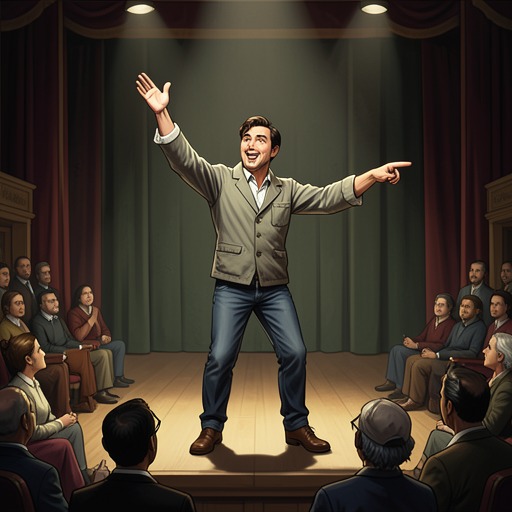
The ImaginaryFranconay’s imitation of Maurice Chevalier is a central example in Jean-Paul Sartre’s account of how an image takes shape. The audience does not simply notice a resemblance and retrieve a picture already stored in the mind. It first reads signs, identifies whom the performance refers to, and then organizes the performer’s gestures and body into an image. Franconay’s act exposes that process in motion: a woman’s visibly individual body never quite disappears, even as the absent Chevalier seems to take form through it.
Identity and Place in the Analysis
Franconay appears as a music-hall artist doing imitations. The account gives few biographical details; its focus is the spectator’s changing consciousness as she performs. The case begins with recognition and evaluation: the spectator recognizes the person she is imitating and judges whether the resemblance succeeds. That judgment is not, Sartre argues, the result of comparing two complete images, one present and one privately summoned. It belongs to a process in which the performance’s signs guide consciousness toward an image.
The example belongs to a broader inquiry into what can count as an image. An earlier illustration distinguishes the imperfect mental representation of Pierre, a photograph that records the details of his face but lacks its expression, and a caricature whose distortions nevertheless restore his life and presence. Those three forms differ in their material, yet each serves the effort to make an absent person present. Franconay’s imitation extends the inquiry from mental representation and portraiture to a living performer: here the material is a body in motion, and the spectator must interpret what it does.
From Signs to an Image
The performance first presents a general situation: someone is imitating a person, but the identity of that person remains to be determined. Consciousness is directed toward an unspecified target, an object to be identified through the signs the performer supplies. Franconay appears in a straw hat, protrudes her lower lip, and tilts her head forward. At first the spectator reads these details as signs rather than as parts of Chevalier’s directly perceived appearance. The hat refers to him; it does not yet appear as his hat seen through a transparent substitute.
The spectator’s deciphering of those signs yields the concept of Chevalier and the judgment that Franconay is imitating him. That judgment changes the structure of consciousness. Chevalier becomes its theme, and the act turns toward realizing him as an image through the intuitive material the performance provides. Sign-reading and imaging are therefore successive but synthetically joined moments: the signs motivate the image, while the image retains the work of interpretation that made it possible.
That material is sparse and selective. The imitation gives only a few features, especially relations such as the angle of the hat against the ears and the angle between neck and chin. Some relations are deliberately altered: the hat’s angle is exaggerated because it is a principal sign meant to strike the spectator first and organize the others around it. Unlike a portrait, which renders a complex model and leaves the viewer to extract its characteristic features, the imitation offers those features as a studied schema from the outset. The audience must find Chevalier through elements that also invite another reading: a small, stout, brunette woman making faces.
The Body and the Work of Expression
The difference between the portrait and Franconay’s imitation lies partly in their materials. A portrait can solicit the synthesis through its resemblance to its subject. Franconay’s material is a human body, which resists the role assigned to it: she is a woman imitating a man, and her own physical traits remain visible. The resulting form is approximate, not self-interpreting. The spectator remains free to see either Chevalier as imaged or Franconay herself pulling faces.
Affect helps bring the sparse signs together. The spectator’s intended knowledge of Chevalier awakens an emotional response associated with his physiognomy and expressive character. In the imitation, that affective quality appears on Franconay’s face and body. It animates the otherwise dry signs, lends isolated features a unity, and supplies depth that the bodily material alone does not provide. The image thus depends not only on visible likeness but on the expressive sense through which the signs cohere as one person.
Spontaneity, Ambiguity, and Possession
The synthesis carries a strong consciousness of spontaneity. The spectator actively animates the performance, and in many cases the image never wholly displaces perception: Franconay’s face and body retain some of their individuality while Chevalier’s expressive character appears through them. This unstable state is neither fully perception nor fully image. Sartre presents its lack of equilibrium not as a failure to be corrected but as a distinctive pleasure of imitation: the audience experiences the performer and the person imaged together, without their relation resolving into a simple likeness.
This account also separates intention from will. Sartre notes that images may arise involuntarily, but their lack of deliberate willing does not mean they lack the intention that constitutes them. The distinction clarifies the spectator’s role before Franconay: the image is an act of consciousness, not an object that appears inside the performer’s body by itself. The absent Chevalier is described as choosing a woman’s body through which to manifest himself; the language casts the image-making relation as possession, not as a literal event on stage. Sartre tentatively extends this idea by suggesting that it may help explain imitation in the ritual dances of primitive peoples. Franconay’s example thereby links an ordinary performance to a wider account of how signs, bodies, and affect can make an absent figure present without turning that figure into a perceived person.