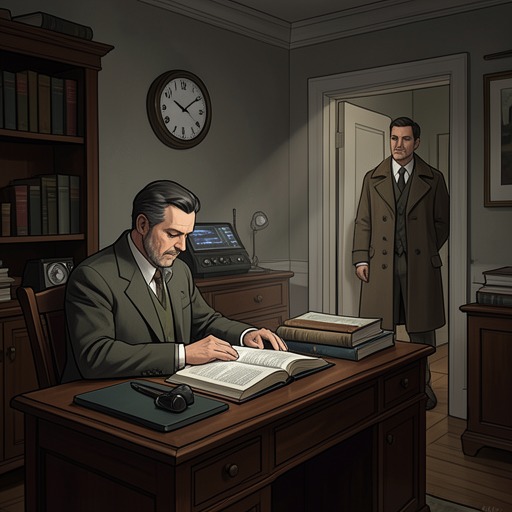
Pierre
The ImaginaryPierre is a recurring exemplary figure in Jean-Paul Sartre’s analysis of consciousness, not a character whose life is narrated in its own right. His importance lies in the contrasts made possible by his repeated appearance: the real person is distinct from a portrait, from remembered appearances, and from the irreal Pierre given in an act of imagination. Across these examples, Pierre shows how consciousness can intend one person through different forms of experience without turning those forms into separate versions of him.
Identity and Function
Pierre is identified as a friend and as a person who exists independently of any image formed of him. The text insists that when someone produces an image of Pierre, Pierre himself is the object of that consciousness. The image is not a small likeness contained inside the mind, nor does it replace its object with a second Pierre. Instead, the person remains the target of the act while appearing in a particular way: imagined, absent, or represented through something else.
That distinction also governs the method of the discussion. While consciousness attends to Pierre as its object, it does not thereby describe the image as an image. Doing that requires a reflective act directed toward how Pierre is given. Pierre thus serves two related purposes: he is the person intended in an image, and he is the example that helps distinguish attending to an object from reflecting on the form of that attention.
Portrait and the Generalized Pierre
In the discussion of portraits, a painting supplies a quasi-face through which Pierre is represented. Its organized forms and colours tend to solicit an imaging consciousness: they offer themselves as Pierre’s appearance, even though the painted canvas remains a distinct, perceptible object. If a viewer instead tries to perceive the picture simply as a flat surface, that perceptual approach meets resistance from the way its forms are organized. In imagining Pierre through the portrait, the viewer projects qualities beyond the canvas toward the person it represents.
The portrait’s features are individually specific as marks on a particular painting, but they function more generally in the image. A painted smile is taken not merely as one smile Pierre once made, but as representative of a range of his smiles. A particular pink becomes representative of his cheek colour, and a green glint of his eyes. The image therefore presents Pierre not as he appeared at one precisely dated encounter, but as a thematic unity drawn from many possible appearances: Pierre in general. The viewer’s judgements about his features remain probable because they depend on whether the portrait represents him faithfully, rather than being certain observations of the living person.
Consciousness, Memory, and Conflicting Appearances
Pierre also clarifies how knowledge and feeling may contribute different aspects to an image. The familiar furniture in his room can prompt a feeling directed at the furniture itself, but it can also prompt a feeling aimed at Pierre alone. In the latter case, the surroundings occasion the feeling without becoming its intended object. The example prevents the feeling from being treated as merely an effect aimed at whatever representation happens to precede it.
Imagined Pierre may condense a duration rather than reproduce a single instant. Knowledge can aim at the Pierre seen that morning while an affective analogon carries features associated with the week before. His sadness from early in the week or his disagreeable mood from the previous day may be fused with the figure identified as the Pierre seen that morning. The resulting image gives those different temporal aspects as belonging to one person, even though its components do not share the same date.
A sharper discrepancy makes the same point. Knowledge may aim at Pierre as he had breakfast that morning in a dressing gown, while the analogon presents him as he appeared two days earlier in a blue overcoat at the Place du Châtelet. The image can still identify the overcoated figure as Pierre in the dressing gown. Sartre uses such contrasts to explain how an image can intend the real person through an appearance that belongs to another time, rather than requiring two Pierres to account for the difference.
The Absent Person and the Irreal Image
The distinction becomes especially clear in the example of Pierre imagined in Paris while he is described elsewhere as currently working in Berlin. The image presents him at home, in a familiar room in Paris, seated in a familiar armchair. These apparently incompatible details raise the question of whether the image concerns the Pierre living in Berlin or a Pierre who lived in Paris the previous year. Sartre’s account resolves the puzzle by distinguishing the person intended from the analogon through which the intention proceeds: knowledge aims at Pierre through an appearance supplied by the image.
In describing the irreal object, the text gives another formulation. Pierre is a real person, located in a real room in Paris; the image does not create a second, unreal person. The imagined Pierre is that same person as absent from the room where the act of imagining occurs. His absence is not an incidental correction added after the image has appeared. It is part of how he is given in it. The image invokes Pierre, but does not make him present where the imaginer is.
Imagination may seem to bring Pierre close enough for temporary possession, yet the imagined object remains out of reach. It cannot be touched or moved through ordinary action; affecting it would require an imagined action upon an imagined object. Nor does the image fulfil the desire to see a friend. It offers a played-at satisfaction while preserving the fact that the friend is not really there. The desire may become more specific through this image, narrowing toward a particular smile or physiognomy, even as the image’s absence prevents actual satisfaction.
Relationships, Feeling, and Significance
Pierre’s role extends from representation to emotional response. An unspecified thought may awaken indignation at Pierre; the feeling can first take shape and then bring an image of the gesture he made the previous day into view. In that sequence, the feeling gives rise to the image. The irreal gesture is not necessarily what first causes the indignation. The example distinguishes an affective process that develops into an image from a later, deliberate response directed at an image already formed.
The account also connects Pierre’s remembered gesture to the limits of feeling in the absence of its object. Indignation or shame about his earlier offensive gesture can reappear, but it must first find its way toward an object and may bring that gesture to mind as it does so. In general, feelings directed toward an absent person differ from those experienced in the person’s presence. Knowledge of Pierre and practical conduct toward him can persist, while the positive movement of feeling is altered: without the real person to renew or exceed what is already known, feeling risks becoming limited by its available definitions.
Taken together, these examples make Pierre a test case for the distinction between the person and the appearances through which consciousness intends him. The portrait gathers many particular features into a general figure; memory and affect can combine appearances from different times; and imagination gives the real person as absent rather than installing a substitute in the mind. Pierre’s consistency across these changes is essential to the argument: what varies is not the number of people, but the mode in which consciousness reaches its object.