Horpach–Rohan relationship
The InvincibleThe Horpach–Rohan relationship is the moral and operational axis of the expedition on Regis III: a bond between an uncompromising captain and a first officer whose judgment he both challenges and trusts. They are not friends, and their exchanges are marked by rank, age, disagreement, and restraint. Yet when the expedition reaches the point at which procedure, probability, and crew solidarity collide, Horpach places the command of the Invincible in Rohan’s hands, revealing that their antagonism is also a form of confidence.## Identity and Command Structure Horpach is the older commander of the Invincible, while Rohan serves as his first officer and navigator. Their relationship is established within the ship’s chain of command, but it is not mechanically formal. Horpach permits Rohan a degree of familiarity that would not ordinarily belong to a subordinate, and Rohan can answer him with a candor that approaches open disagreement. Even so, the difference in status remains decisive: Horpach gives orders, Rohan carries them out, and every personal exchange is ultimately shaped by the responsibilities of command.
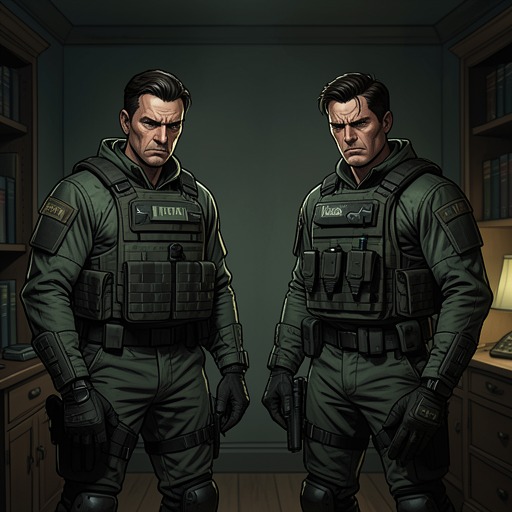
Their distance is emotional as well as institutional. After the ship’s landing, the two men have traveled many parsecs together but have never become friends. The narrative connects that lack of intimacy to their age difference and to the relatively limited dangers they have previously faced together, suggesting that shared service has created knowledge without producing easy companionship. Horpach’s nearly white hair, white uniform, and uncompromising manner reinforce the image of a commander who has made discipline part of his physical presence. Rohan, by contrast, is defined by watchfulness: he masks his surprise, measures Horpach’s words, and retains private ideas about what should be done even while obeying the ship’s hierarchy.## Conflict Over Regis III The relationship is tested immediately after the Invincible lands on Regis III. When Rohan asks whether the ship will follow regular procedure, Horpach answers that they will begin with degree three instead. Rohan tries to conceal his surprise and admits that he would rather not be the person required to announce the decision. Horpach does not debate the matter with him; he leads him to the monitor and shows him the crater, the crumbling dunes, the dark gullies, the lava resembling dried blood, and the sand already gathering beneath the ship’s stern. The visual evidence turns the landing from a technical success into an ominous commitment.
Horpach then reminds Rohan that the Condor did not return from Regis III and admits that they do not know what they are facing. This uncertainty defines their disagreement. Horpach must act without a reliable model of the danger, while Rohan’s resistance reflects the pressure of having to expose the crew to an unknown threat. Their conflict is therefore not a simple opposition between courage and fear. It is a dispute over how a commander should act when the danger cannot be calculated and when the evidence left by the missing expedition is more alarming than informative.
The same pattern appears when Horpach assigns Rohan to the ocean expedition. The coastline is about a hundred twenty miles away, and the Invincible will not be moved. Rohan is authorized to take as many men as necessary, including Fitzpatrick or another oceanologist and six reserve energobots, but he must work exclusively within a force field, without sorties onto the ocean or diving, while conserving the limited automatons. Horpach thus combines trust in Rohan’s competence with strict containment of risk. The order gives Rohan room to act, but only inside boundaries that express the commander’s anxiety about wasting people and equipment.## The Decision to Stay or Leave After Rohan’s team returns and survivors from Regnar’s expedition are brought aboard, Horpach faces the question of whether the Invincible should leave Regis III. The scientists’ interest in the metal pseudo-insects, their symbiosis with mechanical vegetation, and the possibility that the black cloud possesses a mind is not enough to justify remaining. Horpach would be prepared to return with an explanation for the Condor’s destruction and a defensible reason for abandoning the planet. What prevents an immediate departure is that four members of Regnar’s team, including Regnar himself, are still missing.
The missing men are believed to have entered a landscape of caves and ravines after the trail led Rohan’s team there. Without the capacity for reasoned action, they could not reliably find their way back, and their oxygen was running low. The physicians believed that Regis III’s atmosphere would not be lethal to breathe, though methane entering their bloodstream could produce confusion. Horpach’s dilemma is therefore not based on certainty of survival. It rests on the narrow space occupied by the word “almost”: the men are almost certainly dead, but not conclusively known to be dead. Rohan later hears a crew member say that those exposed to a thousand roentgens within a five-mile radius are gone, while another asks why the ship remains. The answer is that the commander does not want to go back.## Authority Reversed In a private conversation, Horpach refuses to settle the question by chance. He tells Rohan that he has not yet decided whether to leave or stay, and that another person might toss a coin. Instead, he gives Rohan the decision and promises to do whatever Rohan says. The gesture reverses their ordinary relationship: the commander retains formal authority but temporarily makes the first officer commander of the Invincible. Horpach knows that Rohan has his own ideas and suspects that he made the decision long ago, even if he could not force it into words.
The transfer of responsibility is deliberately severe. Horpach orders Rohan to answer immediately and gives him one minute. He then shaves as though the crisis were an ordinary interval in the day, leaving Rohan to confront the consequences alone. Rohan initially feels anger at being treated despotically: Horpach has given him the right, or rather the duty, to decide while arranging matters so that responsibility remains fully attached to him. Yet the pressure strips away the arguments Rohan had rehearsed during his nighttime meditations. If the four men were certainly dead, departure would be simple. Their uncertain status makes the decision morally irreversible.
Rohan recognizes that leaving would not end the Regis III affair but begin a different one aboard the ship. The crew wants to leave, but he imagines the judgment that would follow: they would remember that the commander departed while four men remained behind. More important, he understands a principle not written in the regulations: every crew member must know that the others will not abandon him under any circumstances. Everything else may be lost, but the crew must remain together, alive or dead. The relationship with Horpach therefore becomes the instrument through which an unwritten foundation of collective life is brought into view. Horpach does not simply ask Rohan for a tactical preference; he forces him to decide what makes a crew capable of continuing to fly.## The Solitary Rescue and Mutual Recognition Rohan says that he will go, but Horpach immediately rejects the form of the offer. He will not let Rohan volunteer merely under the pressure of the commander's manipulation, nor will he openly ask for a volunteer when he has no right to coerce one. Instead, he explains that only a single man can enter the ravines and return without a helmet, vehicles, or weapons. The proposed rescue strips away the technologies that ordinarily separate the expedition from the planet’s dangers, making Rohan’s decision a direct exposure of the individual to the unknown.
Rohan then asks what Horpach would do in his position and proposes that they exchange places once more. Horpach answers that he would not go. The admission does not dissolve his authority; it clarifies the moral asymmetry between them. Horpach can recognize the necessity of the mission without pretending that he would undertake it himself, while Rohan can no longer mistake the order for an impartial test. When Rohan presses him for an answer, Horpach finally tells him that he may go. He makes a gesture as though he wants to hold Rohan back or place a hand on his shoulder, but Rohan does not notice. Horpach remains motionless beside the closing door for a long time.
At dawn, the first two jeeps leave the Invincible through the force field, and Rohan crouches on the rear step of the third. He wears a jumpsuit and a small oxygen mask but no helmet or protective goggles, clasping his knees while watching the second hand of his watch. The scene gives physical form to the relationship’s final movement: Horpach’s decision has not been replaced by Rohan’s independence, and Rohan’s courage has not erased Horpach’s responsibility. Their bond survives as a painful exchange of burdens, in which command means knowing when to give another person the choice and when to let that choice become action.