Darrell K. Royal Texas Memorial Stadium
The Journey CollectionDarrell K. Royal Texas Memorial Stadium is more than the setting for a University of Texas game: it is the place where Travis McCoy’s love of football began, where that love is handed to Max, and where the emotional stakes of community and family become inseparable from the sport. Its fifty-yard line and crowded stands hold both a childhood memory with Russ McCoy and a present-day family experience in which Travis recognizes the next generation of his own passion.
Setting and Public Meaning
Darrell K. Royal Texas Memorial Stadium appears as a large, charged public arena whose significance extends beyond the field. Travis visits it with Penelope Stone, Max, Russ McCoy, and Nadine, using his status as a University of Texas alumnus to secure seats behind the team and directly on the fifty-yard line. Max is overwhelmed by the proximity to the action, leaning over the barrier until Travis pulls him back by the waistband of his jeans. The gesture is practical, but it also captures Travis’s new role: he is no longer merely a spectator or former player pursuing the game for himself; he is responsible for protecting a child who wants to enter the world that shaped him.
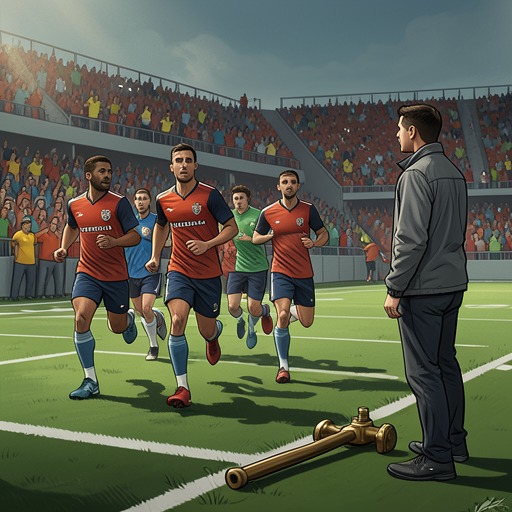
The stadium is also a ceremonial space in the larger football culture surrounding Travis. Public football rituals elsewhere in the story include the Pledge of Allegiance, The Star-Spangled Banner, the Lord’s Prayer, the band’s fight song, the coin toss, and the procession onto the field. In the stadium, such elements give competition the scale of communal observance. The game is not presented as a private contest between athletes alone. For Clarendon’s supporters, the state title represents the reward for children who work every day toward their hopes and dreams, making the stadium a place where local aspiration is publicly witnessed.
Travis McCoy’s Formative Memory
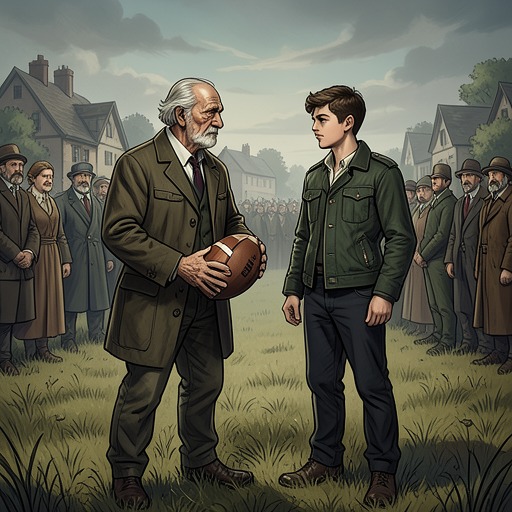
The stadium is where Travis tells Max about his first game with Russ. As a child, Travis sat with his grandfather in a section to the left and halfway up the stands while cold rain fell throughout the night. They wrapped themselves in blankets, drank small sips of hot cocoa, and tried to stay warm; Russ remembers that they nearly ended up with pneumonia, that Travis’s grandmother was furious, and that Travis missed almost a week of school while a doctor threatened hospitalization.
The discomfort of that first visit does not diminish its importance. Travis insists that it was worth it because the experience was where he began to love football: he watched the Broncos win the title in that stadium with his father. The memory therefore binds physical hardship to emotional initiation. Football is not introduced as an abstract ambition or a route to fame, but as a shared experience between father and son, sustained through bad weather, family worry, and the excitement of a victory.
Family Continuity and the Game
When Travis returns to Darrell K. Royal Texas Memorial Stadium with Max, the boy displays the same sparkle that Travis once had. The resemblance turns the visit into an act of inheritance. Travis wants Max to miss none of the game, and the privileged seats place the child close to the team while still keeping him under his father’s watch. Max’s excitement is not treated as a distraction from the adult story; it becomes evidence that Travis’s relationship to football is being remade through fatherhood.
Russ’s presence gives the scene a second layer of continuity. He supplies details Travis only partly recounts, including the cold, the rain, the cocoa, the illness, and the family’s reaction afterward. The stadium thus gathers three generations of football memory: Russ recalls bringing Travis, Travis narrates that experience to Max, and Max becomes the person who may carry the attachment forward. The place functions as a family archive without relying on documents; its sections, field, weather, and remembered championship preserve the history of the McCoy men.
Competition and Emotional Stakes
During the game, the Broncos’ state-title hopes become a communal test of endurance and belief. As the fourth quarter begins, tension fills the stadium, and Travis understands that Clarendon’s supporters are watching their children be rewarded for sustained work. He tells Penelope Stone that he believes the team can win, aligning his personal faith with the community’s expectations. The stadium therefore magnifies a value shift from individual athletic performance to collective belonging: victory matters because it would honor the labor of the players and the hopes invested in them.
The football action also echoes Travis’s own transformation. He once understood the field through the identity of a celebrated professional athlete, a role complicated by injury, retirement, and uncertainty about his future. At Darrell K. Royal Texas Memorial Stadium, he encounters the game through several other positions at once: former player, alumnus, son, father, partner, and community member. The arena remains connected to competition, but its deepest function is relational. It shows Travis that football can be a means of remembering where he came from and of bringing Max into a family story that had previously been concealed from him.
A Threshold for New Beginnings
The stadium’s fifty-yard line becomes an important symbolic threshold in Travis and Penelope Stone’s relationship. Travis later proposes to Penelope by recalling that he has loved her since he was fourteen and that she has always owned his heart and soul. His proposal is not presented as an isolated romantic gesture; it follows the return to a place where his earliest football devotion and his family history are visible. The remembered stadium helps connect the boy Travis once was with the man seeking a permanent future.
That future includes Max’s legal change of surname to McCoy. Travis explains that if Penelope becomes a McCoy, he wants Max to be one as well, because that is how they can become a real family. The stadium’s role in this development is indirect but decisive: the place where Travis received a paternal and athletic inheritance becomes part of the emotional ground from which he chooses to claim fatherhood openly. Its meaning finally reaches beyond the scoreboard. It is where sport, memory, responsibility, and family identity meet, turning a football venue into a site of belonging and renewal.