Football as identity and dreams
The Journey CollectionFootball as identity and dreams is the central emotional and vocational structure of Travis McCoy’s story. It first appears as a childhood revelation, hardens into the identity of a celebrated professional quarterback, and then survives the end of his playing career by changing its meaning. The field gives Travis ambition, recognition, and belonging, but it also becomes the measure by which he fears he has lost himself. His eventual return to Clarendon shows that football is not valuable only when it produces championships, money, or celebrity; its deeper power lies in the relationships and hopes it allows a community to share.
The Dream Begins in Clarendon
Travis’s attachment to football reaches back to shortly after his fifth birthday, when Russ McCoy drove him in a beat-up Chevy truck to Austin, Texas. There, in the University of Texas stadium, Travis watched thousands of fans respond to the Clarendon High School Broncos’ first state championship. He did not yet understand the rules or fundamentals. What he understood was the spectacle of the field: opposing players meeting at the forty-yard line, helmets colliding, and the crowd erupting when the winning touchdown carried the Broncos into history. The experience gave football the force of an origin story. Travis did not merely decide to play; he began to imagine the field as the place where his future belonged.
That dream remains powerful because it is physical as well as symbolic. Travis remembers the impact of a perfect throw, the feel of the ball in his fingers, and the intensity of competing before a crowd. By the time the novel opens, he has spent six seasons thinking that football was all he could think about, while recognizing that the game had actually been part of him for most of his life. His professional success therefore seems less like a job than a confirmation of the child he once was. The six-year veteran’s fame, however, cannot protect the dream from the body that sustains it.
Injury and the Collapse of a Singular Identity
One hard hit makes the future uncertain. When Travis turns the wrong way while searching for a receiver, a three-hundred-pound defensive lineman plants him in the grass. A loud pop in his right shoulder is followed by pain shooting through his arm and into his chest. Three days later, after two dozen ice packs, heating pads, and several X-rays, he waits in the Miami Sharks’ trainer’s office for a verdict that may determine whether he will ever return to the field. The injury is not treated as a minor interruption. It threatens the entire structure of his self-understanding.
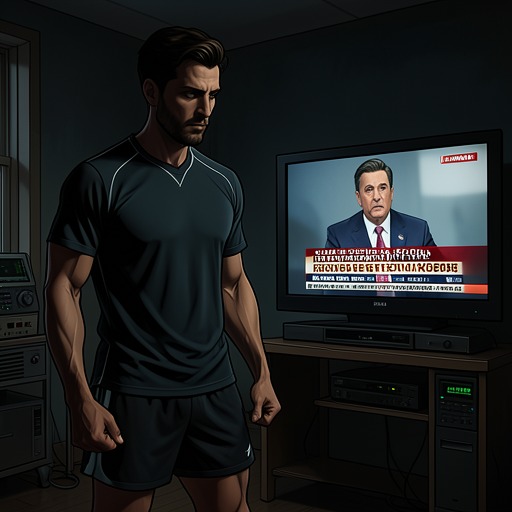
Inside his apartment, the consequences become existential. The local news identifies him as the Miami Sharks’ star quarterback and reports that he is not expected to return for the rest of the season, while also questioning whether he can recover for the following year. Travis turns off the television, but the public doubt has already entered the room. Leaning against the elevator wall, he realizes that the pain is different from the familiar aches of a quarterback’s elbows and shoulders: it radiates through him as though his body were burning. For the first time, he has to ask what the rest of his life might contain. His black leather sofa, television, and carefully chosen apartment offer no answer; the objects of his professional life cannot replace the future that football had promised.
The airport journey from Miami to Amarillo intensifies this dislocation. Admirers still ask him to autograph newspapers, magazines, and even barf bags, and the Sharks remain favored to contend for the national championship, yet Travis can no longer help them. Public recognition continues after athletic usefulness has been withdrawn. The contrast exposes the difference between being known as a football star and being able to live as one. His identity is still visible to strangers even while its material foundation is failing.
Rediscovering the Game Through Young Players
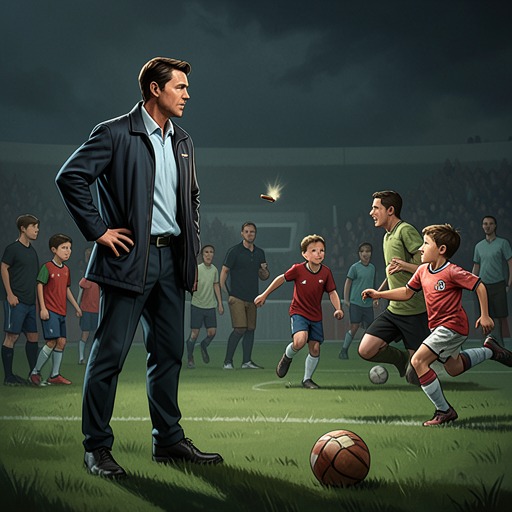
Clarendon changes football from a lost career into a living community. At Max’s practice, twenty boys between ten and eleven surround Travis, amazed that the former professional quarterback has come to watch them. Their admiration initially gives him pleasure, but it also produces a hollow ache. In their faces he recognizes the fire that once burned in him, before fame and salary turned the game into an occupation. The boys’ excitement restores the distinction between loving football and extracting a livelihood from it. Their imperfect practice contains something his professional life has obscured: the joy and pure adrenaline of touching the ball and making a perfect throw.
Dale Morris, one of the coaches, defines the difference between technical instruction and emotional inheritance. He says that he teaches the boys the basics, while Travis gives them hope that their dreams can come true. The statement places Travis between two versions of football. Dale supplies discipline, safety, and fundamentals; Travis embodies the possibility that a child’s vision of the field can become a life. Yet the scene also reverses the direction of inspiration. Travis comes to serve as a role model, but the boys teach him why he loved the sport before it became a career. Their value does not depend on winning professional titles, and neither does the meaning they restore to him.
The homecoming pep rally makes that reversal public. The event combines football with local ceremony: the band plays the fight song, the cheerleaders lead the Pledge of Allegiance, and the crowd hears The Star-Spangled Banner before chanting for the Broncos’ game against the Gruver Greyhounds. The rivalry reaches back to Travis’s senior year, when the community burned a papier-mache figure of a Gruver player at the annual bonfire. Even with the bonfire canceled because drought had made the area dangerously dry, the communal spirit remains. Football here is not an isolated professional spectacle but a civic ritual through which Clarendon remembers itself.
When Jack Garrison introduces Travis as an alumnus of the state championship team, Travis rejects the simple image of himself as an inspirational hero. He explains that the children in the stands endure ninety-degree heat and twenty-degree snowstorms merely to glimpse the players’ passion. Reaching the state tournament opened doors for him, but commitment to the team and love of the game carried him to Austin. He then tells the current players that they are an inspiration to him because they restore his faith in the game’s purity. The speech changes the value of his celebrity: instead of using his past to stand above the boys, he accepts what they have given him.
Football as Home and Public Belonging
Travis’s return to the field with the Broncos completes the movement from spectator memory to communal participation. He leads the team through the inflatable tunnel while the band plays, and the crowd rises around them. At the fifty-yard line, he recognizes that standing in major stadiums before thousands of people never felt like this. The difference is not the size of the audience but the loving embrace of being home. Football becomes a language through which Clarendon welcomes back the person who once left it.
His words to the players turn applause into responsibility. He tells them that the crowd’s roar belongs to them because they have worked hard and earned the community’s respect. The boys must show that the community’s faith has not been wasted, and Travis affirms that people are proud of the men they have become. As he walks past, he taps the backs of their helmets, acknowledging both their youth and their courage. Winning still matters within the competitive structure of the game, but the surrounding community has already invested the night with meaning that cannot be erased by the scoreboard. The field becomes a place where effort, loyalty, and collective pride are publicly recognized.
The coin toss at midfield preserves football’s formal rules while also marking Travis’s altered role. The Broncos win and elect to receive, and Travis murmurs that the game is beginning. He is no longer simply the quarterback whose body must survive every play. He is now a returning alumnus, mentor, father, and leader whose authority comes from experience that can be handed onward. The game’s rituals remain, but his place within them has changed.
From Professional Star to Teacher and Father
The decisive shift occurs when football’s professional institution offers Travis a way to remain inside the sport. Stewart Thornton, owner of the Miami Sharks, tells him that his shoulder will never be strong enough for him to play again but offers him a coaching position. The offer appears to solve the problem of retirement: Travis could retain his expertise, status, and connection to the team without risking another injury. Yet he declines because the meaning of football has changed during his return home.
Travis explains that since childhood the game had been his life. He had dreamed of standing in the world’s largest stadium while people chanted his name and had even slept with his football. He acknowledges that his career was better than most players receive and that the Sharks had more wins than losses. Nevertheless, he cannot continue merely by occupying another professional role. Going home has helped him straighten out his life, but more importantly it has revealed that his future is in Texas, among people who love him and need him. The refusal of the coaching offer is therefore not a rejection of football itself. It is a rejection of the assumption that football must remain tied to Miami, celebrity, or professional employment in order to matter.
His farewell to the Sharks confirms that the old team remains emotionally significant. When Malcolm Rollins asks whether he is happy with whatever is taking him from the game, Travis thinks of Penelope Stone and Max and says that he is. He admits that he will miss the players because they had been there for him through difficult years, but he also says it is time to move on. Football has given him one family, while Clarendon has shown him another. The mature choice is not to deny the first attachment, but to place it within a larger order of responsibility.
That new order extends into education. At the beginning of another chapter, Travis sits in his eighth-period History class with fifteen students, finding the four white walls unusually confining because he has somewhere more important to be. The classroom signals that football has been converted into a different kind of public work. The former star is no longer defined only by performance before a stadium crowd; his knowledge and authority now operate through teaching, mentorship, and the daily formation of younger lives. His football identity does not disappear. It becomes professional and paternal capital redirected toward the next generation.
The Field as Memory, Family, and Future
The novel repeatedly places football beside family rituals, making the field a site of emotional continuity rather than a substitute for intimacy. Travis’s earliest football memory is shared with Russ McCoy; his return is witnessed by Penelope and Max; and his speeches address children who resemble the player he once wanted to become. Even the Lord’s Prayer before the boys enter the field frames their practice as a collective act of trust and fellowship. Their kneeling bodies, joined voices, helmets, tunnel, band, and crowd connect private belief to public sport without reducing either one to a mere accessory.
The wedding preparations on the football field extend this fusion of athletic and domestic meaning. Travis arrives in Bertha, his black 1966 Pontiac GTO, and finds the fifty-yard line transformed by a white wooden arch covered with honeysuckle vines, candelabras, rows of chairs tied with gold satin bows, lanterns, balloons, and an ivory aisle runner. The field that once measured his athletic ambition now becomes the setting for marriage. Its significance has shifted from proving what he can accomplish before spectators to receiving a shared future with Penelope.
Football as identity and dreams therefore ends not with the loss of the field but with its enlargement. Injury forces Travis to confront the danger of treating one role as an entire self. Clarendon teaches him that the game’s deepest inheritance is not fame or a perfect record, but the capacity to inspire, belong, remember, and care for others. By the time he moves between the field, the classroom, and family life, football has become less a single destination than a durable language for second chances: the language through which Travis returns home, recognizes what he owes to the young, and builds a future that no longer depends on being the person who takes the final snap.