Loralie McCoy’s home videos
The Journey CollectionLoralie McCoy’s home videos are a recovered family archive whose decisive significance lies in what they restore: not merely images of Travis McCoy as a child, but his mother’s living presence, her faith in his future, and a route toward accepting Russ McCoy’s love. Delivered after Travis’s engagement to Penelope Stone, the recordings turn grief and estrangement into a shared experience for Travis, Penelope, and Max, helping define the family they are becoming.
Discovery and Contents
The videos appear when Travis wakes the morning after Penelope has agreed to marry him. He finds Penelope and Max watching an old home movie in the living room, and the camera gradually reveals a young, scrawny Travis playing football. He is no more than nine years old, dressed in white padded football pants with his shoulder pads and jersey removed, and he runs across the field laughing before stopping to look directly at the camera. The footage preserves an early, unguarded version of the professional quarterback that Travis would become.
The recording also preserves Loralie McCoy’s voice. Young Travis asks whether she will record all his games once he becomes a “big, bad football player,” and Loralie answers that she will be on the fifty-yard line, cheering as loudly as she can. Her response gives the footage its emotional center: the future athlete’s ambition is inseparable from the promise of a mother who intends to witness it. The video therefore links Travis’s public football identity to a private relationship built on attention, encouragement, and belief.
Memory, Illness, and Grief
The videos were left at the house by Russ, along with a note intended for Travis. When Travis recognizes the footage, he breaks down because the recording was made shortly before Loralie became ill. He remembers that it came from his first year of pee-wee football, before a game against Memphis that his team ultimately won by forty points. He also recalls the signs that Loralie was already unwell: she had lost weight, tired easily, and tried to conceal the seriousness of her condition by remaining strong for him.
The recordings make the loss newly immediate. Travis realizes that Loralie will never watch him marry Penelope, meet Max, see him become a man, or witness him create a family. His grief is not limited to missing his mother in the present; it includes mourning the future moments she was unable to share. The archive gives that absence a voice and a face, making the distance between the living family and the dead parent both painful and tangible.
Shared Viewing and Family Inheritance
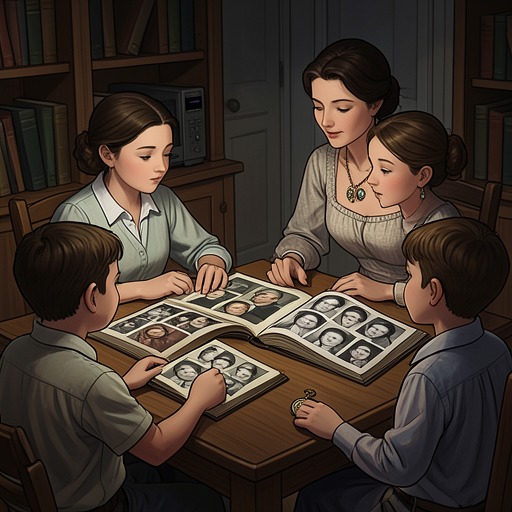
Penelope invites Travis to watch the tapes with her and Max, and Travis asks Max to remain with them while he reads Russ’s note. The arrangement matters because the videos cease to be a solitary memorial. The three sit together on the couch, and Penelope operates the remote while Loralie’s laughter fills the room. Max responds to the image of Travis flexing his muscles by calling his younger father a goof, while Travis observes that Max resembles him at the same age. The archive thus creates recognition across two generations, turning resemblance into a moment of ordinary intimacy.
Travis, Penelope, and Max spend the entire day watching the videos. Travis repeatedly becomes emotional at Loralie’s appearance and voice, while recognizing in Max the same inner fire he remembers in his mother. The comparison extends Loralie’s influence beyond memory: her vitality survives not only in the recordings but also in the traits Travis sees in his son. What was once a private record of childhood becomes a shared family inheritance, allowing Max to know the grandmother he never met and allowing Travis to place his own fatherhood within a longer maternal legacy.
By the end of the week, Travis has watched all ten videos. Penelope or Max is present for most of the viewing, although Travis sometimes watches alone when he cannot sleep. The repeated returns to the recordings show that remembrance is a process rather than a single emotional release. He grieves the moments he missed with Loralie, while also confronting the limits of her illness and the effort she made to hold on despite cancer’s strain on her body.
Connection to Russ and the New Family
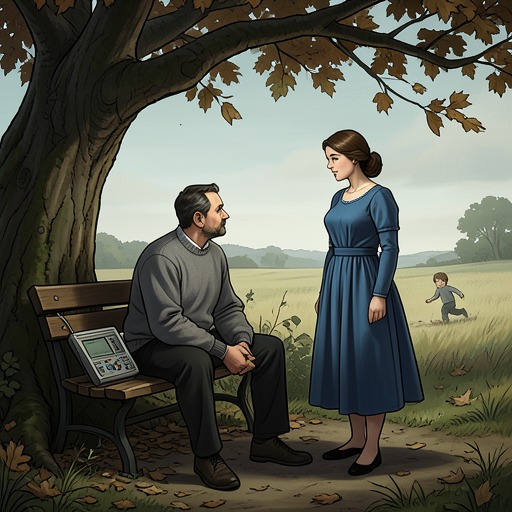
The videos arrive with Russ’s note, whose account of finding Travis asleep while holding a picture of himself and his father leads Russ to describe a later day spent together in the field. Russ tells Travis that he has always been proud of him, that Loralie would be proud as well, and that he loves his son. After years in which Travis and Russ responded to Loralie’s death with anger and mutual hurt, the note enables Travis to accept Russ’s love at last. The videos and the letter work together: Loralie’s recorded presence opens the memory of the family’s past, while Russ’s written words repair a damaged relationship in the present.
The archive also helps prepare the family’s next transition. Travis’s wish to change Max’s legal surname to McCoy is explicitly connected to his desire for a real family, and the videos give that family a history deeper than the recent reunion. When Max later calls Travis “Dad” after the Broncos’ state championship victory, the name carries the trust that Travis has gradually earned. The videos do not solve the family’s conflicts by themselves, but they help create the emotional ground on which fatherhood, legal belonging, and marriage can stand.
Narrative and Thematic Significance
As an object, Loralie McCoy’s home videos oppose the public images surrounding Travis’s football career. News reports and newspapers reduce him to an injured quarterback, a departing Shark, or a celebrity story, whereas the home movies show him before fame: a child laughing, asking his mother to record his games, and learning to imagine a future. Their value lies precisely in their intimacy. They recover a self that public narration cannot provide and return Travis to the emotional source of the identity that later became his profession.
The videos also convert the past from a source of abandonment into a resource for continuity. Loralie’s promise to cheer from the fifty-yard line, her courage during illness, Russ’s accompanying note, and Max’s resemblance to the young Travis form a chain across generations. By watching together, Travis, Penelope, and Max do more than remember a deceased mother; they establish a household capable of carrying her memory forward. The recordings therefore mark the movement from isolated grief and father-son estrangement toward reconciliation, shared identity, and the family’s new beginning.