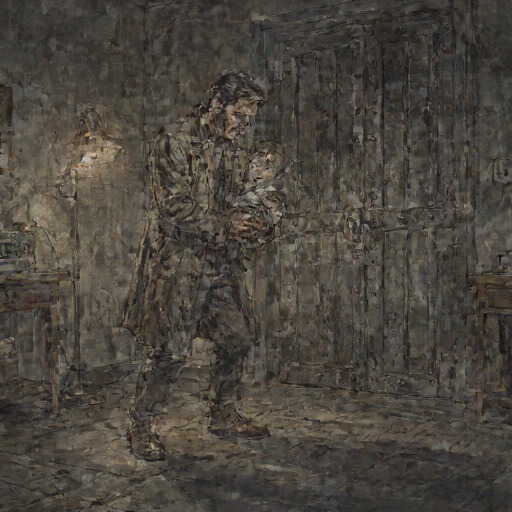
Max publicly confirms Travis is his father
The Journey CollectionMax publicly confirms that Travis McCoy is his father during an apparently ordinary family dinner, turning a decade-old secret into an intimate but decisive family revelation. The disclosure catches Travis McCoy off guard, yet Max treats it less as a scandal than as an obvious fact and immediately links knowledge of his biological father to the possibility of becoming a real family. The event therefore changes more than what Max knows: it gives Travis McCoy a place he must now actively occupy as a father.
Causes and Background
The revelation follows the long separation between Travis McCoy and Penelope Stone. Travis McCoy had left Clarendon a decade earlier, while Penelope Stone had remained behind and raised Max without telling him directly who his father was. When Travis McCoy returned, he learned that Max was his son and confronted Russ McCoy over having known about the boy. Penelope Stone later explained that she had not known she was pregnant when Travis McCoy left; she discovered the pregnancy two months afterward and struggled with fear, parental anger, and the memory of Travis McCoy’s decision to leave rather than remain with her.
The secret was not completely secure inside the household. Max had watched Penelope Stone react emotionally whenever the Miami Sharks played, and he had found photographs of Penelope Stone and Travis McCoy in a box beneath her bed. Those clues allowed him to connect the past relationship, Travis McCoy’s public identity, and his own parentage. His certainty is important because the event is not presented as an adult confession imposed upon an unsuspecting child. Max has already made the inference himself; the dinner conversation merely brings his knowledge into the open.
What Happens
The confirmation occurs after Travis McCoy, Penelope Stone, and Max have washed their hands and sat down to eat chicken casserole, scalloped potatoes, rolls, iced tea, and milk. Max clears his plate, asks for seconds, and then breaks the comfortable silence by asking Travis McCoy when he had planned to tell him that Travis McCoy is his father. The question makes Travis McCoy choke on his tea, while Penelope Stone slaps him on the back and sharply rebukes Max for asking it so abruptly.
Travis McCoy admits that he had not known about Max before returning to Clarendon. Max responds that he already understood the situation. He cites Penelope Stone’s tears during Miami Sharks games and the photographs in the box beneath her bed, adding that the calculation was not difficult for a ten-year-old. His manner is remarkably composed: although the adults experience the disclosure as a crisis, Max acts as though the revelation has simply confirmed something he had already worked out.
Max then removes the immediate threat of rejection. He tells Penelope Stone that he is not angry and points out that Travis McCoy is present now. From that fact, he imagines the possibility that they can become a real family. Travis McCoy promises him that they can. Max accepts the promise conditionally, warning Travis McCoy that hurting Penelope Stone will mean answering to him because she already cries enough. The warning gives the child an unexpectedly protective authority and makes clear that Max’s acceptance of Travis McCoy depends on dependable treatment of his mother, not merely on biological proof.
Immediate Consequences
The event changes the emotional balance among the three characters. Before Max speaks, Travis McCoy and Penelope Stone are still managing the burden of adult secrecy, guilt, and lost time. After Max speaks, the central question is no longer whether he can discover the truth; it is whether Travis McCoy can prove that his presence will last. Max’s statement that Travis McCoy is “here now” makes physical return the beginning rather than the completion of fatherhood.
The dinner also establishes that Max understands family through action and continuity. He does not demand a detailed defense of the past, but he does insist on a future in which Travis McCoy protects Penelope Stone and remains available to him. Travis McCoy’s promise becomes an early test of that future. Later developments give the promise institutional and ceremonial forms: Travis McCoy asks to change Max’s last name to McCoy, and Penelope Stone agrees; during the wedding, Max stands between them to light the eternity candle with them as a family; and at the state championship celebration, Max embraces Travis McCoy and calls him “Dad.”
Development of Fatherhood
Max’s public confirmation begins a movement from biological discovery toward lived fatherhood. Travis McCoy’s relationship with Max is not secured by the revelation alone. At the state championship, after Travis McCoy leads the Clarendon Broncos onto the field, Max thanks him as his father. Travis McCoy answers by thanking Max for bringing him home, reversing the usual direction of rescue: the returning adult believes the child has restored him to family, place, and purpose.
The later request to change Max’s surname makes the same transition visible in legal terms. Travis McCoy says that if Penelope Stone is going to become a McCoy, he wants Max to be one too, because he regards shared identity as part of becoming a real family. The name change does not replace the emotional work begun at dinner; it formalizes it. Likewise, the wedding’s shared candle ceremony places Max inside the couple’s public family ritual, while the later pregnancy announcement expands the family rather than displacing Max from its center.
Narrative Significance
Max publicly confirms that Travis McCoy is his father as a turning point in the book’s treatment of secrecy, responsibility, and belonging. The revelation is staged in a domestic setting rather than at a football stadium or formal ceremony, emphasizing that fatherhood is first tested around a dinner table, in the presence of food, embarrassment, interruption, and an ordinary child’s directness. The contrast between Travis McCoy’s choking surprise and Max’s calm certainty gives the scene its force: the adult has been overwhelmed by the past, while the child is already asking what the future will look like.
The event also prepares the later sequence of family-making rituals. A hidden biological fact becomes spoken knowledge; spoken knowledge becomes a promise; the promise becomes a surname, a wedding ceremony, and a publicly acknowledged father-son relationship. Max’s warning prevents the sequence from becoming sentimental absolution. Travis McCoy is welcomed, but he is also held accountable. The scene’s decisive meaning lies in that condition: Max does not merely identify Travis McCoy as his father; he challenges him to become one.