Miami, Florida
The Journey CollectionMiami, Florida functions as both Travis McCoy’s professional home and the place from which he must finally leave the version of himself built around football. His life there is associated with the Miami Sharks, six seasons of professional play, public recognition, and the shoulder injury that makes his future as a player uncertain. The city therefore carries more than geographical meaning: it is the setting of his achievement, his isolation, and the career whose demands helped keep him separated from Penelope Stone and Max.
Professional Home and Public Identity
Miami is linked to the height of Travis’s athletic identity. During his six seasons with the Miami Sharks, football absorbed nearly every part of his ambition, and the team came within one game of playing for the national championship before the injury threatened to remove him from the field. Even while traveling, he remains recognizable as a professional player: passengers ask him to autograph newspapers, magazines, and even barf bags. His celebrity gives Miami the atmosphere of a public life in which supporters, teammates, and the organization continually measure him through performance.
The injury exposes the fragility beneath that public identity. After the hit that damages his right shoulder, Travis endures a brace, repeated ice packs and heating pads, and diminished mobility. Rumors spread that his career is over, and he begins to imagine that he may be reduced to watching the Sharks from the sidelines. Miami consequently becomes the place where his old future is being withdrawn from him, not through a single announcement but through the accumulating evidence of what his body can no longer do.
Departure and the Journey Home
Travis leaves Miami after deciding that he must face his past before he can understand his future. A yellow taxi takes him to the airport, and he chooses not to answer Jack Garrison’s invitation by formally confirming his attendance at homecoming; instead, he simply books a flight back to Texas. The choice makes the journey an act of confrontation rather than a ceremonial visit. He has been gone for more than a decade and is unsure whether anyone in his small hometown will welcome him after the damage he believes he caused.
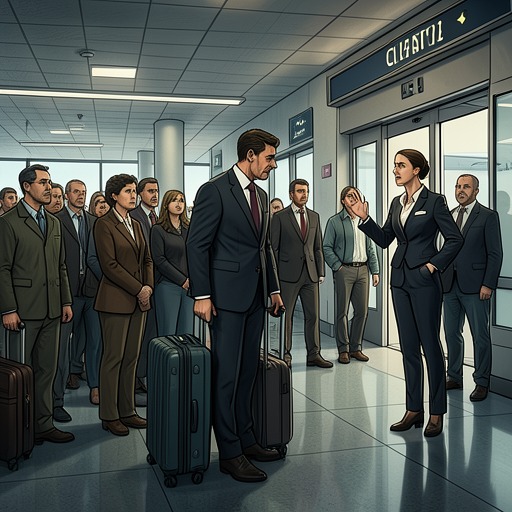
The route away from Miami is deliberately difficult. His flight to Dallas is delayed almost two hours, he has to run for his connection to Amarillo, and his luggage fails to arrive after he waits more than half an hour at the baggage area. These practical obstacles echo the emotional resistance surrounding the trip. As he moves through the airport wearing sunglasses and a baseball cap, Travis is still the recognizable Sharks player to strangers, but inwardly he is returning to the woman he left and the family he never knew he had.
What Miami Represents
For Travis, Miami is inseparable from Penelope. He recognizes that leaving her had crushed the one woman who truly cared for him and that she owned his heart and soul. The city thus preserves the contradiction at the center of his professional success: the place where he fulfilled the dream he had carried since childhood is also the place from which he must reckon with the personal cost of pursuing it. His departure does not erase that cost; it makes it impossible to keep treating football as a complete identity.
The contrast with Clarendon, Texas, becomes decisive. Returning home gives Travis a family, a second chance to heal his broken heart, and an opportunity to reconnect with his father, Russ McCoy. He lowers the emotional walls built after the death of his mother, Loralie McCoy, and learns to see Russ not simply as a cold father but as a grieving man. In this contrast, Miami signifies distance and professional achievement, while home signifies relational repair and the possibility of becoming accountable to people who need him.
Returning to the Sharks and Choosing Family
Miami remains the site of the choice Travis must make after his return to Texas. Stewart Thornton, the owner of the Sharks, tells him that his shoulder will never be strong enough for him to play again but offers him the chance to coach. The offer would allow Travis to remain inside the football world that has defined him, yet he declines it because he has discovered that his future lies in Texas with Penelope and Max. His decision converts retirement from a forced consequence of injury into an act of agency.
Travis does not treat the Sharks as an enemy or dismiss the six seasons he spent there. He thanks Stewart for everything the organization has done and tells his teammates that they were there for him when he needed them. He also acknowledges that he will miss them, while accepting that it is time to move on. Miami therefore becomes not merely a place abandoned but a former community he honors before choosing another one. The professional capital he gained there is redirected toward family, education, and a future beyond the stadium.
Narrative Significance
Miami’s importance lies in the identity conflict it makes visible. In the city, Travis is a celebrated athlete whose body and reputation are tied to the Sharks; after returning home, he becomes a father who promises Max that he will stay, a partner who proposes to Penelope Stone, and a man willing to change Max’s last name to McCoy so their family can be recognized legally as well as emotionally. The movement away from Miami begins the transformation from player to father, husband, and eventually teacher.
The city also remains part of the story’s recurring geography of separation. Travis’s past there explains why Penelope was lonely and why Max grew up without his father, while the decision to leave it establishes the conditions for reunion. By the time Travis embraces Max after the Clarendon Broncos win the state championship, the boy can call him “Dad,” and Travis can answer that Max brought him home. Miami is therefore the place he must depart in order to belong elsewhere: a powerful former home whose value is acknowledged precisely when family becomes the future that football can no longer supply.