Parent-Child Distance
The Journey CollectionThe estrangement between Travis McCoy and his father, Russ McCoy, is rooted in grief that each man experiences differently and in years of missed chances to be present for one another. After Loralie McCoy’s death, Travis understands his father’s withdrawal as abandonment; Russ, who has also lost the love of his life, cannot bring himself to bridge the distance. Their reunion makes old accusations explicit, while Travis’s growing relationship with his own son creates a new basis for connection. The rift does not disappear at once, but the story’s later acts of trust and family inclusion turn estrangement into the beginning of reconciliation.
Origins in grief and absence
When Travis is nine, Loralie is diagnosed with acute lymphoblastic leukemia. He watches her struggle to get out of bed and hears her plead with God to spare her. After two years and numerous rounds of chemotherapy, she dies when Travis is eleven. He is a child facing a loss he cannot understand, and he believes Russ has failed both of them: in his memory, his father spends time shut away in his workshop instead of caring for his dying wife. The anger that follows is inseparable from Travis’s helplessness and grief.
Russ’s absence also takes a more ordinary, cumulative form. Travis works hard for a scholarship and then has to prove himself against players from much larger schools, but he recalls that Russ never comes to watch him play during high school or college. Russ explains that he had to work to keep the ranch going and pay the bills, and that physical absence did not mean he was absent in spirit. To Travis, however, the distinction does not answer the injury: support that was never visible did not feel like support when he needed it.
The homecoming brings the rupture into the open
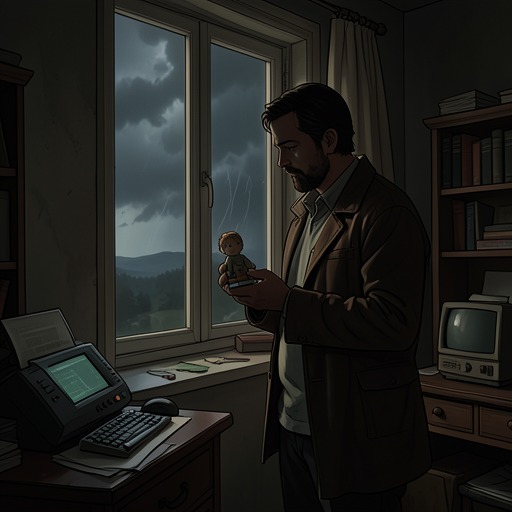
When Travis returns to Clarendon, Texas, the house preserves the past in familiar rooms and objects, but the surroundings do not restore the relationship. He sees the entertainment center Russ spent years building and thinks of the time he believes should have been spent caring for Loralie. In Travis’s childhood bedroom, football posters still cover the baby-blue walls, reminders of the dream that eventually took him away. The unchanged room makes the distance between the boy who left and the man returning difficult to ignore.
The discovery that Russ knew about Max sharpens Travis’s anger. After learning that Penelope Stone had a baby, Travis confronts his father and demands to know whether he knew the boy was Travis’s son. Russ’s reaction confirms that he did. Later, Russ explains that he saw Penelope with a baby the summer after Travis left and immediately understood that Max was his grandson. He says he picked up the phone many times but could not call. Travis had left in anger, and Russ believed his son hated him and the ranch; Russ also admits that he had wanted to hold on to the place Loralie loved. His silence thus compounds the old estrangement with a new, consequential omission: Travis has missed ten years of his son’s life.
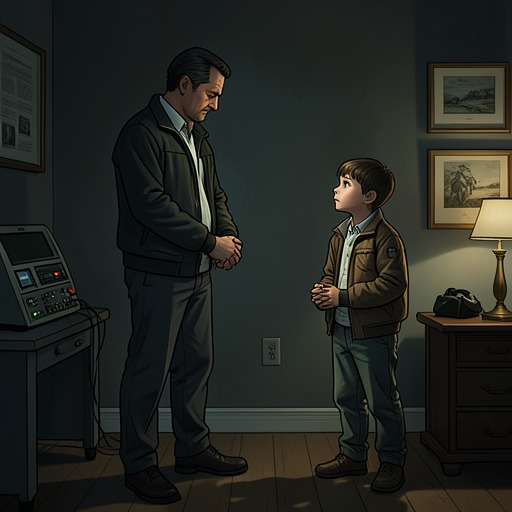
Their argument brings the shared pattern of absence into focus. Travis accuses Russ of failing to support him as a boy and invokes Russ’s failure to be there for Loralie. Russ answers that the same pattern has passed to his son, pointing to Travis’s own long departure. When Russ says that he loved Loralie and still loves Travis, Travis does not yet accept the reassurance as a repair. He leaves to get time to understand what has happened, and later tells Russ that he had already lost his mother and, through one decision, lost his father too. He apologizes for not being the son Russ wanted, but also insists that Russ was not the father he needed. The hurt is mutual, even as their accounts of it differ.
New fatherhood changes what is at stake
The news about Max forces Travis to confront the consequences of his own absence. At a meal, Max asks when Travis planned to tell him that he is his father. Max has already pieced it together from Penelope’s reactions when the Sharks played and from photographs she kept in a box under her bed. He is not angry: he tells his mother that Travis is there now and that they can be a real family. Travis promises to stand by him. The exchange gives Travis a chance to do what he believes Russ did not do for him, but it also makes clear that repairing one generation’s bond cannot recover the years already lost.
Max’s trust develops through actions rather than through biological knowledge alone. After the Broncos win the state title, Max climbs onto the bench, puts his arms around Travis’s neck, and thanks him. Travis understands that his son has needed to trust that his father will not leave or hurt Penelope Stone, and that he will love him. Travis answers by thanking Max for bringing him home. The reversal matters: Travis had treated home as the place he left behind, while Max’s trust makes it the place where he can again belong.
Repair through recognition and family
Travis’s anger at Russ does not vanish as soon as his own family takes shape. When he hears Russ say that he has always thought of Cal Hendricks as a son, he asks why it took ten years for Russ to see Travis as his son. Russ is bewildered and insists that Travis has always been his son. Travis’s question shows how little reassurance can do on its own: Russ’s sense of enduring love does not undo Travis’s remembered experience of being unsupported. The exchange keeps the difference between biological relationship and felt fatherhood in view.
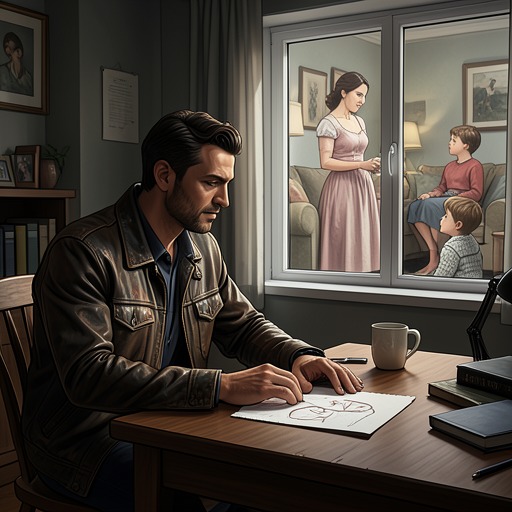
The later family milestones give that relationship a different setting. Travis asks Penelope to let him legally change Max’s surname to McCoy, explaining that he wants Max to share the family name. Penelope agrees, and the proposed change makes belonging public and formal, rather than leaving it as a private promise between father and son. At the wedding, Max stands between Travis and Penelope as they light the eternity candle together. Russ’s presence in Travis’s wider family life is not proof that every old grievance has been resolved, but the ceremony places fatherhood, marriage, and family continuity alongside the history of loss.
The story frames the estrangement as a bond damaged by grief, silence, and missed presence, not as an absence of love. Travis’s return lets him encounter Russ as a grieving man as well as the father he believed had abandoned him; Russ, in turn, has to hear how his choices registered to his son. As Travis accepts his own responsibilities to Max and builds a family with Penelope, he can begin to reconnect with Russ without pretending that the years apart did not matter. The final movement is therefore not a simple erasure of the past, but a change in what the two men can acknowledge and share.