Russ McCoy–Loralie McCoy relationship
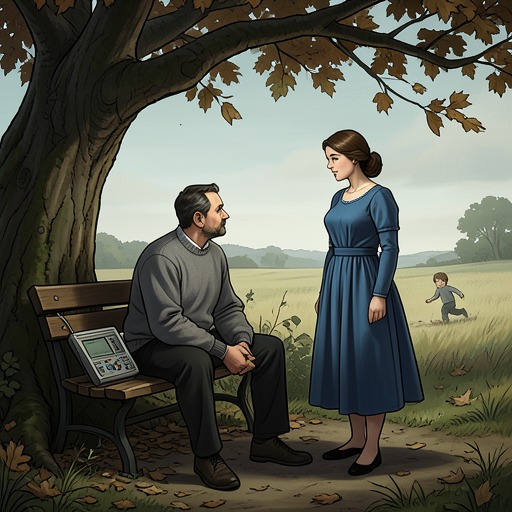
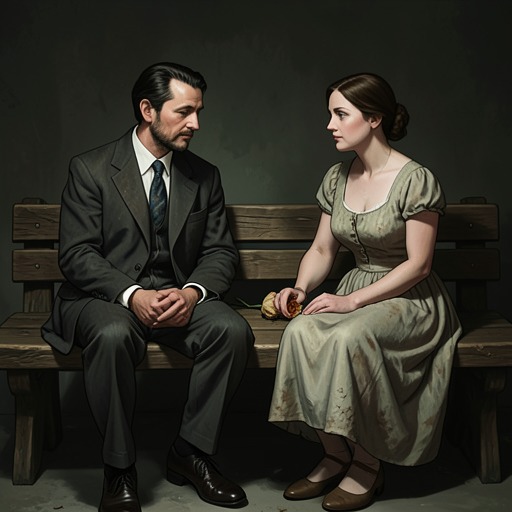
The Journey CollectionThe Russ McCoy–Loralie McCoy relationship is the emotional history at the center of the McCoy family’s grief and estrangement. Their marriage is remembered not as a simple story of neglect, but as a bond whose love survives Loralie’s death and whose hidden tenderness becomes essential to Russ McCoy and Travis McCoy’s eventual reconciliation.
Marriage and Family Life
Russ McCoy and Loralie McCoy built their life at McCoy Ranch, a place Loralie loved and Russ tried to preserve after her death. Their marriage included affection, humor, stubbornness, and the ordinary friction of two people who knew each other intimately. Russ later recalled that Loralie could give him a fiery, unmistakable look when he deliberately refused to do things her way. He admitted that he sometimes chose the harder course precisely because it amused him to provoke her, while her anger remained part of the lively bond he continued to remember.
Their relationship also formed the setting for Travis McCoy’s birth. Loralie went into labor while cooking dinner despite being nine months pregnant and despite Russ’s offers to prepare the meal or go into town for food. Russ remembered recognizing the look that meant she would not be argued with, then watching her closely because he knew how stubborn she could be. When the contractions intensified, he carried her to the truck and drove nearly eighty miles per hour, reaching the hospital in time for Travis to be born in the front seat. The story became a family memory that Loralie told Travis shortly before she died, linking the marriage directly to the beginning of his life.
Illness, Care, and Loss
Loralie was diagnosed with Acute Lymphoblastic Leukemia when Travis was nine. For two years, she fought to get out of bed through numerous rounds of chemotherapy, until her body became too weak to continue. She died when Travis was eleven, after a final night from which she did not wake. To Travis, the illness exposed Russ’s failure as a husband: Russ spent much of his time in his workshop building things the family did not need, while Loralie was slowly dying. Travis believed that Russ should have remained beside her, holding her hand as he had done every day.
That judgment became one of the deepest sources of conflict between father and son. Travis had been a child trying to care for his mother without understanding the full meaning of her illness, and he could not forgive Russ for seeming to abandon her. The accusation reduced Russ’s behavior to indifference, while Russ’s own grief remained largely unspoken. For years, the marriage was therefore remembered through a painful contradiction: Loralie’s suffering was visible, but the form Russ’s suffering took was hidden behind work, silence, and withdrawal.
When Russ finally explained himself, he said that he had held Loralie every night and watched her struggle for breath. He had prayed that God would take him instead and spare her, but the prayer was not answered. His grief was not a lack of love; it was the grief of a husband who needed his wife and could not save her. The revelation does not erase the pain of Loralie’s final years or Travis’s experience of them, but it changes the moral shape of Russ’s retreat from simple abandonment to a damaged attempt to survive unbearable loss.
Memory After Loralie’s Death
Seventeen years after Loralie died, Russ still carried her presence through memory. Sitting at a table covered with dozens of snapshots, he spoke of hearing her laughter and imagining the cheeky smile she always wore. Travis had never seen Russ so openly emotional. Outside the first days after Loralie’s death, Russ had not cried in front of him, so the moment marked a break in the silence that had governed both the marriage’s aftermath and the father-son relationship.
The photographs make memory material. Russ handled the image taken on the day Travis was born, turning a private recollection into an account that Travis could recognize as part of his own history. His grief also revealed that Loralie remained emotionally present in the family even after her physical absence. Russ’s continuing attachment to her was not presented as a new romance or a replacement for the marriage; it was a lasting devotion expressed through stories, photographs, remembered laughter, and the inability to stop missing her.
Marriage, Grief, and Reconciliation
Loralie’s death creates a chain of consequences beyond the marriage itself. Travis’s anger toward Russ contributes to his departure from home, and the unresolved family wound shadows his later return. Russ explains that he saw Penelope Stone with a baby the summer after Travis left and immediately knew that the child was Travis’s. He repeatedly considered calling Travis but could not bring himself to do so because Travis had been angry for years, hated living at the ranch, and seemed to hate Russ. Russ also admits that remaining at the ranch was bound up with his wish to hold on to whatever remained of Loralie, because she had loved the place.
This confession helps transform Loralie from the silent cause of a family grievance into the shared center of Russ and Travis’s memory. Russ and Travis had loved her differently and had suffered her death differently: Travis responded through caretaking, judgment, and flight, while Russ responded through work, silence, and an attachment to the home she had loved. Their reconciliation becomes possible when these competing forms of love are spoken rather than assumed.
Loralie’s influence also survives in the family’s language. Russ repeats her observation that men never listen, using humor to remember her irritation and vitality rather than only her illness. The joke restores her as an active presence with a distinct temperament: witty, fiery, stubborn, and capable of shaping the household even when she was no longer alive. Her memory therefore mediates reconciliation without becoming sentimental erasure; it allows Russ and Travis to acknowledge both the damage caused by silence and the love that silence had concealed.
Narrative Significance
The Russ McCoy–Loralie McCoy relationship gives the family story its central pattern of love obscured by behavior. Russ’s workshop can be read by Travis as evidence of rejection, yet Russ’s later account reveals that it was entangled with helplessness, mourning, and his effort to remain connected to the world Loralie had loved. The marriage thus becomes a study in how grief can be misread when it is not articulated.
Its importance extends into the book’s broader movement from separation toward family formation. Loralie is absent from later milestones, including Travis McCoy’s reunion with Penelope Stone, their engagement, and their marriage, but her memory continues to shape the emotional vocabulary through which the McCoys understand loyalty, loss, and endurance. When Travis and Penelope eventually marry, their vows to remain together in sickness and health carry particular resonance against the earlier marriage marked by terminal illness and death. Loralie and Russ’s relationship remains the family’s lost foundation, but the truth of their love helps the next generation imagine commitment as something that must be expressed, witnessed, and actively sustained.