Russ’s letter to Travis
The Journey CollectionRuss’s letter to Travis is more than a private message: it is the decisive object through which a damaged father-son relationship becomes capable of receiving love. Delivered after Russ has left it specifically for Travis, the letter turns an old failure of attention into a remembered act of care and allows Travis to accept the affection his father had struggled to express.
Discovery and Immediate Setting
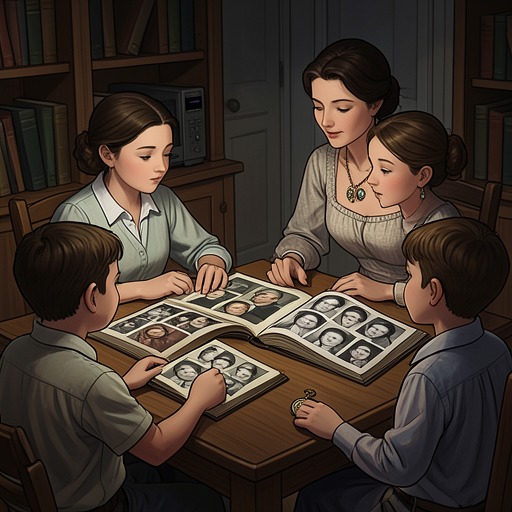
The letter appears while Travis, Penelope Stone, and Max are watching the family videos that Russ left behind. Penelope tells Travis that Russ also left a note and explains that she did not read it because it was intended for him. The decision preserves the letter as a direct communication between father and son rather than making it another family artifact mediated by someone else. When Travis asks Penelope to remain with him while he reads it, his request reveals how exposed he feels: the letter arrives amid memories of Loralie McCoy, whose absence has become newly painful because she will never see Travis marry Penelope Stone, meet Max, or watch him form a family.
Max is brought into the moment as well. When Max carries the white sheet of paper to Travis and begins to leave, Travis takes his hand and pulls him into his lap, saying, “I want you here, too,” before opening the letter. The gesture places three generations of the family in the same emotional scene: Russ’s written voice addresses Travis, Travis reads it while holding Max, and the memory of Loralie remains present through the grief surrounding the family videos.
The Childhood Memory in the Letter
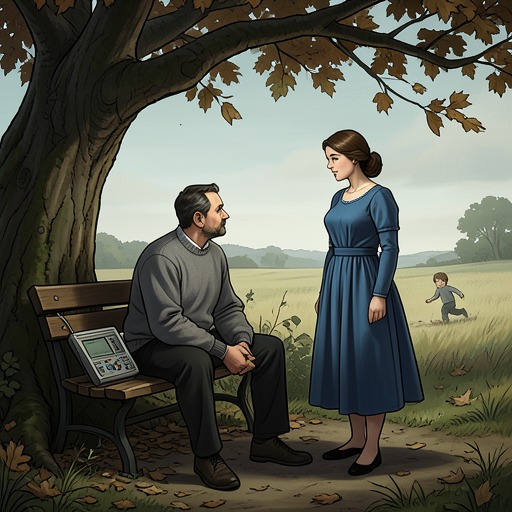
Russ’s message begins with Travis at four years old, begging to accompany him on the tractor. Russ admits that he initially resisted because he was behind on the harvest and thought a child would slow him down. He put Travis to bed and promised to take him the next day, although he did not intend to keep that promise. The letter therefore starts with an admission of ordinary parental failure rather than an idealized account of fatherhood.
The turning point comes through Loralie’s warning. She tells Russ, “He’s gonna be gone before you know it. Don’t blink, or you might miss him.” Her words haunt Russ through the night and alter his behavior the following morning. He leaves his room with a sudden urge to check on Travis, finding the boy asleep with a picture of the two of them clenched in his hand. Russ says that the sight brought him to his knees. The photograph functions as the letter’s central image: Travis’s attachment is silently visible before Russ is ready to acknowledge its importance.
Russ then fulfills the promise he had not planned to keep. He takes Travis into the field, seats him on his lap, and remembers the child laughing and talking to him. The episode does not erase Russ’s earlier neglect, but it supplies a concrete counter-memory to the abandonment and anger that later shaped their relationship. In the letter, fatherhood is measured not by a grand declaration but by a changed morning, a tractor ride, and a child’s physical closeness in the field.
Confession, Love, and Reconciliation
The letter’s emotional culmination is Russ’s direct declaration that he has always been proud of Travis, followed by his assurance that Loralie is watching over him with “a smile on her face and a tear in her eye.” He tells Travis that he loves him and thanks him for allowing Russ to be part of his life. These words supply the affirmation Travis has needed but has not been able to receive from Russ in person.
Travis lets the letter fall from his fingers and leans his forehead against Max’s shoulder. His response connects the written confession to the larger history of the McCoy family. After Loralie’s death, Travis and Russ had lashed out at one another instead of allowing grief to bring them closer. The letter does not merely remind Travis of a happy childhood scene; it gives him a form in which Russ’s love is unmistakable. Travis had already forgiven Russ for abandoning him, but Russ’s kind words enable him to accept that love as well.
Narrative Function and Significance
As an object, the letter carries what Russ has been unable to communicate through direct confrontation. Its written form gives him room to recount a specific memory, acknowledge his failure, preserve Loralie’s influence, and state his pride and love without the immediate defensiveness that has marked the men’s conflict. Because Travis reads it aloud, the private message becomes a shared family experience witnessed by Penelope Stone and Max.
The letter also joins memory with inheritance. Russ’s recollection begins with Travis as a small child and ends with Travis holding Max, so the object moves across generations while the scene around it demonstrates Travis’s changed understanding of fatherhood. Russ once imagined that a child would slow his work; Travis now stops his own movement to keep Max beside him. In that visual and emotional parallel, Russ’s letter becomes part of Travis’s movement away from inherited distance and toward an openly expressed family life.
The letter’s final consequence is not a new argument but a completed emotional shift. Travis is able to recognize Russ’s love after years of hurt, and he then agrees to watch the remaining tapes with Penelope Stone and Max. The object therefore opens the past without leaving Travis trapped in it: it makes grief speakable, converts remorse into connection, and helps establish reconciliation as an active acceptance of love rather than merely the end of anger.