Separated shoulder
The Journey CollectionThe separated shoulder is the injury that turns Travis McCoy’s long-standing devotion to football into a question of what life can hold when playing is no longer possible. First diagnosed as an AC separation after a forceful tackle, it places him on the Miami Sharks’ injured reserve list; its lasting loss of strength and mobility then helps bring his professional career to an end. The injury matters not only as a physical setback but as the hinge between the player Travis has been and the family future he decides to pursue.
Onset and Diagnosis
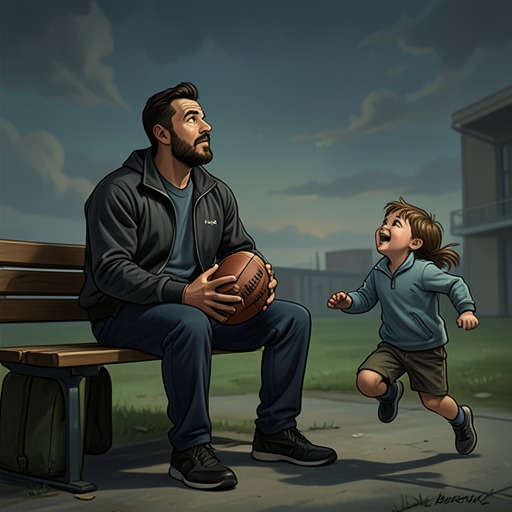
Football had shaped Travis’s ambitions since just after his fifth birthday, when his father took him to Austin, Texas, to watch Clarendon High School win its first state championship. He did not yet understand the game’s rules or fundamentals. What stayed with him was the spectacle of the players on the field and the crowd’s response to a winning touchdown. From then on, he wanted to play. By the time the injury occurred, he had spent six seasons focused on professional football, and a single hard hit threatened the pursuit that had defined him since childhood.
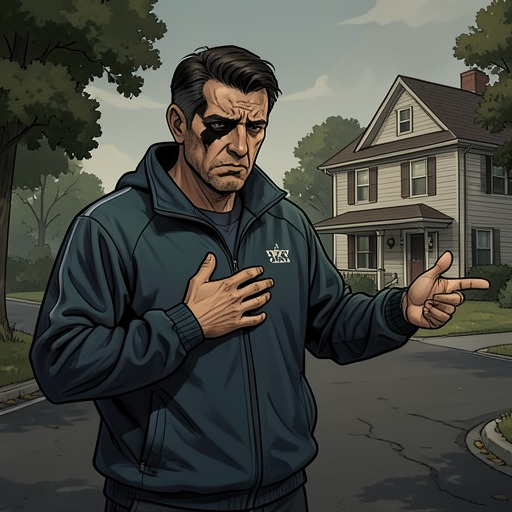
The injury happened when a receiver was out of position and Travis turned the wrong way while searching for him. A defensive left tackle planted him in the grass. Travis felt a pop in his right shoulder, followed by searing pain that ran through his arm and into his chest. The pain brought him to tears, though he kept them from falling. The episode was not presented as an isolated mishap: it was his third injury to the same shoulder, following an earlier injury the previous year.
Three days after the hit, Travis was still waiting to learn the extent of the damage. In the meantime, he had gone through two dozen ice packs, heating pads, and several X-rays. The head trainer, Cal Hendricks, explained that the diagnosis was an AC separation: ligaments between the clavicle and acromion bone had torn. The tear was serious enough to threaten his season, but not so severe that surgery was required.
Treatment and Lingering Effects
Cal told Travis that he would be placed on the team’s injured reserve list for the remainder of the season. Travis answered with a heavy breath and a sarcastic complaint about the bluntness of the news, but Cal pushed back against his irritation. He reminded Travis that this was the third injury to the same shoulder and that he had advised him, after the previous year’s injury, to take time off and rehabilitate it properly. Travis had not followed that advice. The diagnosis therefore carried an element of accumulated consequence: the current tear was the immediate cause of his removal from play, while his earlier refusal to rest and rehab was part of the history Cal invoked to explain why the shoulder had become such a serious problem.
The brace eventually came off, but that milestone did not mean the shoulder had recovered its former use. When Travis left his apartment for Texas about a month after receiving Jack Garrison’s letter, he had been without the brace for a couple of weeks. The joint remained stiff and ached when he used it too much, and its limited mobility fed rumors that his career was over. The injury thus persisted beyond the acute pain and the formal period of protection: even once the brace was gone, ordinary movement remained restricted, and the future of his playing career was uncertain.
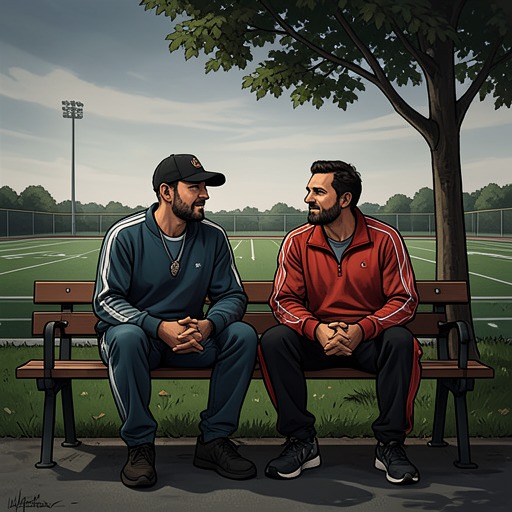
That limitation is still evident when Penelope Stone sees him back in Clarendon. She remembers how to make his coffee, then notices that he still cannot extend his arm normally and asks about the shoulder. Travis initially claims it is better, but Penelope points out that if he were well he would be in Denver preparing for his next game. He admits that the shoulder is sore and tight, that he has little rotation left, and that the movement he can manage hurts. Their exchange gives the injury a domestic setting rather than a medical one: its condition is visible in the way he moves, and Penelope’s familiarity enables her to recognize the truth beneath his attempt to minimize it.
The End of Playing
The consequences extend beyond the season. Later, Stewart Thornton, owner of the Miami Sharks, acknowledges that Travis is finished as a player because his shoulder will never again be strong enough for professional football. Stewart offers him the chance to coach, but the offer cannot restore the career that the injury has ended. Travis tells him that football had been his life since childhood and that he had dreamed of playing in the biggest stadiums. He had achieved a career with more wins than losses, yet he says he cannot continue in the game.
The injury is therefore a boundary between playing and what comes after, not a route back to his old position. Travis’s shoulder is the physical reason he can no longer take the field; his response to that reality is to decline the coaching offer as well. He explains that returning to Texas to resolve matters from his past also showed him where his future lies: with people who love him and need him. His decision is not that football never mattered, but that its claim on his life can no longer outweigh the family he has found there.
Meaning in Travis’s Changed Life
The shoulder’s significance is sharpened by the contrast between its beginning and its lasting effects. Travis’s childhood memory of football is an image of possibility: a championship, a crowded stadium, and a desire to become one of the players he watched. The later injury narrows that possibility through pain, restricted motion, and the end of his playing career. Yet the story does not make the injury disappear once Travis returns home. His limited rotation remains present in his interaction with Penelope, even as his attention shifts toward his family and future.
That shift also sits alongside the unresolved relationships that brought him back to Clarendon. Travis confronts his father, Russ McCoy, about feeling unsupported during his college years, and tells him that he had already lost his mother before losing his father through one decision. Penelope reveals that she drove to Austin after Travis left, intending to tell him she was pregnant, but believed he had already moved on. Later, Travis acknowledges to her father, Sherman Stone, that he wronged Penelope. These reckonings are not medical effects of the shoulder, but they form the family context in which the loss of football changes direction: the end of playing makes room for Travis to face the past and choose the people he says need him.
The injury’s final meaning is thus both bodily and biographical. It begins in one badly turned play and is confirmed by a specific ligament tear, but its consequences accumulate through a season on injured reserve, persistent stiffness and pain, and the recognition that professional play is finished. What it takes from Travis is the role he had imagined for himself since childhood; what follows is a deliberate reordering of priorities, as he leaves the Sharks and turns toward life with his family in Texas.